 3
3Two detectives are riding to a murder, and one of them will not stop complaining about it. The victim is a young woman, which Ana Dolabra finds tediously overrepresented in the honours lists. The victim is also gentry, which she finds worse. By the time the carriage reaches town she has declared the whole case beneath her, kicked the wall, and demanded to know what she did to deserve such fates.
She is wrong, of course, and she knows it within ten minutes of seeing the room.
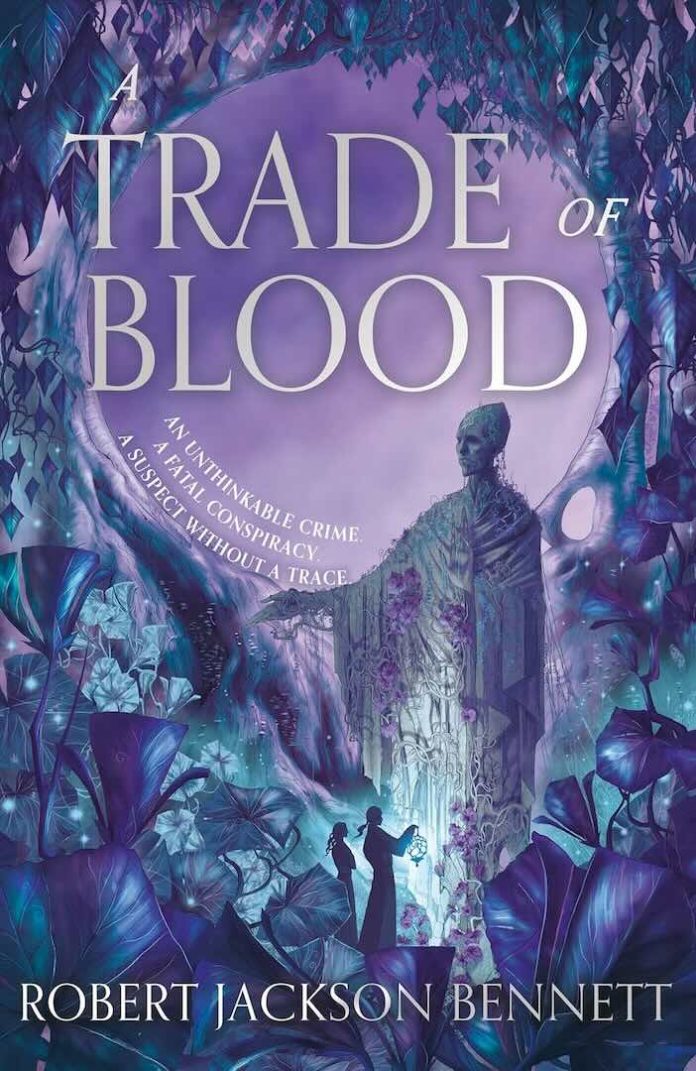
A Trade of Blood by Robert Jackson Bennett opens on a killing that looks embarrassingly simple. Zansay Burav lies dead in a rented room, her shoulder and stomach opened with a flensing knife. Castus Armenta ran out of that room covered in her blood and was caught in the woods by morning. The two are children of rival cattle clans whose armed drovers now face each other across the streets of Lacanthim, and one wrong move turns a murder into a war. But the wounds are surgically neat, there is no sign of a struggle, and the innkeeper heard nothing. Worse, the blood says the girl calmly lowered herself to the floor and lay down after she was cut open.
A Butchering Most Curated
Bennett has always been better than almost anyone at the mechanics of the impossible crime, and this is his cleverest yet. What killed Zansay Burav is not a poison or a curse but an agricultural product: a neuro-fungus called the guiding web, bred to infest the drokha-cats that harvest the Empire’s fields at night. Feed a cat the fungus, play a pitch while it works, and it will re-enact that task forever when it hears the note again. Cheap labour for an empire running out of people.
Someone has taught it to do the same to human beings.
The reason this works as a mystery and not a magic trick is that A Trade of Blood by Robert Jackson Bennett establishes the rules and never cheats them. The fungus takes repeated doses in drinking water to take hold. Conditioning creates nightmares within forty-eight hours. Corpses fruit three days after death. It can only compel actions the host has performed many times, which is why an entire subplot turns on a beautifully simple observation: you can only hang yourself once. The clue that finally cracks the case is a piece of clothing so ordinary you will have read past it three times.
Where This Sits in the Series
Newcomers can technically start here, but the emotional payoffs belong to readers who have been with Din since the first body. The running order:
- The Tainted Cup (Book 1)
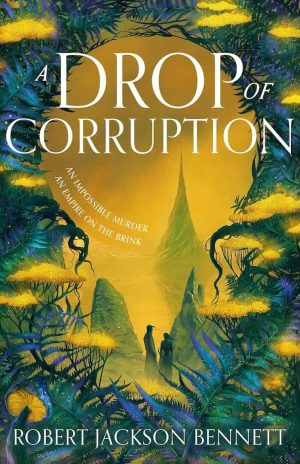
- A Drop of Corruption (Book 2)
- A Trade of Blood (Book 3)
Bennett’s other work, the Founders trilogy beginning with Foundryside and the Divine Cities trilogy beginning with City of Stairs, shares this obsession with civilisations built on borrowed miracles they no longer understand.
The Empire Eats Itself
The canton of Sapirdad exists to grow beef, and everything follows from that. Urhosi cattle the size of houses need enormous quantities of feed. Feed needs land. Land is finite, so the two families who control cattle and feed can only grow by taking from each other, and both would rather kill than sell. Meanwhile the flensing halls dump their leavings into fens that stretch for leagues, and a mountain of bones burns once a year because nobody can use it fast enough.
Bennett has been building toward this argument for two books and here he stops pretending it is subtext. An author’s note connects it directly to the real economics of eating animals, where a huge share of farmland yields a small fraction of our calories, a discrepancy laid out plainly in the data on the environmental impacts of food. The novel’s most chilling line arrives almost casually: what we do to the beasts in the field, we may one day do to our own kin.
What Works
- The mechanism. A murder weapon that is agricultural infrastructure, planted months in advance, in victims who never knew they were loaded. It is genuinely new.
- Din’s interiority. His augmentations begin to mature, and his stored memories start speaking to him in a voice he recognises and does not want to name. The best writing about his condition in the series.
- The sister. Din’s estranged sibling turns up inside the investigation, and their reunion is prickly and true, all wounded pride and unsent letters.
- The romance. Din’s relationship with an Orbiis commander is warm, adult, matter-of-fact about being queer, and given real consequences rather than a tidy bow.
- The last thirty pages. The epilogue goes where the series has been circling for three books, and it is quietly, genuinely horrifying.
Where It Stumbles
- The suspect pool is thin. By process of elimination, the second culprit becomes obvious well before the reveal. Attentive readers will have their answer and simply wait for the mechanism to be explained.
- The middle repeats itself. A long stretch runs on the same loop: Din investigates, Din recites his memories to Ana, someone licks a strip of testing paper. The procedural texture that felt fresh in book one starts to feel like a metronome.
- A very large coincidence. The relative Din has not seen in six years happens to be embedded in the suspect family in the exact canton he is posted to, and A Trade of Blood by Robert Jackson Bennett never really argues the case for that.
- The romance is compressed. It goes from meeting to intimacy to rupture in a handful of days, and the break is triggered by a revelation about someone else entirely, which makes an affecting thread feel partly like plot machinery.
- The metaplot dangles again. Anyone hoping this book finally answers the question of what Ana Dolabra actually is will get another tantalising inch and a great deal of “I cannot speak of it.”
A Word on Content
Extensive on-page gore, dissection, animal slaughter in industrial detail, suicide, self-harm, exhumation, and body horror involving fungal growth. The bodily-autonomy material is the most disturbing part: the horror is not being killed but being made to perform your own death while grateful.
Who This Is For
Reach for A Trade of Blood by Robert Jackson Bennett if you like fantasy built out of economics and biology rather than prophecy, if you want a Holmes-and-Watson pairing where Watson is the interesting one, and if you can take a mystery that indicts you along with its killers. Skip it if you need a fresh entry point, or if slaughterhouse detail is a hard limit.
Read These Next
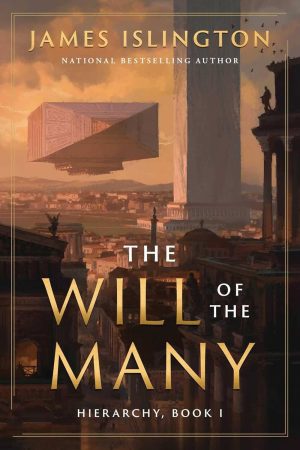
- The Will of the Many by James Islington. Another empire that runs on extracting something essential from its people.
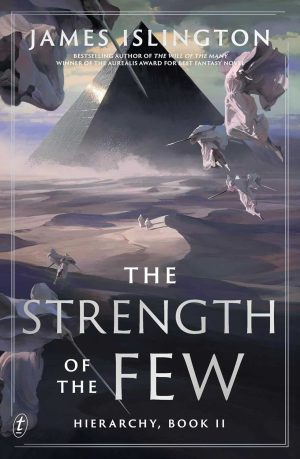
- The Strength of the Few by James Islington. The sequel, if the imperial machinery is what grips you.
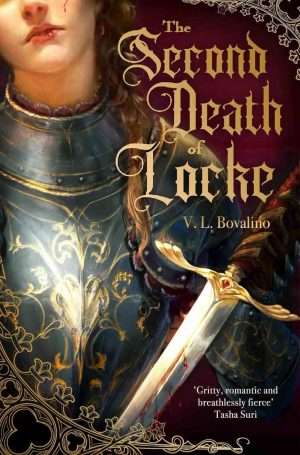
- The Second Death of Locke by V.L. Bovalino. For the necromantic edges of a murder investigation.
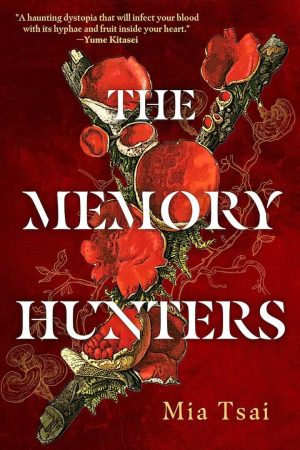
- The Memory Hunters by Mia Tsai. If Din’s engraved memories are the hook.
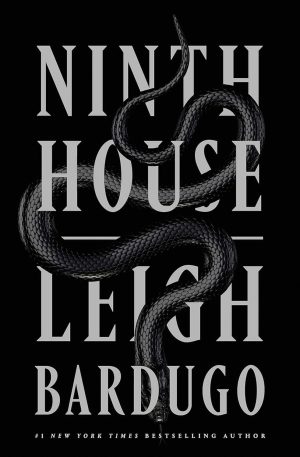
- Ninth House by Leigh Bardugo. Institutional rot, occult mechanics, and an investigator who is the wrong sort of person for the job.
The Last Word
The whodunnit is the least interesting thing here, and Bennett seems to know it, because he spends his final act on the far more uncomfortable question of what an empire is willing to do to keep its plates full. Ana gets her culprit. Nobody gets absolution. A Trade of Blood by Robert Jackson Bennett ends on an image of forced, cheerful, endless labour that I have not been able to stop thinking about, and it earns every bit of the dread it spends three hundred pages accumulating.