44 new this week · 3,661 honest reviews · 203 author interviews · 200K+ readersAboutWrite for usContact
Award list · 6 books

Booker Prize 2026 Predictions: Who Will Win, and Which Novel Deserves To?

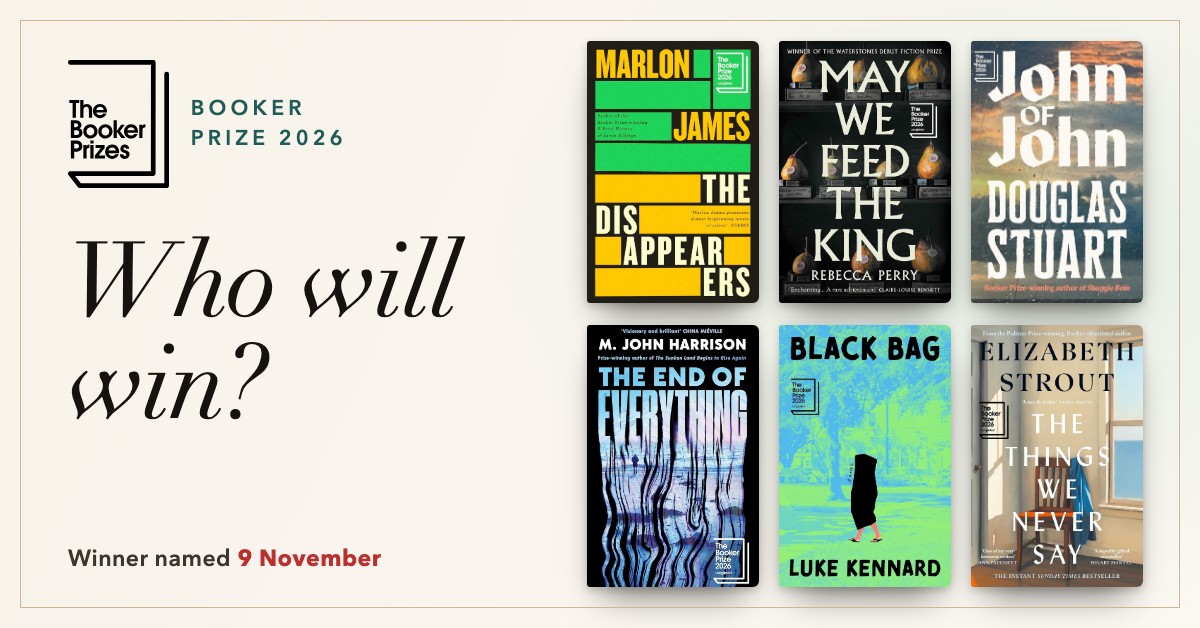
Our Booker Prize 2026 predictions, argued book by book: what each novel is attempting, where the critics divide, what the judges have revealed, and who we think wins on 9 November.

6 books6 reviewed by us3.8 our avg rating
A
adminUpdated 1 Nov 2026 · 15 min read
Booker Prize 2026 Predictions: Who Will Win, and Which Novel Deserves To?

Our Booker Prize 2026 predictions begin with something one of the judges said. In a Five Books interview in October, Rebecca Liu recalled a talk by Ben Okri, who divided novels into two kinds: "private garden" books, grown from the strange interior weather of an author, and "in the world" books, which answer to politics and public life. Now and then, Liu suggested, a single novel manages both, and that may be what makes a future classic.

It is the most useful thing anyone on this panel has said in public, because it turns a betting question into a critical one. Every book on this shortlist can be sorted by Okri's test. Only one or two survive it cleanly.

We think The Disappearers by Marlon James wins on Monday 9 November at Old Billingsgate. We think May We Feed the King by Rebecca Perry is the likeliest upset, and that moved after we went back to the evidence. What follows is the argument, including the place where we got something wrong.

0/6
How many have you read?Tick “I’ve read it” on each book. Saved in your browser, no account needed.

Our Booker Prize 2026 Predictions, Ranked

Now Book Sept
1 The Disappearers by Marlon James 1
2 May We Feed the King by Rebecca Perry 3
3 John of John by Douglas Stuart 5
4 The End of Everything by M. John Harrison 2
5 Black Bag by Luke Kennard 4
6 The Things We Never Say by Elizabeth Strout 6

These Booker Prize 2026 predictions forecast what five people will agree on. They are not a list of our favourites, which is why a ranking can move while the ratings stay still.

A Correction to Our Booker Prize 2026 Predictions

In our shortlist guide we said the judges gave The Disappearers their longest answer, and Strout's novel their flattest. We went back and counted the judges' published notes. Perry's runs to about 930 words and Stuart's to about 820. Strout's is around 600, James's nearly the same, Kennard's about 450 and Harrison's under 370.

So we were wrong, and the error flattered our own pick. Booker Prize 2026 predictions built on a miscount are worth nothing, so we have rebuilt ours. The notes are unsigned and at least one slips into the first person, so length may only show which judge held the pen. Even so, the two longest pieces of advocacy on the page belong to Perry and Stuart, and the shortest to Harrison, whom we had placed second. Hence the new order.

What the Panel Means for Booker Prize 2026 Predictions

Liu told Five Books that she was drawn to rich sentences and to novels making surprising, risky choices, and that Antrobus and Lockwood taught her to read with a poet's eye and ear. Two poets on a panel of five is not a footnote. Kennard and Perry are both prize-winning poets themselves, and Harrison's sentences are the reason anyone reads him.

Liu also said something that should make anyone writing Booker Prize 2026 predictions nervous, us included. The judges are not meant to weigh an author's record, and Liu went as far as covering biographies and author photos with post-it notes. The repeat-winner argument assumes a room that remembers. This one is trying hard not to.

Mary Beard's shortlist statement promised writing that would surprise readers and challenge their certainties, and at the longlist she said great books are not cosy. Beard also admitted that "I just wish I could have written that" kept running through her head, which suggests a chair who is reading for prose as well as for argument.

The Case for Each Novel

01
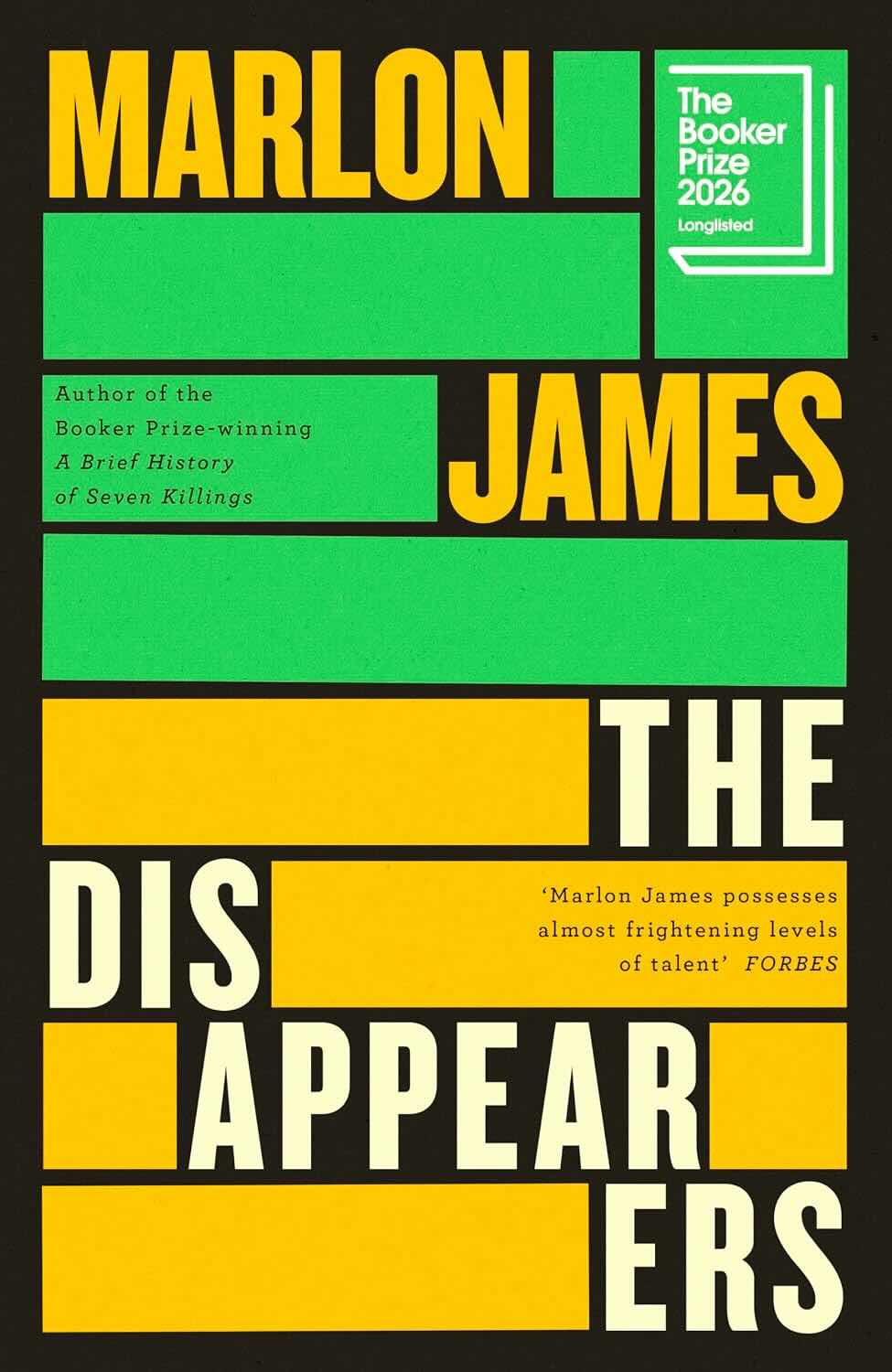
The Disappearers by Marlon James

The Disappearers

by Marlon James · 2026
Some men are killed. Some are simply mislaid.

This is the book most obviously trying to do what Okri described. Its starting point is public: a homophobic attack on a theatre company in Kingston in 1988, set against the AIDS years and the dancehall hits that made hatred singable. But its method is private to the point of obsession. James gives the story to a teenager's diary, to the attackers' own testimony, to a survivor whose only language is borrowed from rock records, to the letters of an ageing Wildean, and refuses to let anyone narrate twice.

The formal idea matters more than the size. The play the company rehearses, Fortune and Men's Eyes, takes its title from Shakespeare's Sonnet 29, and the novel is full of men using literature as equipment for survival. The judges call Wilde, Rechy and Auden "live ammunition" in the characters' arguments. In The Atlantic, Emma Sarappo called it a gay novel about the uses of a gay novel, and that is the best short description we have seen. The title works four ways: the men who vanish, those who make them vanish, those who erase themselves to stay alive, and the epidemic. Stephanie Burt, also in The Atlantic, drew the sharpest contrast with A Brief History of Seven Killings: that book was about men reaching for power, and this one is about what internalised rejection does to a person.

Why it could win. The judges' note says it holds, arguably, more truth than any work of nonfiction could manage in the same setting, a remarkable sentence for a panel to publish. Dwight Garner of The New York Times went further, calling it the novel of the decade. It meets Beard's test: nobody will call it cosy. A Caribbean novel of this reach also answers a line the judges drew themselves, placing James in descent from V.S. Naipaul and Jean Rhys.

Why it might not. The dissent is serious and it is not about taste. In the London Review of Books, Adam Mars-Jones argued that the book lacks the historical need for its length that Seven Killings had, and that its characters' reading has little to do with their lives. That goes straight at the novel's central conceit. Anthony Cummins in the New Statesman wondered whether the subject, rather than the writing, explains its force. Our own review found a middle that circles. It also failed to reach the National Book Award's five finalists after being longlisted. Different jury, same question: is it an event, or a great novel?

We still think it wins, because Liu's test rewards exactly this kind of overreach. Our review of The Disappearers has the detail, and it comes with the strongest content warning on this list.
02
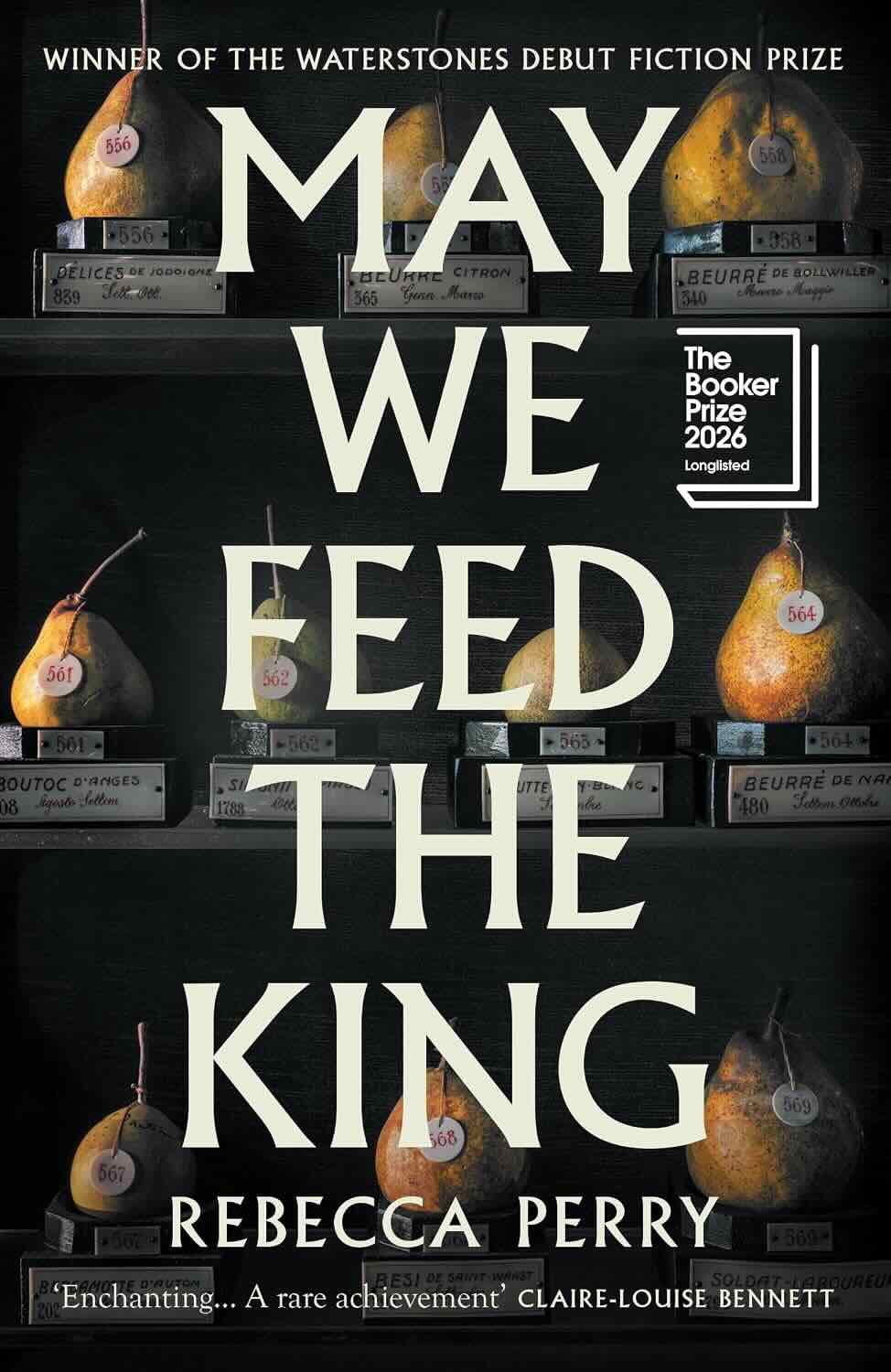
May We Feed the King by Rebecca Perry

May We Feed the King

by Rebecca Perry · 2026
She builds rooms that look as though someone has just left them.

Here is the surprise of the judges' notes. A debut about a curator and a medieval king looks like the purest private-garden book on the list, all replica Camembert and palace rooms. Then the note turns and reads it as a book about the present: hardened nationalism, the wars fought over what a country supposedly once was, and the certainty with which people invoke a glorious past. That is a judge arguing, in print, that this quiet novel passes Okri's test.

It is a serious argument. Perry's king wants to garden, which makes him contemptible, and the records about him were assembled by people with reasons to belittle him. The obvious ancestors are the ones the TLS named, Julian Barnes's Flaubert's Parrot and A.S. Byatt's Possession, the latter a Booker winner. Yet the more telling comparison is with Hilary Mantel. Wolf Hall fills the silences in the record with a mind so vivid that we forget they were silences. Perry leaves the holes open and makes us watch ourselves trying to fill them. Melissa Harrison's Guardian review describes exactly that frustration, and says it is the point.

Why it could win. It has the longest note, the best-made structure on the list, and a stillness the prize has lately rewarded: Samantha Harvey's near-plotless Orbital won in 2024.

Why it might not. The reservations are real and they all concern the same thing. Sam Sacks in The Wall Street Journal found it clever but deathly boring. The Times thought the sensibilities modern and the medievalism a mishmash. Erin Maglaque in the New Statesman asked how much stillness a novel can hold, which is a fair question to put to five tired people in a final meeting. Only six debuts have ever won, and a book that withholds this much must persuade a room to love an absence.

Our review of May We Feed the King called it a debut of extraordinary control. Our first Booker Prize 2026 predictions, in July, ranked it twelfth of thirteen. We no longer trust our instinct against it.

03
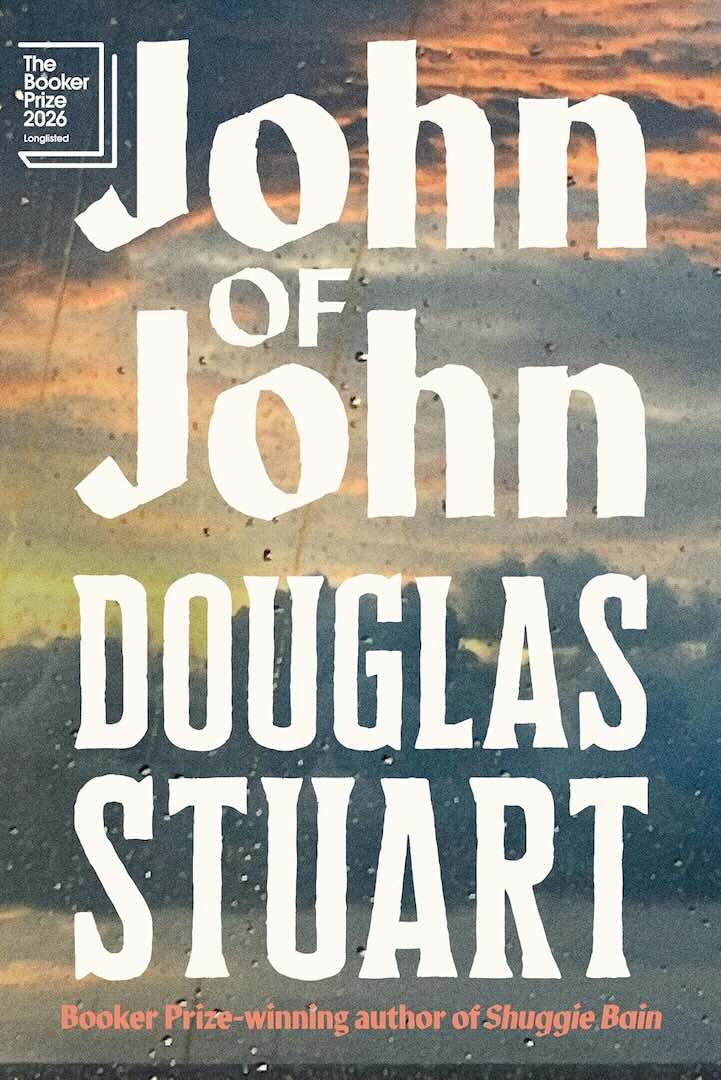
John of John by Douglas Stuart

John of John

by Douglas Stuart · 2026
A slow, color-soaked novel of duty, faith, and the long shadow of family secrets on the Isle of Harris.

Nobody else on this list is so committed to the old contract between novelist and reader. A son comes home to a Hebridean croft and a Presbyterian father, and the book takes its time over weather, wool and the things neither man can say. Its most interesting move is the title. Asked who he belongs to, Cal answers with a genealogy, and the novel slowly shows what it costs to be defined by a line of men who cannot speak to one another.

The judges make the boldest claim for it of any book, and it has nothing to do with Scotland. At a time when machines can generate blocks of text in seconds, they say, there is something radical in a writer sitting down to apply sustained attention, as the father and son do at their loom. That turns a slow novel into a manifesto. It also solves the private-garden problem from the opposite side: an intensely local book becomes a statement about what human making is for.

Why it could win. Critical agreement is the widest on the shortlist. Reviewers in The Boston Globe, Vulture and The Irish Times all called it his best, and The Times said it was hard to imagine the shortlist without it. Readers love it, and a final meeting needs a book that nobody hates. If the first choices cancel out, this is where a compromise could land.

Why it might not. Sacks found the central men childish and the sense of captivity onerous, and Michael Arditti in The Spectator doubted that a man of John's Calvinist belief could be so indifferent to damnation. That second objection is the serious one, since the novel rests on the credibility of that faith. Our review of John of John asked whether some of its restraint is really withholding. A win would make Stuart the second-fastest repeat winner after Mantel, and the Booker Prize 2026 predictions of the bookmakers rate it higher than ours do.

04
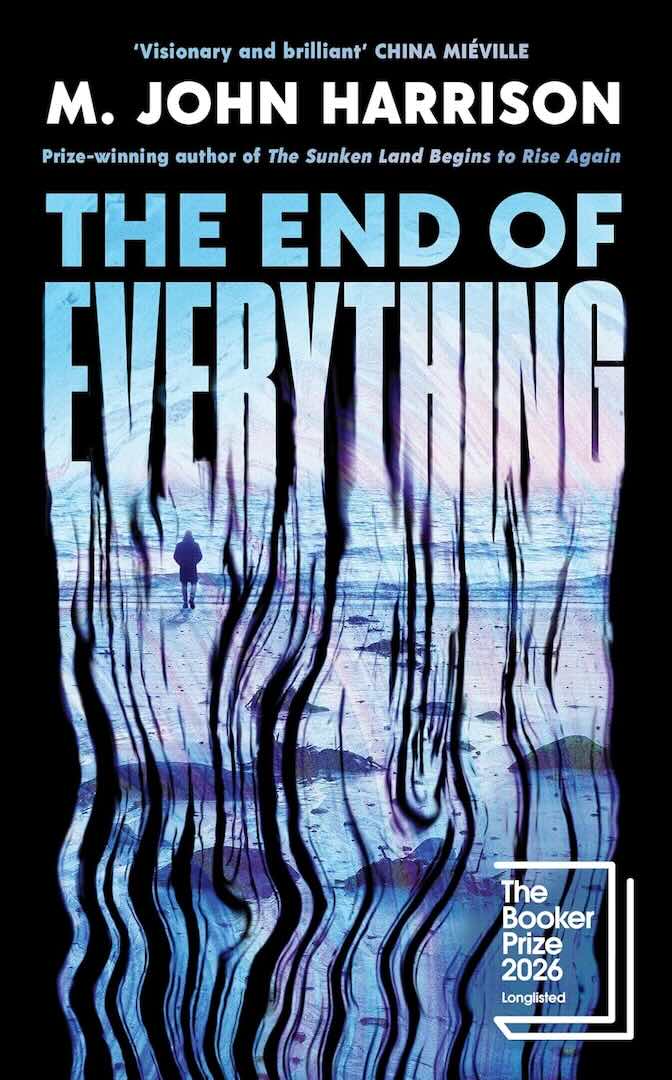
The End of Everything by M. John Harrison

The End of Everything

by M. John Harrison · 2026
The sea gives back what we threw away. Some of it is learning to speak.

In 2007 Harrison dismissed the worldbuilding of much science fiction and fantasy as "the great clomping foot of nerdism", and he has spent half a century proving the alternative. Something has occupied the City of London. Nobody knows what. Theories multiply, the sea returns objects that learn to speak, and the book offers no explanation. Its subject is the gap between an event and an account of it, which makes it the most exact novel here about living through the 2020s. Harrison writes what it feels like not to be told.

The judges' most original observation concerns his dialogue, which they describe as flotsam scavenged and repurposed, a kind of decoupage. Language in this novel behaves like everything else on the beach. In our reading the great creation is Marnie, the aunt who commits an appalling act and carries on, written without judgement or psychology. It is the coldest passage on the shortlist, and the bravest.

Why it could win. Helen Macdonald wrote in The Observer that she did not expect to read a better book this year. Reviews in The Guardian, The Times and The New York Times Book Review were glowing, while the prize has lately shown an appetite for unease: Paul Lynch's dystopian Prophet Song won in 2023. At 81 he would be the oldest winner in its history. Liu's phrase for it, close to poetry, is high praise from a judge who cares about sentences.

Why it might not. Liu's own account of the book is that violent acts happen and nobody knows why. Five people must agree to love that. Edmund Gordon in the London Review of Books conceded there is little point in trying to make it add up, and even Dave Kim's admiring New York Times review found it frustrating at times. Our review of The End of Everything gave it three stars for that reason. This is the title most likely to embarrass our Booker Prize 2026 predictions, and if it wins, the prize will have honoured a career as much as a novel, whatever the post-it notes say.

05
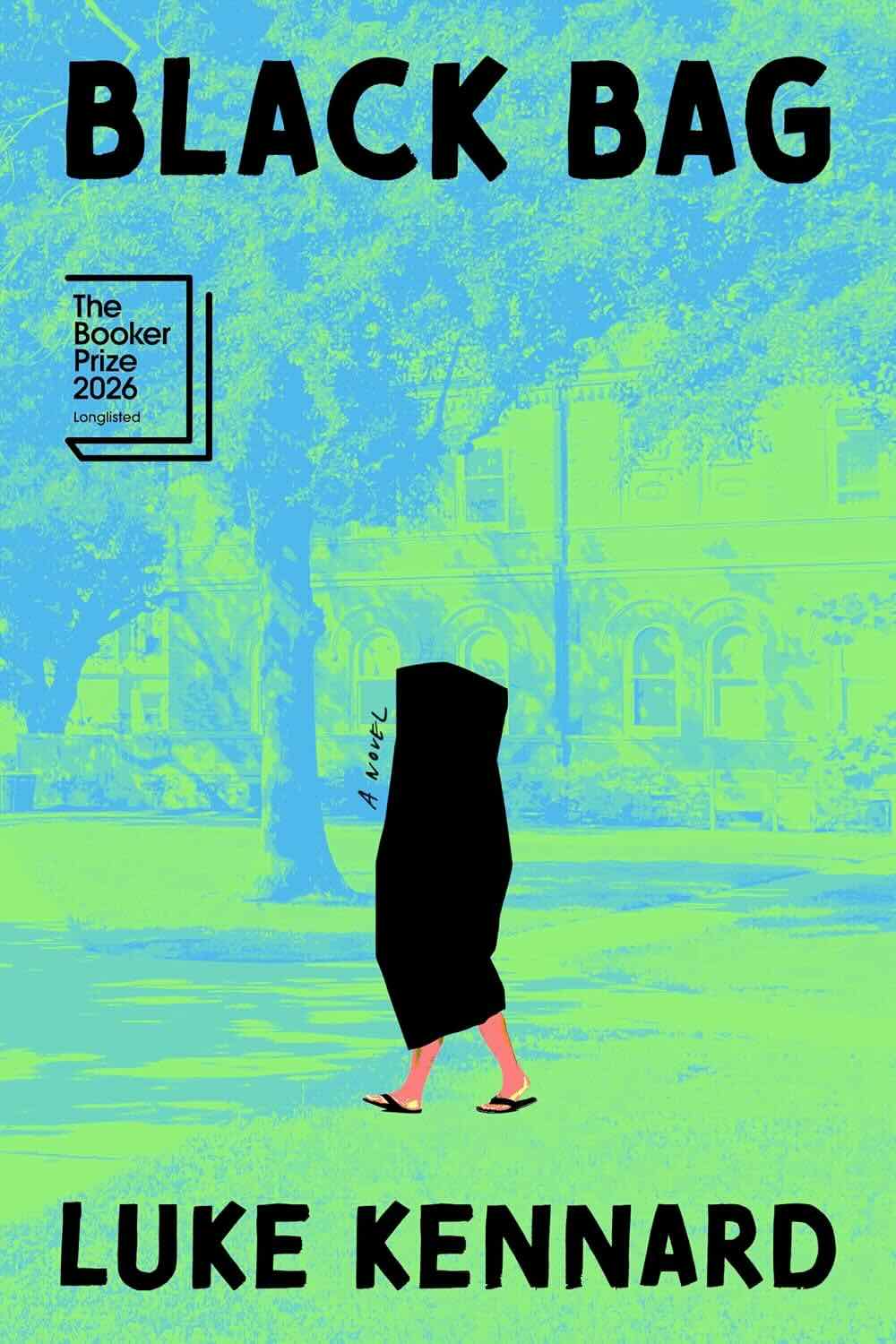
Black Bag by Luke Kennard

Black Bag

by Luke Kennard · 2026
Nobody can see him. It is the best he has ever been.

An unemployed actor is paid to attend lectures inside a leather bag, in a replay of a real 1960s experiment at Oregon State testing whether exposure turns hostility into affection. It is a superb comic idea, because it literalises what we already do online: be present, be unseen, be monetised. The barely named narrator refuses to describe his own parents, who remain two pillars of stone for the whole book. That joke becomes an ethic and then the most moving thing in the novel.

Kennard won the Forward Prize for poetry, and it shows. Liu quoted lines to Five Books the way people quote lyrics. The line of descent runs from Lucky Jim through The Diary of a Nobody, and the novel's real target is what the narrator's friend Claudio calls the great river of shame under masculinity.

Why it could win. It may have the warmest press of any book on the list. All five reviews collected by Book Marks are raves, including The Guardian, The Times and the TLS, and Zadie Smith called it the funniest and smartest novel she had read in some time. The judges' test was whether its jokes survive a second reading, and they say they do. Comedy has won before, most recently with Howard Jacobson's The Finkler Question in 2010 and Paul Beatty's The Sellout in 2016.

Why it might not. Comic novels are still a rare choice for this prize. Our notes found the crypto satire broad and the erotic monologues long. Liu's praise is warm rather than awed: a funny and clever book. It is a private garden, beautifully kept, with a view of the world over the wall. Our review of Black Bag said nothing here is better company, and that may be a compliment the Booker does not pay.

06
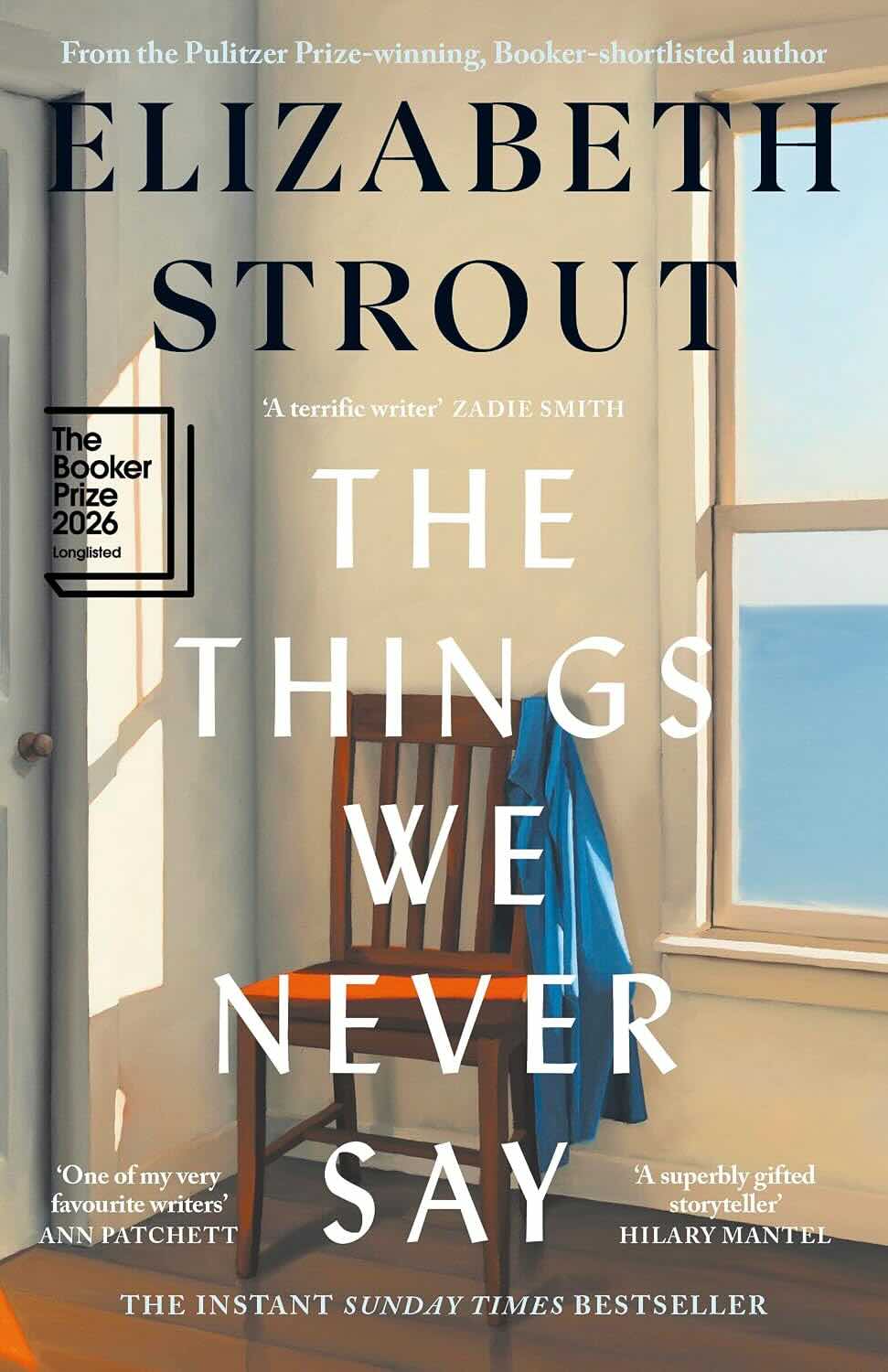
The Things We Never Say by Elizabeth Strout

The Things We Never Say

by Elizabeth Strout · 2026
A meditation on loneliness, marriage, and the secrets we carry in plain sight

Strout's achievement is to take the one subject that deforms nearly all fiction, the American present, and write about it in a voice that does not raise itself. Artie Dam teaches history, specifically the Civil War, in the months around the 2024 election. A Jung epigraph sets the question: loneliness comes from being unable to share what matters most. Liu's reading is the best we have seen, that a decent man is slowly corroded as the world around him sours. Public and private are the same weather here, which on paper makes this another candidate for Okri's double.

The judges proposed a new genre for it, "radical normalcy", and argued that it may one day read as a historical novel. Their claim that anybody could read it and everybody should is more ringing than we allowed in September. The Times called it the first great novel about Trump's America.

Why it could win. It is the third nomination for a writer many feel is overdue, it has passionate admirers, and Maggie Shipstead's New York Times Book Review piece notes that it rewards rereading, this panel's stated test.

Why it might not. The strongest objections come from her natural allies. Priscilla Gilman, who calls herself one of Strout's most ardent champions, argued in The Boston Globe that the book loses its bearings on the way to parable and that its bleakness feels programmatic. Sacks found the topical passages grafted on, and Rohan Maitzen's TLS review was also mixed. Against Beard's warning about cosiness, a judge's own phrase, a calm antidote, may count against it. Our review of The Things We Never Say found it patient, compassionate and uneven, and we were not persuaded by its narrator's sweeping pronouncements.

What the Six Novels Are Arguing About

Read together, the shortlist has more shape than a list of six usually does. Gaby Wood of the Booker Prize Foundation named its common thread as isolation, and asked what we can know of each other. Two more specific arguments run underneath.

The first concerns men who cannot speak. Stuart's father and son talk through colour and cloth. James's survivors speak through other people's songs. Kennard's narrator hides in a bag, Perry's king is despised for refusing to act like one, and Artie Dam whistles when he is nervous. The panel says it worked from no checklist, yet it chose five studies of men in trouble. The exception is Harrison's Marnie, who says and does exactly as she pleases.

The second concerns imitation, and it feels like the argument of the moment. Perry's curator lovingly fakes food. Harrison's artefact learns to pass as human. Kennard's actor has his gestures harvested by an AI company. James's cast perform a borrowed play to claim a life of their own. The judges praise Stuart for the patience of doing it by hand. Five of the six novels are asking what remains when a surface can be copied, in the year a machine can produce a passable paragraph on request.

Booker Prize 2026 Predictions From the Bookmakers

James is the clear favourite, at 6/4 both in William Hill's prices reported by The Scotsman on 24 September and in OLBG's update of 15 October. Stuart was second in both, at 2/1 and then 7/2, with first-time shortlistees close behind. Literary markets are thin and easily moved by name recognition, so treat these as dated snapshots and not as advice to bet.

When Is the Booker Prize 2026 Winner Announced?

The winner is announced on Monday 9 November 2026 at Old Billingsgate in London, and receives £50,000. Each shortlisted author receives £2,500. The Booker Prize Foundation has not published an exact announcement time, but its competition terms describe a ceremony and dinner at around 7pm. That is 12.30am on 10 November in India and 2pm in New York, and in past years the name has come later in the evening. Readers in India should expect the news on the morning of 10 November.

Booker Prize 2026 Questions, Answered

Who is the favourite to win the Booker Prize 2026?

Marlon James leads most Booker Prize 2026 predictions with The Disappearers, at 6/4 in the most recent prices we could verify, dated 15 October.

Who are the judges of the Booker Prize 2026?

Mary Beard chairs a panel of Raymond Antrobus, Jarvis Cocker, Rebecca Liu and Patricia Lockwood.

Has anyone won the Booker Prize twice?

Yes, four writers: J.M. Coetzee, Peter Carey, Hilary Mantel and Margaret Atwood. James or Stuart would be the fifth. Our full list of Booker Prize winners has every year since 1969.

Which Booker Prize 2026 book should I read first?

Black Bag for pleasure, John of John for a long immersive story, and May We Feed the King if you like a puzzle. Leave The Disappearers until you have time and stamina for it.

Our Final Call

If we held the vote, we would give it to The Disappearers, flaws and all. It has the greatest ambition on the list and the longest reach, it is the one book here that could change what a reader thinks is possible in a novel, and it comes closest to the double Liu described. The best-made book is May We Feed the King, and on a different day, with one judge's mind changed, it takes the prize.

So our Booker Prize 2026 predictions end where they began: The Disappearers to win, May We Feed the King the likeliest surprise, and The End of Everything the book most likely to prove us wrong. We will mark this publicly when the name is read out. Our guide to all thirteen longlisted novels covers the books that fell away, and the official Booker Prize site has extracts and the judges' notes in full.

The Booker Prize logo is a trademark of the Booker Prize Foundation and is used here to identify the prize. The Bookish Elf is not affiliated with the Booker Prizes.

The list at a glance

#BookAuthorYearOur rating
01The DisappearersMarlon James2026★★★★★4.0
02May We Feed the KingRebecca Perry2026★★★★★4.0
03John of JohnDouglas Stuart2026★★★★★4.0
04The End of EverythingM. John Harrison2026★★★★★3.0
05Black BagLuke Kennard2026★★★★★4.0
06The Things We Never SayElizabeth Strout2026★★★★★4.0

Keep reading

LEAVE A REPLY

Please enter your comment!
Please enter your name here