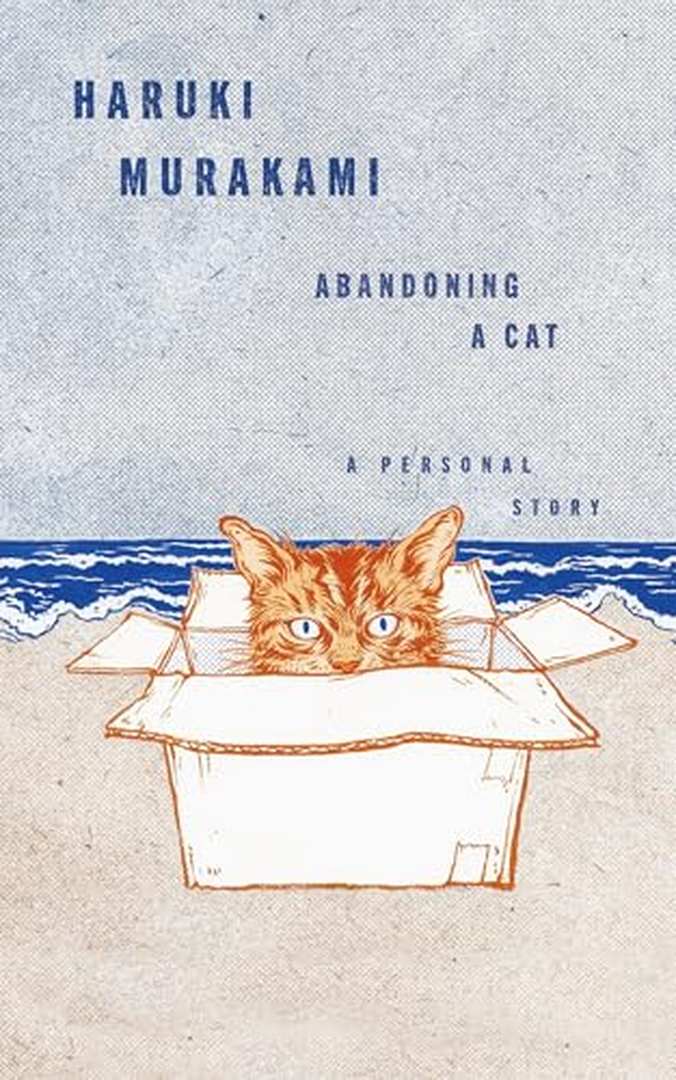






A man pedals a bicycle along the Shukugawa River on a summer afternoon in the mid-1950s, his small son on the back holding a box with a grown female cat inside. They leave the box among the trees at Koroen beach, about two kilometres from home, and ride straight back without looking round. When they open the front door, the cat is already there, tail up, greeting them. Nobody ever works out how. Abandoning a Cat by Haruki Murakami starts with that small, unsolved puzzle and uses it as a key to a much larger one: who his father was, and what the war did to him. Translated by Philip Gabriel and illustrated by Yuko Shimizu, the English edition is out now from Knopf (20 October 2026). It first appeared in Japan in 2020.
It is short. Abandoning a Cat by Haruki Murakami runs to roughly ten thousand words with its afterword, about an hour’s reading, dressed by Knopf as a gift book with a Chip Kidd cover. Know that going in and the brevity reads as a choice.
The Priest Who Was Sent to War
The thread that carries the book is Chiaki Murakami, born in Kyoto in 1917, the second of six sons of a temple priest. Murakami builds him out of facts rather than adjectives. The grandfather, a convivial priest at the Anyoji Temple, is killed by a train at an unattended crossing in a typhoon in 1958. That night the boy watches his mother cling to his father and beg him not to take over the temple. He nods without expression, and in the end the eldest brother leaves his job at the tax office to do it instead.
Then the war, told with patience. Chiaki was studying to become a priest and was exempt from service, until he missed a piece of paperwork and was drafted at twenty, in 1938. He shipped to Shanghai with a transport regiment that handled supplies and horses across central China. He was called up twice more, released once just days before Pearl Harbor, and survived. The 16th Division he had served with was later almost annihilated on Bataan and again on Leyte, where more than 96 percent of its men died. Murakami sets the numbers down without drama, beside the image of his father, every morning before breakfast, eyes closed in front of a small glass case, praying for the Japanese and the Chinese dead of the Second Sino-Japanese War.
The best material is the haiku. Chiaki joined a haiku circle at the Seizan school and kept writing through the war, posting poems back to the school journal from the front. Murakami’s reading of them is the most tender thing in Abandoning a Cat by Haruki Murakami: a soldier could not write his real feelings in letters past the censors, so he coded them into seventeen syllables. One poem from 1940, about the visiting Hitler Youth calling to the deer at Nara, is a tiny masterpiece of historical irony, and the son’s delight in it feels like the first moment he is reading his father as a writer, not a parent.
There is one wartime story the father told only once, about the execution of a Chinese prisoner, and the son has carried it ever since. Murakami treats it carefully and briefly, and so will we.
A Son Who Did Not Ask
The counter-thread is the son, and it is where Abandoning a Cat by Haruki Murakami is most honest and least complete. For years Murakami put off looking into his father’s service because he feared he would find him at Nanjing in 1937. He did not ask while his father was alive. When he finally checked the dates, his father had been drafted almost a year after the massacre, and the relief he describes is physical.
The other silence is between them. Chiaki wanted his son to study hard and take the scholarly path the war had closed to him. Murakami preferred novels, music, mah-jongg and dates, and the disappointment curdled on both sides. The essay is lovely about the good years, Sunday mornings scanning the newspaper for Westerns and war films, until the boy had seen practically every John Ford picture of the decade, and Koshien Stadium with a Hanshin Tigers fan who sulked after every loss. Then come two decades of silence, and a meeting in a Nishijin hospital when the father is ninety and gaunt, where they manage an awkward reconciliation.
Murakami tells us he will not go into the details of the estrangement, and he does not. Readers of his fiction, full of unreadable fathers, will feel what he is holding back.
Where Abandoning a Cat Gives Ground
- The middle is a unit history. Regiment numbers, divisional reorganisations, dates of landings: necessary for the argument, but for a dozen pages Abandoning a Cat by Haruki Murakami reads like a military archive, and the father disappears behind the paperwork.
- The rift is withheld. Twenty years without speaking is the emotional core of the son’s story, and it gets a paragraph. That is his right, but it leaves the reconciliation scene underpowered.
- Some of it repeats. The afterword restates the essay’s central idea, that the author exists only by accident of history, almost point for point.
- It is slight for the price. As an object it is handsome. As a read it is one sitting, and readers expecting a full memoir in the vein of his running book should know that up front.
Read These Next
- The City and Its Uncertain Walls by Haruki Murakami, also translated by Gabriel, for the fiction that hides the same longing behind a wall.
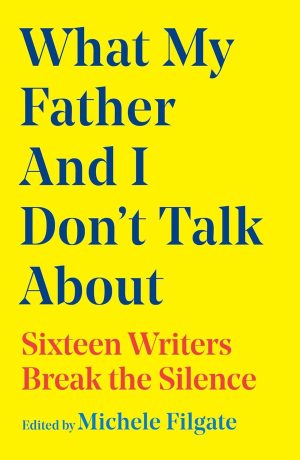
- What My Father and I Don’t Talk About by Michele Filgate, an anthology of writers circling the same unspoken subject.
- Underground by Haruki Murakami, his book-length nonfiction on the 1995 Tokyo sarin attack, for the reporter in him.
- Maus by Art Spiegelman, the definitive book about a child inheriting a parent’s war.
About Haruki Murakami and His Translator
Murakami was born in Kyoto in January 1949, the only child of two teachers of Japanese, and grew up near Kobe, the landscape of this essay. He says he wrote Abandoning a Cat by Haruki Murakami after years of wanting to set down his father’s life and not knowing where to start, until he remembered the beach. A few facts worth knowing:
- Before writing he ran a Tokyo jazz bar called Peter Cat from 1974 to 1981. The cats in his life go back a long way.
- He has won the Franz Kafka Prize (2006), the Jerusalem Prize (2009) and the Princess of Asturias Award for Literature (2023).
- Philip Gabriel, a professor at the University of Arizona, has translated Kafka on the Shore and Killing Commendatore, and also Hiro Arikawa’s The Travelling Cat Chronicles.
- Gabriel also translated Dinner at the Night Library by Hika Harada, another book we have reviewed.
The Last Word
Near the end Murakami compares each of us to a single raindrop in a downpour over a wide plain: replaceable, nameless, and still carrying its own history and the duty to pass it on. It is the right image for Abandoning a Cat by Haruki Murakami, a book about one ordinary man who survived three call-ups by luck, and the son who would not exist if he had not.
The cat beat them home. The father, it turns out, spent the rest of his life trying to.
Content notes tap to reveal
Where to read Abandoning a Cat
Amazon lists the current Kindle, print and audiobook editions, and shows whether the ebook is in Kindle Unlimited right now.
To borrow it free, try your library: Libby and OverDrive lend ebooks and audiobooks with a library card, and WorldCat finds print copies near you.
We don’t link to “free PDF” sites. Those copies are pirated and pay the author nothing.