
The salesman arrives just ahead of the weather. He walks up the street of Green Town, Illinois, on a grey October afternoon with a leather case full of iron, and he stops at a lawn where two boys lie carving whistles from twigs. He has no customers, they have no money, and still he runs his hands over the porch posts of both houses like a doctor listening for a heartbeat. One house, he decides, will be struck tonight. Not the fair-haired boy’s. The dark one’s. He leaves them a rod etched with scarabs and alphabets nobody speaks, and he hurries off toward a storm that never quite comes. Something Wicked This Way Comes by Ray Bradbury opens with a stranger choosing which child is in danger, and the remaining fifty-three chapters prove him right.
Two Boys Born Either Side of Midnight
Will Halloway and Jim Nightshade live next door to each other and were born two minutes apart, one just before Halloween and one just after. Bradbury makes that pairing the spine of the book. Will is the careful one, the boy who fetches the ladder. Jim is the boy who wants to see what happens if you take the rod down again. They run everywhere together, to the library, to the edge of town, over an old boardwalk they have tuned like a xylophone, and neither ever tries to win a race.
What keeps this from being a nostalgic portrait is how clearly Bradbury sees the crack in it. Jim has started looking in windows Will would rather not look in, and he has started wanting to be older, faster than Will can bear. Every scene between them carries the same question: when one friend reaches for adulthood and the other holds on, who lets go first? Will’s father, the library janitor who reads alone late into the night, sees it before the boys do, and his brief reverie about the two of them in chapter three is as good a description of childhood friendship as anything in American fiction.
The pleasure here is also tonal. Something Wicked This Way Comes by Ray Bradbury is unusually good on the texture of October in a small town: shop lights going out at the stroke of nine, a cigar-store owner standing as still as the wooden Indian beside him, paper handbills skittering like animals down the street. The horror arrives through ordinary things made strange, and the strangeness is always seen through boys who half want it.
What the Carousel Offers
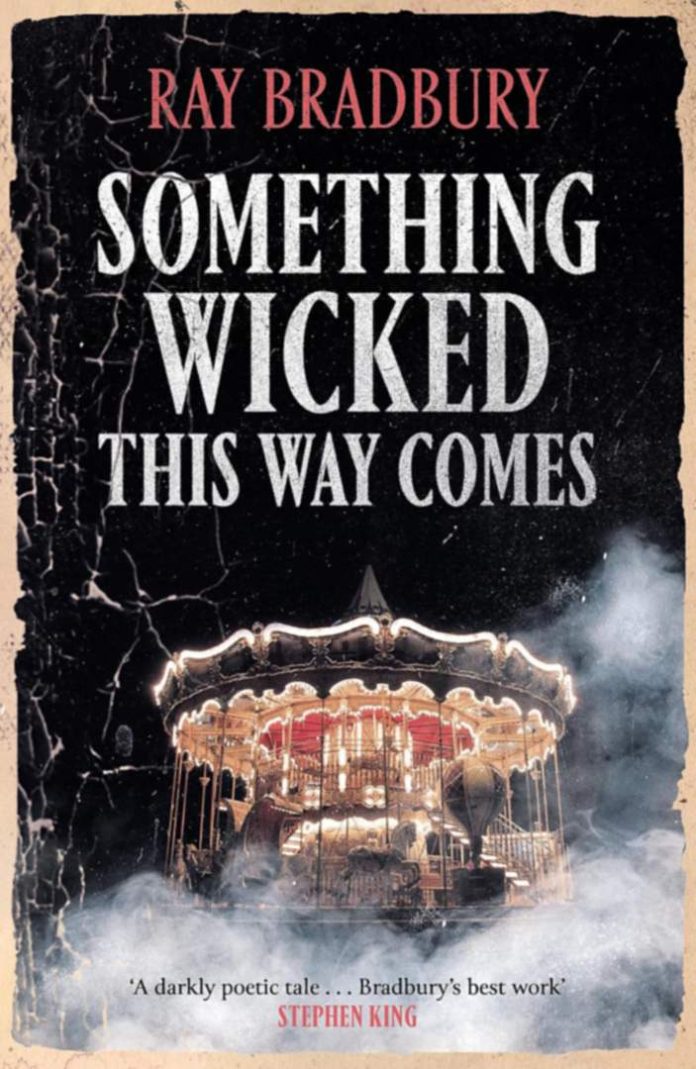
The carnival comes in at three in the morning on a train with a calliope that plays itself, and by daylight it looks shabby and harmless. Bradbury’s great idea is the merry-go-round. Ridden forward, it ages you a year with every turn. Ridden backward, it takes a year away. The scene in which the boys, hiding in a tree, watch a red-haired carnival man ride it in reverse until something much smaller climbs off is one of the classic set pieces of horror fiction, and it is staged with total control.
Everything sinister in the book grows from that machine. The carnival’s owner, Mr Dark, is a ringmaster whose skin is a ledger of everyone he has bought, and what he sells is time itself. He offers each person the age they most want to be, and Bradbury is shrewd about who is tempted. The boys’ schoolteacher wants back the girl she was. Jim wants to be twenty. Will’s father, who married late and fears he is too old to be a proper parent, is offered his own lost decades.
That last offer is what lifts Something Wicked This Way Comes by Ray Bradbury beyond a scary carnival story. It is a novel about the fear of ageing, written by a man past forty, disguised as a novel about being thirteen. The real enemy is not death but the longing to be some age other than your own. The weapon Bradbury eventually finds against it is surprising and entirely his own, and it is best discovered on the page.
Where Something Wicked This Way Comes Gives Ground
- The library sermons stop the clock. Two chapters in the middle of Something Wicked This Way Comes by Ray Bradbury hand the book over to Charles Halloway’s long speeches on fools, sin, love and death. Some of the lines are lovely, but the chase halts while he states the themes outright.
- The prose sometimes smothers the action. Bradbury piles image on image, and in a few key moments, such as the cataloguing of Mr Dark’s tattoos and the description of a stunted carnival worker, the sentences pile up until you lose track of who is where.
- The women are props. The two mothers barely leave their kitchens, the schoolteacher exists mainly to be punished for her wish, and the one female villain is defined by her withered body.
- One scene has aged badly. The final chapter uses a minstrel-era term and a run of Stephen Foster songs that modern readers will wince at.
Read These Next
If Something Wicked This Way Comes by Ray Bradbury leaves you wanting more autumn dread, our more Halloween classics shelf is the place to start. Closer matches:
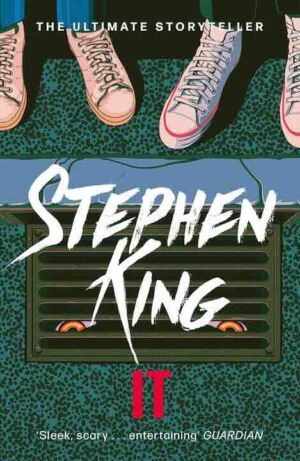
- It by Stephen King, the most obvious descendant: friends on the edge of adolescence and an evil that feeds on fear.
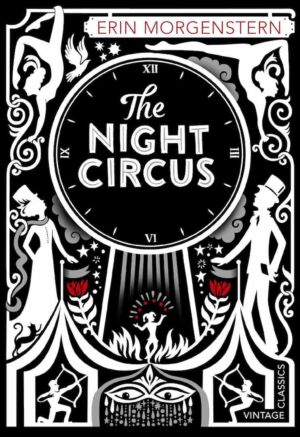
- The Night Circus by Erin Morgenstern for a travelling show that opens at nightfall, gentler and more romantic.
- The Ocean at the End of the Lane by Neil Gaiman for a child facing something ancient while the adults look the other way.
- Dandelion Wine by Ray Bradbury, the summer companion set in the same town.
Ray Bradbury, and Where Something Wicked This Way Comes Came From
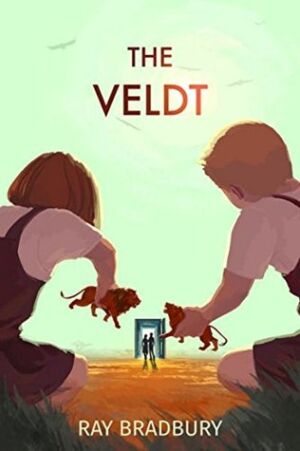
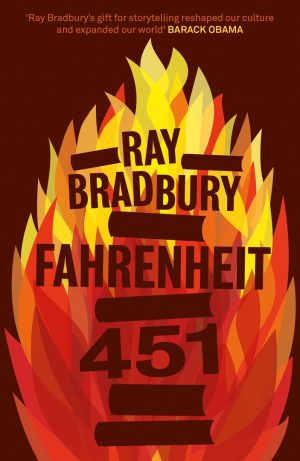
Ray Bradbury was born in 1920 in Waukegan, Illinois, and died in Los Angeles in 2012. He made his name with The Martian Chronicles in 1950 and Fahrenheit 451 in 1953, wrote hundreds of short stories (our analysis of The Veldt looks at one of the best), and received the National Medal of Arts in 2004 and a special Pulitzer citation in 2007. He was past forty when Simon & Schuster published Something Wicked This Way Comes by Ray Bradbury in 1962.
- The book began as a 1948 short story, “The Black Ferris”, which Bradbury reworked into a film treatment for his friend Gene Kelly in the 1950s. When no studio would fund it, he spent years turning it into a novel.
- The title is borrowed from the witches in Macbeth.
- Green Town is Waukegan in disguise, and the book is a thematic follow-up to Dandelion Wine, trading its summer for October.
- Disney filmed it in 1983, directed by Jack Clayton from Bradbury’s own screenplay, with Jason Robards as Will’s father and Jonathan Pryce as Mr Dark.
- R. L. Stine has called it the scariest book he ever read.
What Stays With You
Not the carousel. What lingers from Something Wicked This Way Comes by Ray Bradbury is two boys racing each other through a dark town and never trying to win, and an old man finally deciding to run with them. Bradbury knew that growing up and growing old are the same frightening journey, and he wrote the one book that makes them feel like a single adventure.
Read it in October, with the window open. Count the turns.