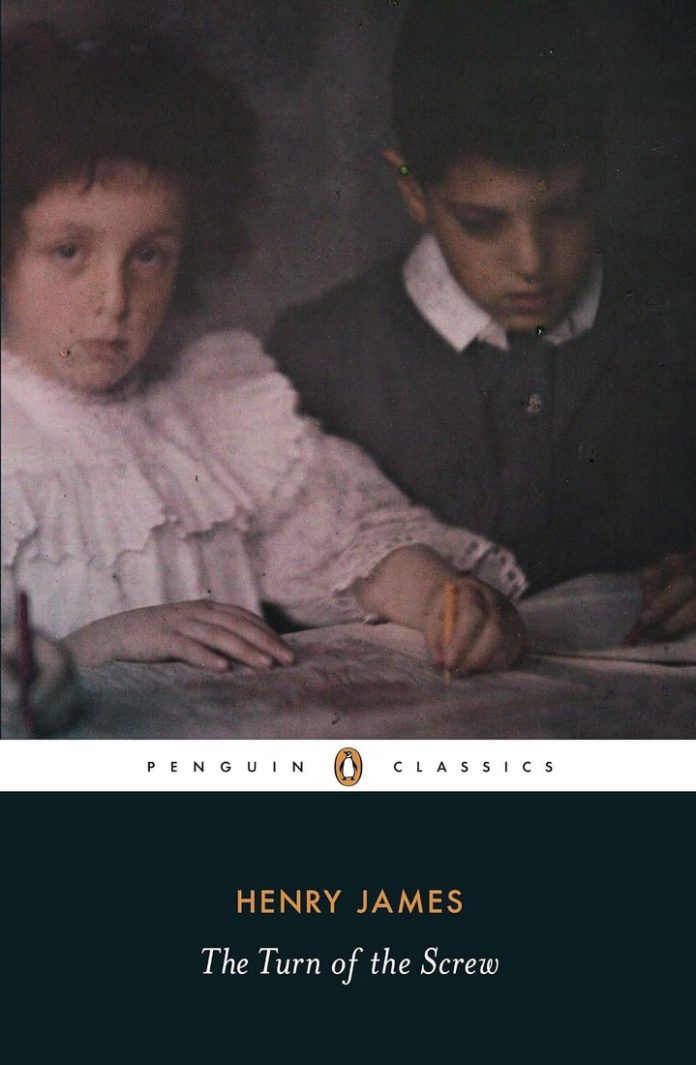

On Christmas Eve a group of guests has spent the evening frightening one another, and one of them, a man named Douglas, says he knows a story worse than anything they have heard. He cannot tell it yet. It is written down in a woman’s hand and locked in a drawer at his London flat, and he must post the key to his manservant and wait for the packet. The woman was his sister’s governess, ten years his senior and dead for twenty years. Two nights later he starts to read. The Turn of the Screw by Henry James is built like that from its opening page: a story passed from one keeper to the next, each telling only what they choose, with the reader holding the final copy.
How It Works: One Witness, Two Children
The manuscript belongs to a twenty-year-old parson’s daughter from Hampshire, on her first post. A handsome bachelor in Harley Street hires her to bring up his orphaned niece and nephew at Bly, his old family house in Essex, on one strict condition: she must never trouble him about anything. Dazzled, she agrees.
Bly comes with a kindly housekeeper, Mrs Grose, a golden eight-year-old named Flora and, within days, a letter from the school of her brother Miles saying he will not be taken back. It gives no reason. When Miles arrives, he is so beautiful and so gentle that the governess decides the charge must be absurd and resolves to say nothing to anyone.
Then, one June evening, she sees a stranger standing on one of the house’s two towers. Later he appears outside the dining-room window, staring in. When she describes him, the housekeeper names him: Peter Quint, the master’s former valet, who died the winter before. A woman in black follows, and she too has a name and a grave. From there the rules of The Turn of the Screw by Henry James are simple and merciless. Only the governess sees the visitors. She becomes convinced the children see them too and are hiding it. And everything we learn reaches us through her.
What The Turn of the Screw Does With Its Witness
This is the most argued-over ghost story in English, and the reason is mechanical. James gives us one first-person account and almost no means of checking it. The governess is our only camera, and an excitable one: proud of her courage, hungry for the absent employer’s approval, quick to leap from a child’s silence to a certainty about damnation. She is the textbook case of an unreliable narrator, except that James also hands her genuine evidence. Mrs Grose recognises Quint from a description down to his red whiskers and the master’s missing waistcoats, and nobody had mentioned him before.
That double bind is what makes The Turn of the Screw by Henry James more frightening on a second reading than a first. Every scene runs twice, once as a haunting and once as a young woman talking herself into terror, and the hair on your neck rises either way.
What works
- The daylight apparitions. James refuses gloom. Quint first shows himself on a golden summer evening, and the dead governess sits at the schoolroom table at noon. Ordinary light makes the figures far worse.
- The window scene. After Quint vanishes from the glass, the governess goes outside, puts her own face where his was and looks in. Mrs Grose walks into the room and recoils from her exactly as she recoiled from him. In one move, the watcher becomes the thing watched.
- Mrs Grose as the only check. The housekeeper cannot read, trusts her friend, and keeps seeing nothing. Her plain loyalty is the reader’s ballast and, in time, a source of unease of its own.
- Compression. At around forty thousand words it fits into a long evening, and the last chapters close like a vice.
Where It Gives Ground
- The sentences are hard work. James was moving towards his late style, and even dialogue arrives in broken-off phrases, doubled-back qualifications and italicised stresses. Newcomers may need fifty pages to find the rhythm.
- The frame is left open. Douglas and his fireside audience disappear once the manuscript begins and never return. The device that opens The Turn of the Screw by Henry James so beautifully has no matching close.
- The children are ideas as much as people. Miles and Flora are so angelic and so precociously witty that they rarely feel like a real eight- and ten-year-old, which serves the ambiguity but blunts the pity.
- The evil stays unnamed. Victorian reticence keeps whatever Quint and Miss Jessel did deliberately vague. That powers the dread, but the long night-time conferences between the two women circle the same ground more than once.
Read These Next
Our shelf of more Halloween classics includes several books that grew out of this one. If The Turn of the Screw by Henry James leaves you wanting more, try these:
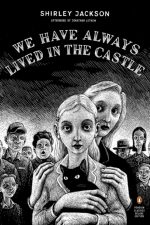
- The Haunting of Hill House by Shirley Jackson, for another lonely woman, another house, and a haunting that may live in the mind.
- The Turn of the Key by Ruth Ware, for the same set-up moved to a smart house in the Scottish Highlands, told by a nanny writing from prison.
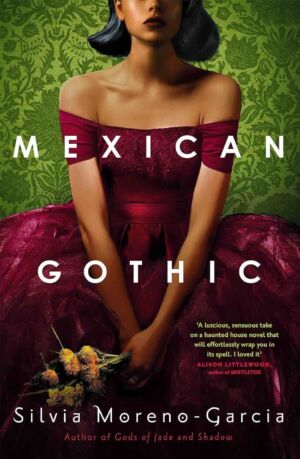
- Mexican Gothic by Silvia Moreno-Garcia, for a young woman alone in a decaying mansion whose secrets are in the walls.
- Affinity by Sarah Waters, for a Victorian lady visitor, a spiritualist prisoner and a narrator who sees what she wants to see.
About Henry James and Some Turn of the Screw Trivia
Henry James was born in New York in April 1843 and died in London in February 1916, a few months after taking British citizenship, with the Order of Merit awarded in the final weeks of his life. He made his name with Daisy Miller and The Portrait of a Lady, novels of Americans adrift in Europe, and he came back to ghosts more than once, most memorably in “The Jolly Corner”. He wrote this novella in late 1897, short of money and readers, for an illustrated American magazine that wanted a ghost story.
- The seed of The Turn of the Screw by Henry James was an anecdote told to its author over tea by Edward White Benson, then Archbishop of Canterbury, in January 1895, which he sketched in his notebook two days later.
- Collier’s Weekly ran it in twelve instalments between January and April 1898 and paid $900 for the serial rights.
- James dictated it to his secretary, William MacAlpine, who took it down in shorthand and typed it up the next day.
- Its first book appearance, in October 1898, was a volume called The Two Magics, paired with a now-forgotten story titled “Covering End”.
- In 1934 the critic Edmund Wilson argued that the ghosts were the governess’s hallucinations, opening the debate that still splits readers.
- The best-known film, The Innocents (1961), starred Deborah Kerr, with Truman Capote reworking the screenplay.
Worth Your Shelf
Not every reader will love James’s sentences, and the refusal to explain can feel like a trick on a first pass. But The Turn of the Screw by Henry James is that rare ghost story which grows more frightening once you know how it ends, because the question it plants was never really about the ghosts. It is about the woman telling you about them.
Read it once for the chill. Read it again to find out who you were afraid of.