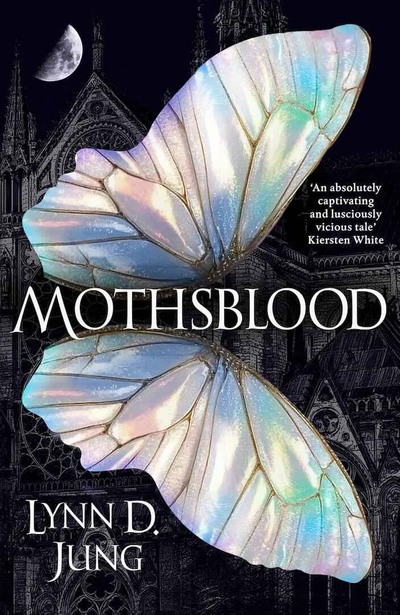



The first trial lasts ten minutes. One at a time, the first-years of Université Meurdrac are called into a small room in a converted cathedral on an island in the Seine, where the Grand Magistra waits behind a plain metal box. Inside are a soot-blackened burner, some quicksilver, a withered bezoar and a dead white moth sealed in a plastic bag. The task is three feats of classical alchemy: turn lead into gold, brew a panacea, and do something remarkable with the insect. Larkspur Lee, an entomology student from Oakland with no family name to lean on, runs out of time before the third. Then the moth moves. Mothsblood by Lynn D. Jung opens with that small, eerie triumph, and it is the cleanest scene in the novel.
How the Trials Work
Meurdrac never stopped training alchemists; the tourists photographing its spires simply do not know it. Power comes from lithmus, an energy every human carries but few can steer, channelled through runes and the seven Hermetic metals. Gold blasts, silver transforms, lead degrades, iron cuts a working clean through. Seven immortals, the Deathless, hold the secret of the Philosopher’s Stone, and one of them, Petronelle Flamel, has announced she will take her first apprentice in nearly a century. Every past apprentice has ended up immortal.
That is the hook Lark bites. The second trial is meant to be a dinner in Flamel’s private lounge with the four other finalists. By the end of the evening the guests are hallucinating, and Flamel is dead in her office with two flames painted on her forehead in her own blood. Lark has the same mark carved into her stomach.
The setup is efficient. Within the opening five chapters, Mothsblood by Lynn D. Jung has established the school, the stakes, the suspects and a secret its heroine would rather die than share. The suspects are her own cohort: the son of a pharmaceutical dynasty whose father may have bought his place at the table, a prodigy who has been sleeping in the labs, and a materials student better known for parties than for theory. The murder also strands Lark. With no Grand Magistra there is no apprenticeship, and with no apprenticeship there is no way out of the poverty she has been hiding from all of them.
What Lynn D. Jung Is Really Building
The murder looks like the engine, but it is closer to a pretext. What Mothsblood by Lynn D. Jung is actually about is the man who arrives in Paris for the memorial: Victor Goodwin, the celebrated Californian alchemist who chose Lark from a waiting room when she was twelve, trained her, branded her and was left behind when she fled. Within weeks he is teaching her classes. Soon he is running the school.
The structure keeps circling back to him. Five parts, each named for a moth species and opened by an in-world epigraph, chart a metamorphosis. Chapters carry French titles. Four past-tense interludes interrupt the present-tense Paris story to return to California, and each one reveals a little more of what was done to Lark and what she did in turn. It is a smart design, because the reader’s sense of who Lark is changes with every flashback, and the last interlude lands like a dropped tray.
Lark herself is a bold choice for a lead. She is clever, vain, lonely and frequently unkind, and Mothsblood by Lynn D. Jung never softens her to make her easier company. She sleeps with a classmate to get into a memorial, lies to a Knight who is trying to help her, and treats an assistant with open contempt. The novel’s argument is that a girl shaped by a predator learns to see everyone as a tool, and that argument only works if the reader feels the chill of it. Some readers will find her exhausting; that is partly the point.
What Works
- The mentor is terrifying because he is generous. Victor rarely threatens. He fixes a flaw in Lark’s thesis in seconds, finds her a better lab and calls her his best student in front of the people she most wants to impress. Jung understands that grooming feels like being chosen, and the novel never lets that knowledge go soft.
- The magic has real rules. Every working costs something, and the metals behave consistently from the first locked door to the final confrontation.
- The body horror is memorable. Meurdrac’s cleaning automatons, with their glassy animal heads, turn out to be far stranger than they look, and the reveal is the creepiest set piece in the book.
- The cohort is sharply drawn. Kareem Idrissi, the legacy charmer who keeps turning out kinder than Lark’s cynicism allows, and Sacha St. Rose, a twenty-year-old transplant survivor trying to grow hearts from base elements, are more than rivals to beat.
Where Lynn D. Jung Gives Ground
- The middle goes round in circles. Through the central third of Mothsblood by Lynn D. Jung, Lark is repeatedly summoned to Victor’s office, made to feel small, handed a backhanded favour and sent away. The effect is cumulative and deliberate, but four versions of the same scene is at least one too many, and the investigation stalls while they play out.
- The mystery is answered rather than solved. Key revelations arrive in captive confessions, a villain’s speech and a confession that happens off the page. The climax depends on preparations Lark makes out of the reader’s sight, revealed only once they pay off, which trades tension for surprise.
- The vocabulary outpaces the explanation. Deathless, Stewards, Knights, Masteries, ranked commanders and an older secret society all pile up, and the hierarchy between them is never quite clear.
Read These Next
Lynn D. Jung is a Southern California writer and educator whose short fiction has been nominated for the Pushcart Prize; this is her first novel. If Mothsblood by Lynn D. Jung hooked you, these share its bloodline.
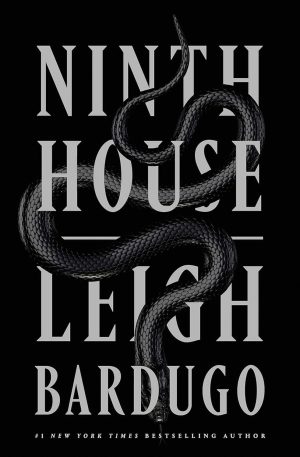
- Ninth House by Leigh Bardugo, for a scholarship outsider among occult elites with a past she cannot outrun.
- The Secret History by Donna Tartt, for the original study of brilliant students and a teacher’s dangerous pull.
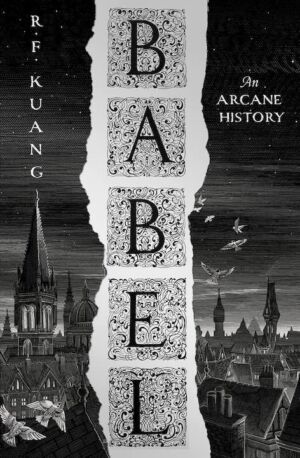
- Babel by R.F. Kuang, for an elite institution whose magic is built on extraction.
- The Atlas Six by Olivie Blake, for a ruthless competition for a place among the chosen few.
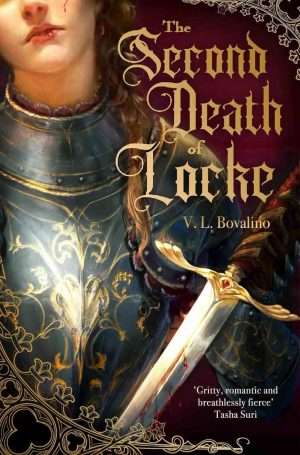
- The Second Death of Locke by V.L. Bovalino, for gothic dread and a city that keeps its secrets underground.
Worth Your Shelf
This is an uneven book with a very good one inside it, and a debut that takes more risks than most. The sentences are lush and sometimes overdressed, the mid-book loop tests patience, and the final act leans on explanation where it should lean on discovery. But the opening trial, the automaton reveal and the slow exposure of what Victor made of Lark are as strong as anything in the genre this year. Read Mothsblood by Lynn D. Jung for the portrait of a girl who mistook being used for being seen, and for the moment she finally tells the difference.
Some books are about getting into the room. This one is about learning to leave it.