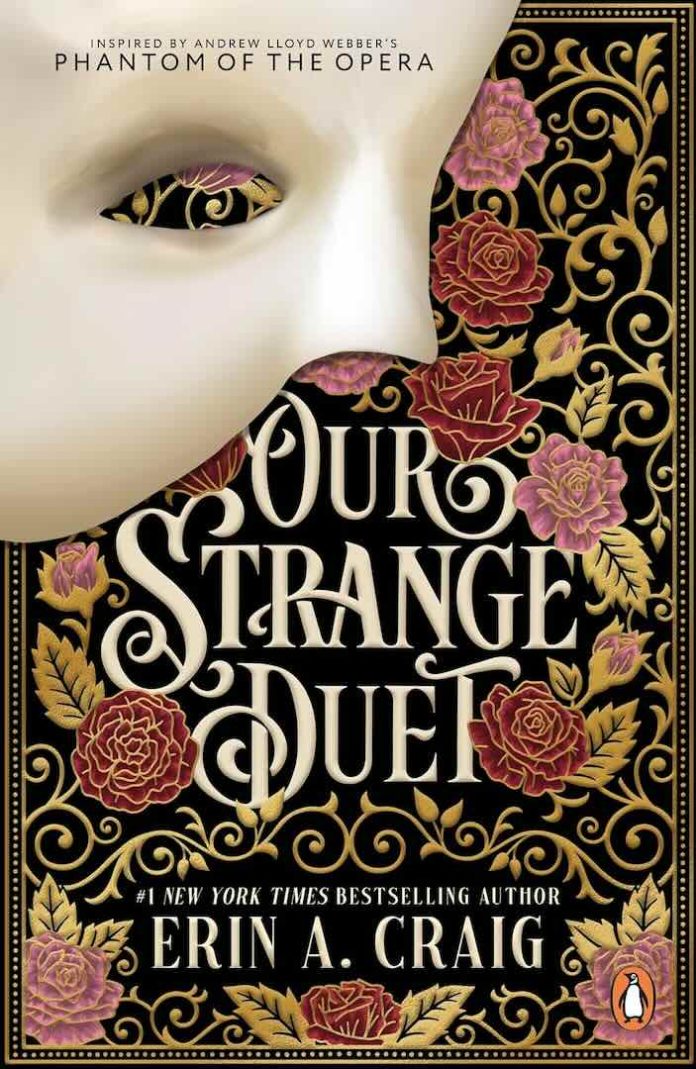
The copyright page is the tell. Text copyright is held not by the author but by LW Entertainment Limited, and the acknowledgments close with a letter of thanks addressed to Andrew. Our Strange Duet by Erin A. Craig is not a fan retelling published in the gap where the source is out of copyright. It is a sanctioned continuation of Andrew Lloyd Webber’s The Phantom of the Opera, written inside the estate, and that single fact governs almost everything the book can and cannot do.
Which makes the interesting question not “is the plot good?” but “what was she allowed to change?”
What Our Strange Duet Is Allowed to Change
Not the events. The beats arrive in order and on schedule: the dressing room, the disembodied voice, Hannibal and a soprano storming out, the boat across the lake, the unmasking, Il Muto, the chandelier, the masquerade, the graveyard, Don Juan Triumphant. Anyone who has seen the show will spend four hundred pages knowing exactly what happens next.
What Craig gets instead is the inside of Christine’s head, and she uses it for something sharper than romance. This Christine is nineteen, orphaned, in the back corner of the corps de ballet because the ballet mistress does not play favourites, and one bad month from destitution. Her livelihood depends on a soprano who has decided to dislike her. When the voice arrives promising greatness, she does not swoon at a miracle so much as grab a rope.
The other change is the frame. A prologue set a year after the main action opens the book in the wrecked lair, and an epilogue returns there in spirit. Our Strange Duet by Erin A. Craig does not stop where the musical stops. Whether that is a bold move or a franchise hook is a fair argument, and I lean toward the second.
Where Erin A. Craig Is Writing From
This is the part that lifts Our Strange Duet by Erin A. Craig above competent pastiche.
Craig took a BFA in theatre design and production from Michigan with a concentration in stage management, then spent years stage-managing operas at Goodspeed, Opera Boston, Ash Lawn and Opera Memphis. It shows on every page that has nothing to do with the plot. Spirit gum failing under stage lights so the beaded serpents peel off the dancers and litter the deck. Costumes sprayed with diluted vodka rather than washed. The chocks that were supposed to be set under a rolling staircase and were not. A conductor holding an orchestra in a vamp while a singer misses an entrance. A ghost light left burning after everyone has gone home.
There is a glossary of opera terms at the back, and it is genuinely useful rather than decorative. The best sustained sequence in the novel is a first music rehearsal in which a difficult new score humiliates an entire company, and it works because Craig knows precisely how that room smells and sounds.
What works
The strengths of Our Strange Duet by Erin A. Craig are almost all in the women.
- Meg. Given a real arc rather than a friend’s role. Her ambition arrives late, hurts her, and comes out sideways as resentment, and the scene where she names it out loud is the most honest thing in the book.
- Carlotta. A late conversation over a café table reframes her entirely, as a woman being aged out of a profession she spent thirty years mastering. It is the single best-written scene here and it belongs to the character everyone expects to be a joke.
- Madame Giry. Her account of how she first met the boy behind the mask is delivered plainly, without lush horror, and lands harder for it.
- The vicomtesse. Raoul’s mother is not a cartoon. Her objection to the engagement is that a working singer cannot run an estate, and the novel has the nerve to let her be partly right.
- The dressing-room lessons. The teaching is specific. Appoggio breathing, soft palate, tall vowels, be the bell rather than the ringer. Craig thanks a working soprano in the acknowledgments for the crash course, and it paid off.
Where it gives ground
Five things keep Our Strange Duet by Erin A. Craig from being as strong as its best chapters.
- The middle sags badly. A long seaside courtship and a country-house visit run for something like a hundred pages with almost no pressure on them. It is pleasant. It is also the point where a reader checks how much is left.
- Lyrics become dialogue. Whole lines from the musical are spoken aloud by characters, and in prose they sound like what they are: lyrics. A marriage proposal delivered in the words of a famous duet is the worst offender.
- Christine keeps being made to want things. She is hypnotised, compelled, puppeted and drawn against her will more than once, which sits awkwardly in a book whose entire selling point is her interiority. Every time her agency is suspended, the premise weakens.
- One chapter cheats. A long, sensuous sequence turns out to be something other than it appeared, and the reversal is a trick played on the reader rather than a development.
- It does not end. The last page is a hook. Readers who want a complete story in one volume should know that going in.
Do You Need the Musical to Read Our Strange Duet?
No, but the book assumes you do. Newcomers will follow it perfectly well and may actually have the better experience, since the plot will surprise them. Readers who know the show are reading for the gaps, and the gaps are where Craig is working. Anyone curious about the older bones underneath can read Gaston Leroux’s original 1910 novel free, though be warned that Craig is adapting the musical rather than the book, and the two differ considerably.
Content notes for Our Strange Duet
Our Strange Duet by Erin A. Craig is darker than its cover suggests. Stalking, coercive control and gaslighting, presented as such but romanticised in places. Abduction and imprisonment. Multiple deaths, including a strangling and a mass-casualty accident described in its aftermath. Attempted murder. Graphic description of facial disfigurement, and cruelty directed at it. Child abuse and the display of a disabled child for public entertainment. Parental abandonment and parental death. Grief and a cemetery scene. Non-explicit sexual content, including one extended scene that stops short. Grooming dynamics between an adult teacher and a teenage student, which the novel does eventually name.
Read it if / Skip it if
Read it if you have wanted Christine’s version of Our Strange Duet by Erin A. Craig for years; if backstage detail is a pleasure in itself; if you want a gothic romance that takes the heroine’s career as seriously as her suitors.
Skip it if you need an ending; if lyrics-as-dialogue will pull you out; if you want the plot to surprise you and already know the show by heart.
Read these next
Five for readers who finish Our Strange Duet by Erin A. Craig and want more of the same:
- The Thirteenth Child by Erin A. Craig. Her own work, unbound by anyone else’s canon, and the fairest test of what she does with a bargain.
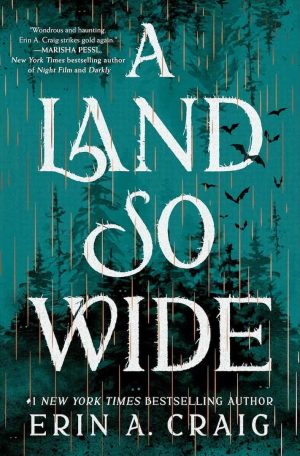
- A Land So Wide by Erin A. Craig. More recent, and useful for hearing her voice without a famous score playing over it.
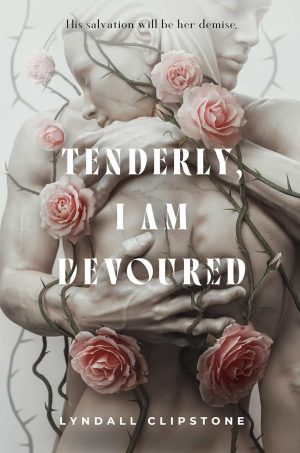
- Tenderly, I Am Devoured by Lyndall Clipstone. Young adult gothic with a similar appetite for dangerous devotion.
- Mexican Gothic by Silvia Moreno-Garcia. For the house that watches, done at full strength.
- What is Gothic Literature? Our guide to the genre’s furniture, which this novel deploys almost completely.
The Verdict
There is a version of Our Strange Duet by Erin A. Craig that is only a novelisation with better adjectives, and it comes close. What rescues it is a thread Craig runs quietly under the famous plot. The man in the cellar wants her voice for his music. The man in the box wants her to stop singing and be a vicomtesse. The dowager wants her gone entirely. Management simply wants somebody who can go on at short notice. Every single person who tells Christine he loves her is also telling her what to give up, and by the last act she has worked that out, even if nobody in the book has said it aloud. Craig has been handed the most protected property in musical theatre and used it to write about a nineteen-year-old realising that being adored and being free are not the same offer. That is more than the assignment required.