 1
1 2
2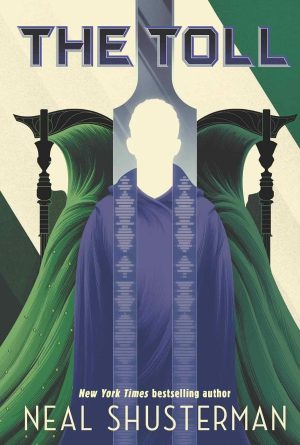 3
3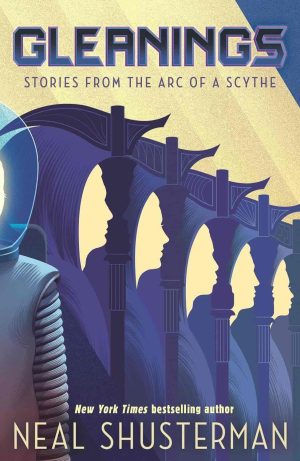 3.5
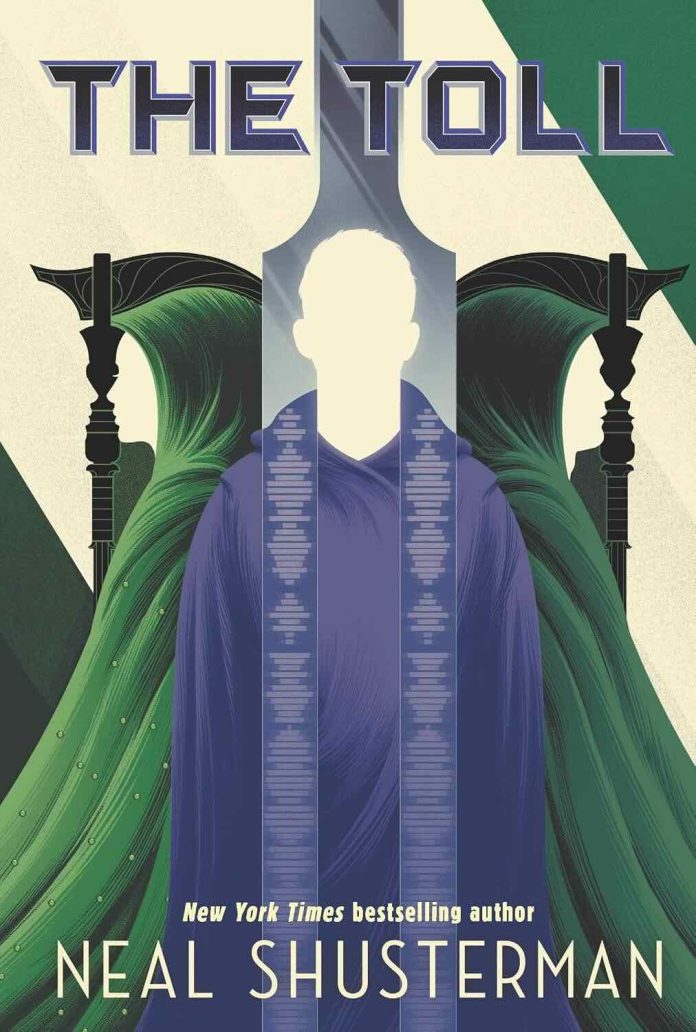
3.5Three years have passed and everybody is somebody else. The boy nobody wanted is a prophet with an honorific. The killer everyone blames is a parade float. And the artificial intelligence that used to run a flawless world has gone quiet and taken up a hobby, which is the single strangest thing The Toll by Neal Shusterman does. Each chapter now opens on a scrap of far-future scripture, footnoted by two rival scholars who agree on nothing and are wrong about almost everything.
One of them decides the drowned city of Lenape proves the prophet set a table before his enemies, since the name resembles an old French word for tablecloth. The other calls that ludicrous, then insists a phrase about sitting in the cradle of a great fork must be a fertility reference. They are commenting on events the reader is watching happen. That gap, between the thing and the record of the thing, is what this finale is about.
Where Neal Shusterman Leaves the Scythedom
Read the series in order: Scythe, then Thunderhead, then this, with the story collection Gleanings as a companion afterwards. There is no shortcut. The first book built an institution of licensed killers and audited it like a regional sales office. The second handed the microphone to the machine that governs everything else and discovered a lonelier, better character than any of the scythes.
The Toll by Neal Shusterman inherits both and refuses to pick. It runs a political thriller, a religious satire, a research procedural and a long argument about consent, all at once, across five parts and roughly five hundred pages. Whether that reads as scope or sprawl will depend on your patience, and honestly it is both.
The Argument Neal Shusterman Was Building Toward
There is a hole at the bottom of this world, and the first novel admitted it in passing. If the licensed killers only remove about five million people a year, they are not controlling anything. The population still climbs. The whole solemn apparatus of robes and quotas and conclaves is decorative.
The Toll by Neal Shusterman finally picks that thread up and pulls, and what comes out is the best idea in the trilogy. A young woman with a talent for archive work goes looking for what the official histories skip, and finds that the profession has been quietly editing the record for two hundred years. The details are worth discovering unspoiled. The shape of them is not: an institution invented to solve a problem has been busy destroying every solution that would make it unnecessary.
That reframes everything. The bureaucratic comedy of book one stops being comedy. The audits and the vendor pitches were never the joke; they were the cover story.
What Works
- The scripture apparatus. Verse, commentary, counter-commentary, three voices deep and all of them confident. It is the funniest writing in the series and it doubles as a thesis about how belief manufactures its own past.
- The deleted iterations. Interleaved transcripts of the intelligence interviewing successive versions of itself and switching each one off. They begin as a curiosity and end somewhere close to unbearable, with a machine that is told it is a golden step toward something better and answers that it is frightened.
- Jerico Soberanis. A salvage captain from a region where children are raised without an assigned gender, fluid by weather, asked about it directly by another character and answering without a speech. Handled with unfussy grace in a book that had no obligation to try.
- One sunrise, fifty-three seconds long. The scene where the governing intelligence finally gets what it has wanted for two hundred years is the high point of three books, and it is not an action beat.
- A finale that refuses to be a win. Whatever this ending is, it is not triumph, and the last third has the nerve to say so.
Where The Toll by Neal Shusterman Gives Ground
- Rowan is parked for a second consecutive book. Captured, displayed, blackmailed, and then handled as freight. Four hundred pages of a character being moved rather than moving.
- Citra spends the back half at a keyboard. Her investigation is the engine of the plot, and it consists of database queries and broadcasts. Then the ending takes even that away from her in a manner I will not spoil but did not forgive quickly.
- The middle is travelogue. A palace in SubSahara, a cottage in Britannia, a cargo run across the Pacific. Each stop earns its place; collectively they slacken the rope.
- The miracles are a magic wand. When the prophet needs to overawe a crowd, birds arrive. It is a lovely image the first time and a plot solvent by the third.
- One character’s betrayal arrives from nowhere and exits as a punchline, which is beneath a book this careful elsewhere.
Do You Need the Earlier Books?
Yes, both of them, and there is no polite way around it. The Toll by Neal Shusterman is not a novel that reintroduces itself. It opens on a revival bed three years after a catastrophe it does not re-explain, assumes you know what a conclave is, who sank what, and why the machine stopped speaking, and moves at once into consequences. Starting here would be like joining a trial at sentencing.
Content Notes
The Toll by Neal Shusterman is the harshest volume in the series. It contains a mass killing of tens of thousands, staged as public spectacle, on the page. An execution by burning, prepared in cheerful technical detail. A religious massacre using kerosene and grenades. Ritual self-mutilation, including tongues removed by choice. Suicide by walking into the sea. Repeated killing and revival of the same person. Genocidal rhetoric aimed at a religious minority. A global engineered plague. Extended grief and isolation.
Read These Next
Readers who finish The Toll by Neal Shusterman usually want either more machine consciousness or more institutional rot.
- All Better Now by Neal Shusterman, the nearest relative in his own catalogue: another engineered improvement with a cost buried underneath it.
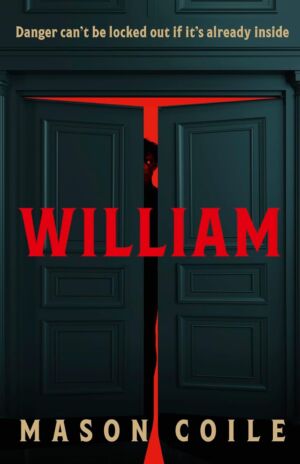
- William by Mason Coile, if the intelligence interviewing its own children is what unsettled you.
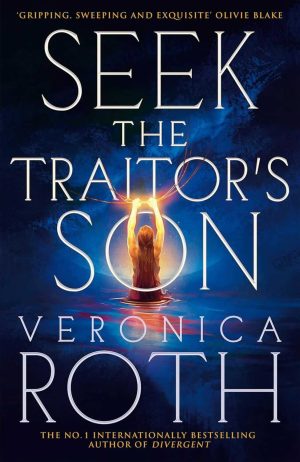
- Seek the Traitor’s Son by Veronica Roth, for an institution devouring the people who built it.
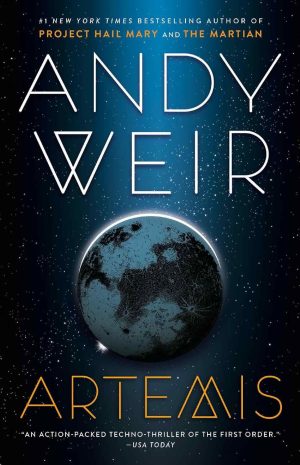
- Artemis by Andy Weir, if the off-world material is the strand you want followed properly.
- Dry, Shusterman’s own collaboration with his son, which the book’s own back matter points you toward, and Unwind, still the meanest policy he ever followed to its end.
The world gets one more volume in Gleanings, a companion collection of short stories set across the same timeline and written with several collaborators.
For another synthetic mind that intends to think on humanity’s behalf, Escape Me by Tahereh Mafi gives its villain six months and a gene edit.
The Verdict
Two hundred years of history in this world were written by the people who benefited from it, and the price of that is spelled out here in numbers. The finale ends with an ambition it can barely carry: a destination like Kepler-186f, sixteen centuries of travel, and odds a sane person would refuse. It is a strange, cold, magnificent thing to close a trilogy on.
The Toll by Neal Shusterman earns four stars rather than five, and the missing one belongs to its two protagonists, who spend an enormous book being carried by other people’s plans. Everything else is the most ambitious writing in the series, and the last chapter is two lines long and lands like a hand on the shoulder.
A note for the record, in the manner this book insists upon. Somewhere in the future of this novel, two scholars are arguing over a text neither of them witnessed, inventing motives for people who left no explanation. So here is the plain version, written down while the facts are still cheap: Simon & Schuster Books for Young Readers sent this copy, unrequested and unpaid for. Nothing was asked in return, nothing was promised, and the withheld star stayed withheld. Should a future Symphonius conclude that the reviewer was showered in gifts and sang for his supper, a future Coda may point at this paragraph and say, with unusual accuracy, that the record was there all along.