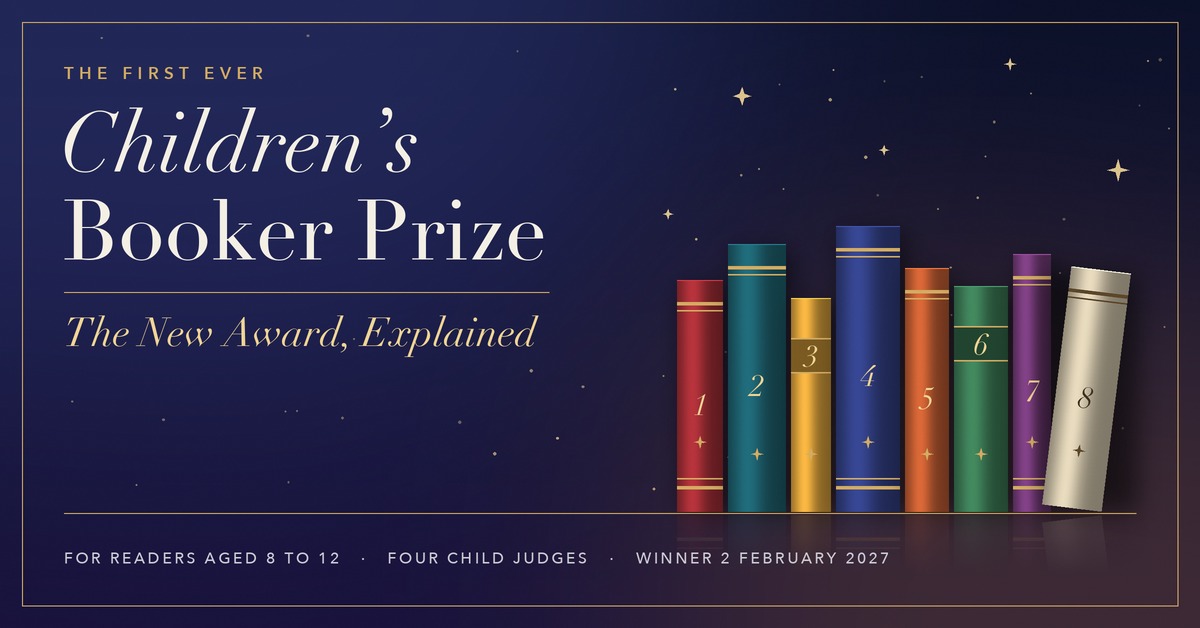
The Children’s Booker Prize is the newest award from the Booker Prize Foundation and the first major prize it has launched since the International Booker in 2005. It rewards the best fiction for readers aged eight to 12, pays its winner £50,000, exactly what the Booker Prize itself pays, and puts children on the judging panel to help choose the winning book.
The first edition is the 2027 prize. Its shortlist of eight books is announced on 24 November 2026, together with the four child judges, and the winner is named on Tuesday 2 February 2027 at Young V&A in London. This guide explains how the prize works, who is judging it, what they say they were looking for, and why it matters more than its newness might suggest.
What Is the Children’s Booker Prize?
It is an annual prize for contemporary children’s fiction, first announced in October 2025 and funded for its first three years by AKO Foundation, a charity that supports education and young people’s wellbeing. A small group of private donors paid for the three years of development that came before.
The rules borrow from both of the existing Booker prizes:
- Language: the book must be written in English or translated into English, so translated fiction competes on equal terms.
- Publication: it must be published in the UK or Ireland. For the 2027 prize the window ran from 1 November 2025 to 31 October 2026.
- Author: writers of any nationality can enter, as with the Booker since 2014.
- Reader: the book has to be written for children aged eight to 12, the band publishers call middle grade.
The Foundation’s stated aim is to grow a new generation of lifelong readers. Gaby Wood, its chief executive, has described the books it wants as ones children will love, whether they reread them for years or enjoy them once.
How the Children’s Booker Prize Is Judged
Judging runs in two stages, and only the second involves children.
First, three adult judges read every book publishers submitted. That came to more than 80 titles in five months, which by their own accounts meant reading in supermarket queues, on trains and, in the chair’s case, on a log flume. There is no longlist. The adults argued the field straight down to a shortlist of eight.
Second, four child judges join them, and all seven choose the winner together. The Foundation says the point is that the winning book should be a recommendation from young readers to their peers rather than a verdict handed down by grown-ups.
The Adult Judges
Frank Cottrell-Boyce chairs the panel. He was Waterstones Children’s Laureate from 2024 to 2026, won the Carnegie Medal with Millions, his first children’s novel, and co-devised the opening ceremony of the London 2012 Olympics with Danny Boyle. His first paid job was as a Punch and Judy man.
Lolly Adefope is the actor, writer and comedian best known as Kitty in the BBC sitcom Ghosts, which earned her two BAFTA nominations. She grew up on A Series of Unfortunate Events and Roald Dahl, and she has said she used to try to copy Matilda’s powers at home.
Sanchita Basu De Sarkar owns the Children’s Bookshop in Muswell Hill, north London, the oldest children’s bookshop still trading in the UK and the British Book Awards’ Children’s Bookseller of the Year in 2024. She has judged the Costa Book Awards and co-founded SAIL Fest, which promotes South Asian children’s authors and illustrators.
A writer, a performer and a bookseller. There is no critic or academic on the first Children’s Booker Prize panel, and that looks deliberate.
The Child Judges
In April 2026 the Foundation opened a UK-wide competition for children aged eight to 12. More than 4,000 applied. It had planned to appoint three, but after seeing how the finalists worked together it appointed four, to reflect a wider range of tastes within the age group. Their names are announced alongside the shortlist.
Children have picked book prize winners before. The Blue Peter Book Awards, for instance, have long been decided by young readers voting on an adult-chosen shortlist. What is new here is the mixed table: children and adults reading the same eight books and arguing them out in the same room, for a prize carrying this much money and attention. Cottrell-Boyce has said he expects the children to turn the judging into a national reading party, and admits he has no idea whether they will love the adults’ choices or hate them.
What the Judges Say They Looked For
All three adults gave interviews in the week before the shortlist, and their answers are the best clue to the kind of books that will win the Children’s Booker Prize.
Cottrell-Boyce said the panel did not start out knowing what it wanted. In the end, he said, it looked for stories that made the judges feel something, that made them laugh or cry.
Adefope looked for strong characters and stories that go somewhere unexpected. She also warned that, though she loves funny books, many of the ones the panel chose are not comic. What they share, she said, is heart, and a refusal to talk down to the reader. She added that some books she loved turned out, in discussion, to be wrong for the age range.
Basu De Sarkar reads for voice first, then for how quickly she can settle into a book’s world, and only then for plot. She also noted how rarely fantasy makes any prize shortlist, which will be worth remembering when the eight are named.
Prize Money and How It Is Split
The Children’s Booker Prize winner receives £50,000 and each shortlisted book £2,500, the same as the Booker Prize. The Foundation chose that parity on purpose, saying children’s authors deserve the same reward and recognition as writers of adult fiction.
The money is shared when a book has more than one maker:
- Translated book: author and translator split it equally, as with the International Booker.
- Graphic novel: author and illustrator split it equally.
- Illustrated book: author and illustrator share it 50:50 or 75:25, as the Foundation decides.
Why the Children’s Booker Prize Matters
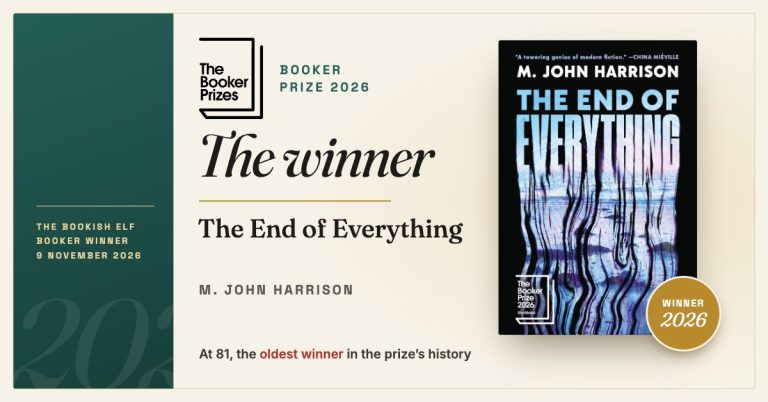
The reach. The Booker is the one British literary prize most adults can name, and its sticker moves books in shops, as the attention around the Booker Prize 2026 winner showed again this month. Children’s fiction already has excellent awards, the Carnegies above all, but none with this reach among people who do not follow children’s publishing.
The giveaway. Every year, 30,000 or more copies of the shortlisted and winning titles will go free to children who need them most, delivered through the National Literacy Trust, The Reading Agency, OnSide, Bookbanks and the Children’s Book Project. A prize for children’s books that children cannot get hold of would be a strange thing, and this one has been built to avoid that.
The classroom. Teaching resources are being produced for each shortlisted title, Beano is creating illustrated content and lesson plans through Beano for Schools, and the ceremony will be livestreamed so schools across the UK can watch. The prize also lands in the UK’s National Year of Reading.
Children’s Booker Prize Key Dates
- October 2025: the prize is announced.
- April 2026: the competition to find child judges opens.
- May to June 2026: publishers submit books.
- 24 November 2026: the shortlist of eight and the four child judges are announced.
- Tuesday 2 February 2027: the first winner is named at a ceremony taking over Young V&A in Bethnal Green, London.
Children’s Booker Prize FAQ
Is there a longlist? No. The prize goes straight from submissions to a shortlist of eight, then to a winner.
What age are the books for? Readers aged eight to 12.
Who picks the winner? Three adult judges and four child judges, together.
How much does the winner get? £50,000. Each shortlisted book receives £2,500.
Can authors from outside Britain win? Yes, including in translation, as long as the book was published in the UK or Ireland during the eligibility year.
Will it run every year? Yes. It is an annual prize, with AKO Foundation funding committed for its first three years.
The Last Word
A new prize is usually judged by its first winner. This one may be better judged by its first shortlist, because eight books chosen by a laureate, a comedian and a bookseller are about to be handed to four children who owe nobody a polite opinion. We will add the eight books here once they are named, and cover the winner in February.
Full details are on the official Children’s Booker Prize page. If you are looking for something to read in the meantime, our list of the best children’s books is a good start, and our full list of Booker winners covers the adult prize back to 1969.