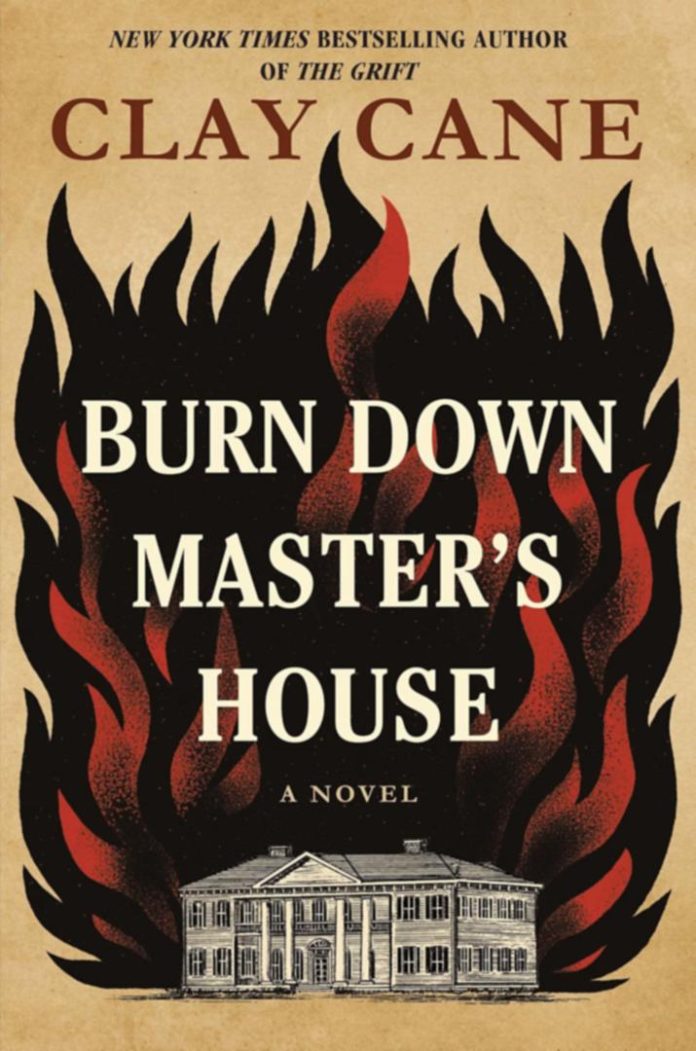
Each of the four chapters opens on a line lifted from a historical source: a slave narrative, a newspaper report, a court ruling, a 1912 magazine article. Then the fiction takes over and does what the record never could, which is to let the people in it fight back and win. Burn Down Master’s House by Clay Cane is a machine for converting archival fragments into revolts, and its characters carry a single refrain from one chapter to the next, a promise about guarding the part of yourself no owner can reach. Whether that machine works depends on which chapter you are in.
Burn Down Master’s House Plot Summary
In Goochland, Virginia, Henri, African-born and sold on for refusing to father children for his master, arrives at a vast cotton plantation called Magnolia Row. There he falls in love with Luke, a house servant kept chained at night to the bedside of the owner’s son. Their story ends in fire, and the girl who watches it, Josephine, carries the memory to a smaller farm, where years later she cooks a supper laced with arsenic. A boy she rescues grows up to be a Gettysburg blacksmith who marries Charity, a woman counting her days on free soil. The last chapter moves to Charleston at the end of the Civil War, where a formerly enslaved man has become a slave trader, and where the threads of Burn Down Master’s House by Clay Cane finally meet.
How It Works
The novel is four long linked stories rather than one continuous plot, set roughly between the 1830s and February 1865. Every chapter stands on a real case that Cane lays out in a detailed author’s note:
- Luke and Henri grow from two men glimpsed in Harriet Jacobs and Henry Bibb, whose narratives hint at sexual abuse by owners and then fall silent.
- Josephine blends two women accused of poisoning their owners, one in Maryland in 1855, who took the arsenic from a clock, and one tried in Mississippi in 1857.
- Charity is Charity Butler, who tallied her visits to Pennsylvania under the state’s Gradual Abolition Act of 1780 and lost in court to a young Thaddeus Stevens.
- Nathaniel draws on Nat Butler, a Black Maryland trader who sold runaways back to their owners, and William Ellison of South Carolina.
Side characters thread through the whole of Burn Down Master’s House by Clay Cane: a man who lost an eye after an escape turns up three decades later, and Larkin, the blacksmith, links the second and third chapters. The history is the evidence; the revenge is the invention.
The Case Burn Down Master’s House Is Making
The introduction states the argument openly. Cane, a SiriusXM host and journalist, writes against what he sees as a modern campaign to soften the history of slavery, and he wants stories of resistance to stand where stories of suffering usually go. The novel is his case, and the archive is his exhibit list. How well does it make that case? Unevenly. Burn Down Master’s House by Clay Cane shows a clear pattern: the closer the fiction stays to its documents, the stronger it gets.
What Works
- The Charity chapter. The best fifty pages here. The law itself is the antagonist, and Stevens is drawn with real moral complexity, a future abolitionist who argues for an owner and then cannot stop seeing the faces he sent south.
- Miss Clara. The broke, theatrical Vermonter who rents Charity is complicit, vain and finally brave, the one white character the book allows to change.
- The love at the centre. Luke and Henri’s river scenes are tender, and the small gift of a shared birthday is the most moving idea in the novel.
- Women teaching women. Ruby, Old Mama Bess and Josephine pass down cooking, numbers and nerve, and the book honours those networks.
Where It Gives Ground
The weaknesses of Burn Down Master’s House by Clay Cane are about craft, and they carry real weight:
- Villains as grotesques. Nearly every enslaver is described through a repellent body or affected manner, including a predatory, flamboyant son whose mannerisms read as shorthand for rot. Cruelty becomes easier to dismiss when it is this cartoonish.
- Narration that explains itself. Scenes are routinely followed by paragraphs telling you what they meant, and the prose leans on overwrought imagery.
- Violence as spectacle. Mutilations and killings are described at great length, and the revenge scenes linger in a way that turns witness into display. Two children are poisoned and the narrative cheers.
- Coincidence. The final chapter’s reunions rely on several characters arriving at the same porch at the same moment.
- Polemic at both ends. The introduction and the closing pages speak directly to present-day politics, sometimes with sweeping claims; some readers will find this bracing, others a lecture.
Read These Next
If Burn Down Master’s House by Clay Cane leaves you wanting more fiction that reckons with slavery, these make good companions:
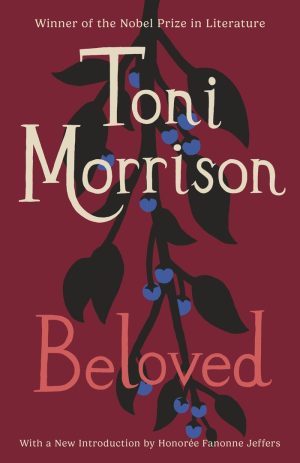
- Beloved by Toni Morrison, the defining novel about what slavery does to a mother, and what she does in return.
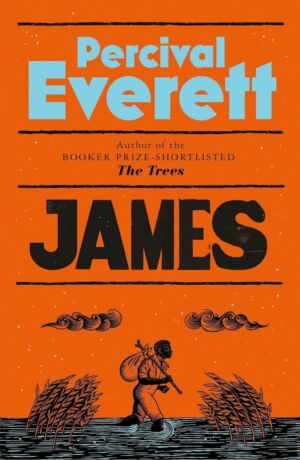
- James by Percival Everett, for an enslaved man taking back his own story, with wit where Cane uses fire.
- The Prophets by Robert Jones Jr., the closest comparison: two enslaved young men in love on a Mississippi plantation.
- Kindred by Octavia E. Butler, for a time-slip into the antebellum South that refuses to look away.
- The Underground Railroad by Colson Whitehead, for a flight north that bends history to make its point.
About Clay Cane
Cane is a radio host, journalist and author whose first novel had a long gestation: Burn Down Master’s House by Clay Cane began more than twenty years ago as a short story called “Magnolia Row” about two enslaved men in love. He set it in Goochland County, where his own family was once enslaved.
- His previous book, The Grift (2024), on Black Republicans, was a New York Times bestseller
- He hosts The Clay Cane Show on SiriusXM Urban View, which launched in 2017
- Many supporting characters carry the names of his Goochland ancestors
- He chose to leave the N-word out of the novel entirely, and explains why in the afterword
- Dafina published the hardcover on 27 January 2026
Worth Your Shelf
Burn Down Master’s House by Clay Cane has a strong idea and a strong archive behind it, and at its best, in Gettysburg’s courtroom and on Magnolia Row’s riverbank, it is absorbing and humane. It is also a novel that rarely trusts the reader, draws its villains in crayon and stages its revenge as long, bloody set pieces. Readers who come to Burn Down Master’s House by Clay Cane for catharsis will find plenty of it. Readers who want the history to stay complicated will find the documents in the back more unsettling than the fires in front.
The record kept their names. Cane gives them matches.
Content notes tap to reveal
Where to read Burn Down Master’s House
Amazon lists the current Kindle, print and audiobook editions, and shows whether the ebook is in Kindle Unlimited right now.
To borrow it free, try your library: Libby and OverDrive lend ebooks and audiobooks with a library card, and WorldCat finds print copies near you.
We don’t link to “free PDF” sites. Those copies are pirated and pay the author nothing.