
Ichabod Crane looks at a farmyard and sees dinner. The pigs trot about with puddings already inside them and apples in their mouths, the pigeons are tucked into pies under a coverlet of crust, and the rooster lies on his back in a side dish, claws raised as if asking for mercy. Then the schoolmaster’s imagination moves on from the kitchen to the ledger. He sells the orchards and the wheat in his head, buys wild land out west, and pictures the farmer’s daughter on top of a loaded wagon bound for Kentucky with a brood of children and the pots rattling underneath. The Legend of Sleepy Hollow by Washington Irving is remembered as a ghost story, and it is one. But this early scene tells you what it is really about: a man whose hunger is bigger than the valley he has wandered into.
What the Legend of Sleepy Hollow Is Hungry For
Ichabod is a Connecticut schoolmaster boarding a week at a time with the families whose children he teaches, his whole estate wrapped in a cotton handkerchief. Irving introduces him as a walking appetite in a body built like a weathervane: narrow shoulders, hands dangling far out of his sleeves, feet like shovels. Seen on a hilltop on a windy day he could pass for “some scarecrow eloped from a cornfield.” He is a huge eater, a vain church singer and a man who beats the sturdy boys in his schoolroom twice as hard as the weak ones, and Irving gives you every one of those details with a smile.
The courtship of Katrina Van Tassel, a wealthy farmer’s only child, is where the comedy sharpens. Ichabod’s love is honest only in the sense that he never pretends, even to himself, that the girl comes before the barn. Irving lists the house’s treasures (pewter on the dresser, strings of dried peaches, an ostrich egg hung from the parlour ceiling) with the same greedy relish the schoolmaster feels, so that the reader shares the appetite before being invited to laugh at it. It is a clever trick, and in The Legend of Sleepy Hollow by Washington Irving it works for pages at a time.
The rivalry with a local horseman known for his strength gives the plot its spine, but it is the most conventional thread in the tale. What lifts it is the background hum of a settled Dutch farming community, sleepy in the literal sense, that the outsider plans to mine and leave behind.
The Ghost Rides in Ichabod’s Own Head
The counterweight to all that hunger is fear, and Irving makes Ichabod the author of his own haunting. He has read Cotton Mather’s history of New England witchcraft and believes every word. He spends winter evenings by the fire with the old Dutch wives, trading goblin tales over roasting apples, and then pays for the pleasure on the snowy walk home, where every shrub looks like a sheeted spectre and the crunch of his own boots makes him afraid to glance behind.
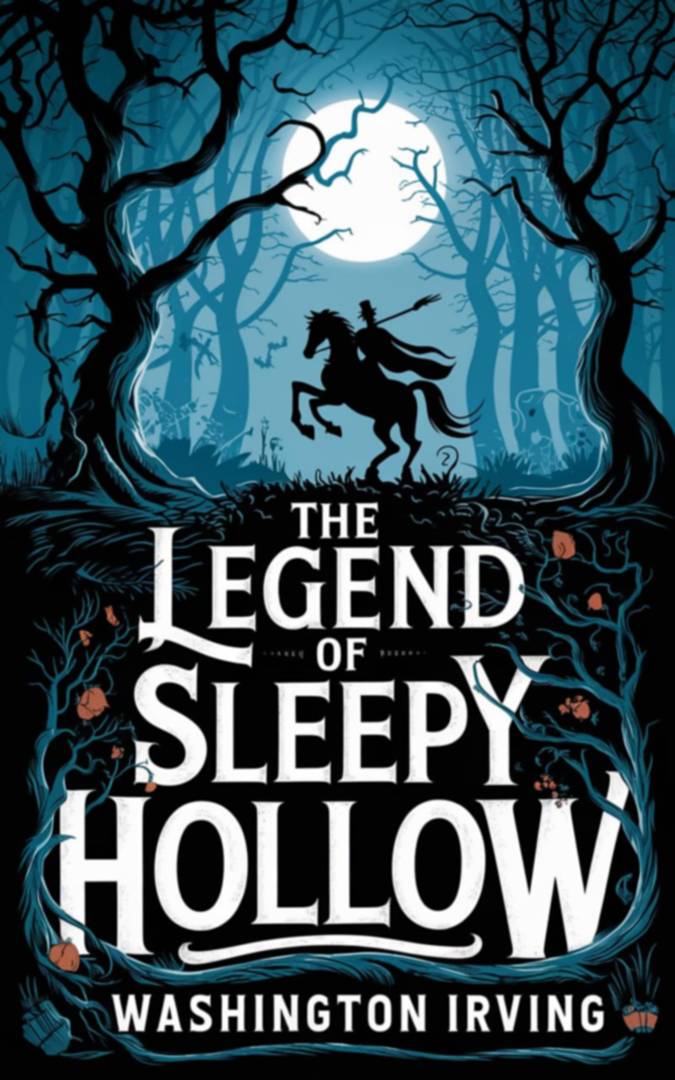
So when the real night ride comes in The Legend of Sleepy Hollow by Washington Irving, it lands on ground the story has spent half its length preparing. Ichabod borrows Gunpowder, a broken-down plough horse with a head like a hammer, one wall eye and a devil in the other. The road home passes the giant tulip tree where Major André was taken prisoner, then a log bridge over the stream at Wiley’s Swamp, and Irving stages each landmark as a separate trial. Every scare dissolves into a creak or a scar on the bark until, at the bridge, the horse balks and something huge stands up in the dark. The legend at the heart of the valley is said to be a Hessian trooper who lost his head to a cannonball, and the chase that follows is a few pages of genuinely superb pacing, tight and noisy after a long, drowsy build.
The famous image is not a spoiler. How the night ends, and what is found by the brook afterwards, is best met unspoiled, along with the knowing shrug Irving gives it.
Where It Gives Ground
- The opening is a long amble. Close to half of the tale is portrait and landscape before anything happens. The writing is lovely, but readers expecting a horror story will wonder when it starts.
- Katrina is a prize, not a person. She is described as a coquette and a fortune, and the story never once lets her speak in a scene that matters.
- The racial caricature is ugly. The Black messenger, the old fiddler and the onlookers at the dance are drawn in demeaning period language that reads very badly now.
- The horror is brief. The Legend of Sleepy Hollow by Washington Irving is far more comedy than ghost story, and the actual fright fills only a handful of pages.
Read These Next
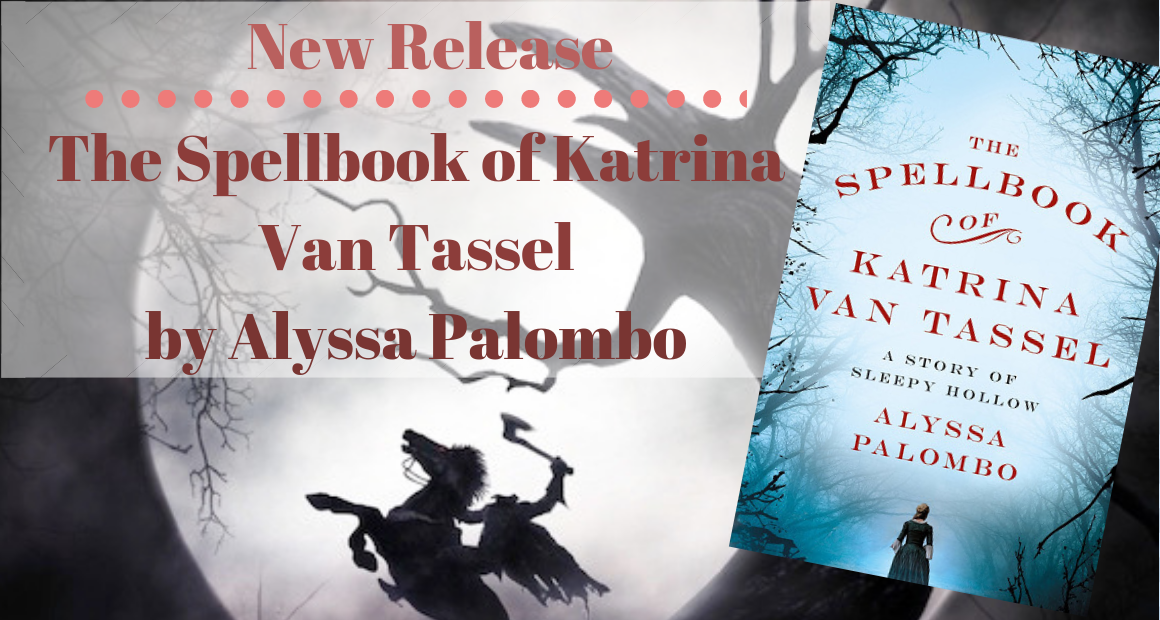
- The Spellbook of Katrina Van Tassel by Alyssa Palombo, a retelling that gives the heiress the inner life Irving never did.
- The Haunting of Hill House by Shirley Jackson, for the next great American study of a mind that frightens itself.
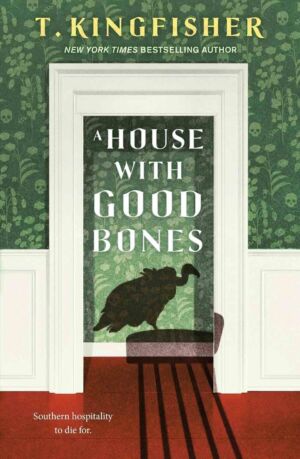
- A House with Good Bones by T. Kingfisher, for a funny, sharp-eyed voice wrapped around a creeping small-town horror.
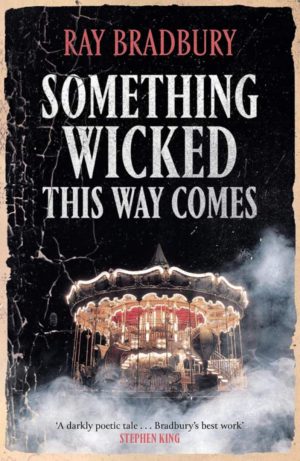
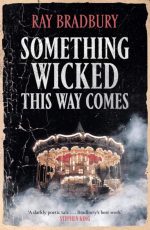
- Something Wicked This Way Comes by Ray Bradbury, for an autumn town, a night of terror and the same love of the season’s harvest.
If The Legend of Sleepy Hollow by Washington Irving has put you in the mood, you will find more Halloween classics and new frights on our Halloween reading hub.
Washington Irving and the Trivia Behind the Legend of Sleepy Hollow
Washington Irving was born in Manhattan in 1783 to a merchant family and died in Tarrytown in 1859, a few miles from the valley he made famous. He had already won a name with a satirical History of New-York in 1809, and after the success of The Legend of Sleepy Hollow by Washington Irving and its companion tale Rip Van Winkle he went on to biographies of Christopher Columbus and George Washington, Tales of the Alhambra (1832), and four years as the American minister to Spain in the 1840s.
- He wrote the story in Birmingham, England, where his sister lived, after the family trading business he had gone over to help ended in bankruptcy.
- It first appeared on 15 March 1820, in the sixth paper-covered instalment of The Sketch Book of Geoffrey Crayon, Gent., issued by C. S. Van Winkle of New York. It was the longest piece in the collection.
- The name Ichabod Crane belonged to a real army captain Irving met in 1814 at Sackets Harbor, New York. A Kinderhook schoolteacher, Jesse Merwin, is one likely model for the character.
- North Tarrytown renamed itself Sleepy Hollow in 1996.
- Disney’s 1949 cartoon, narrated by Bing Crosby, made the Horseman a childhood fixture, and a 2013 television series dragged Ichabod into the twenty-first century.
The Last Word
Two hundred years on, the Horseman has outgrown his story, and anyone arriving from the films may be surprised by how little of the tale he occupies. What they will find instead is a sly comedy of appetite with one of the best-built chases in early American fiction at its end. The Legend of Sleepy Hollow by Washington Irving asks for patience in its first half and a clear eye about its prejudices, and it repays both.
Read it on a dark October night. Then listen for hoofbeats on the walk home.