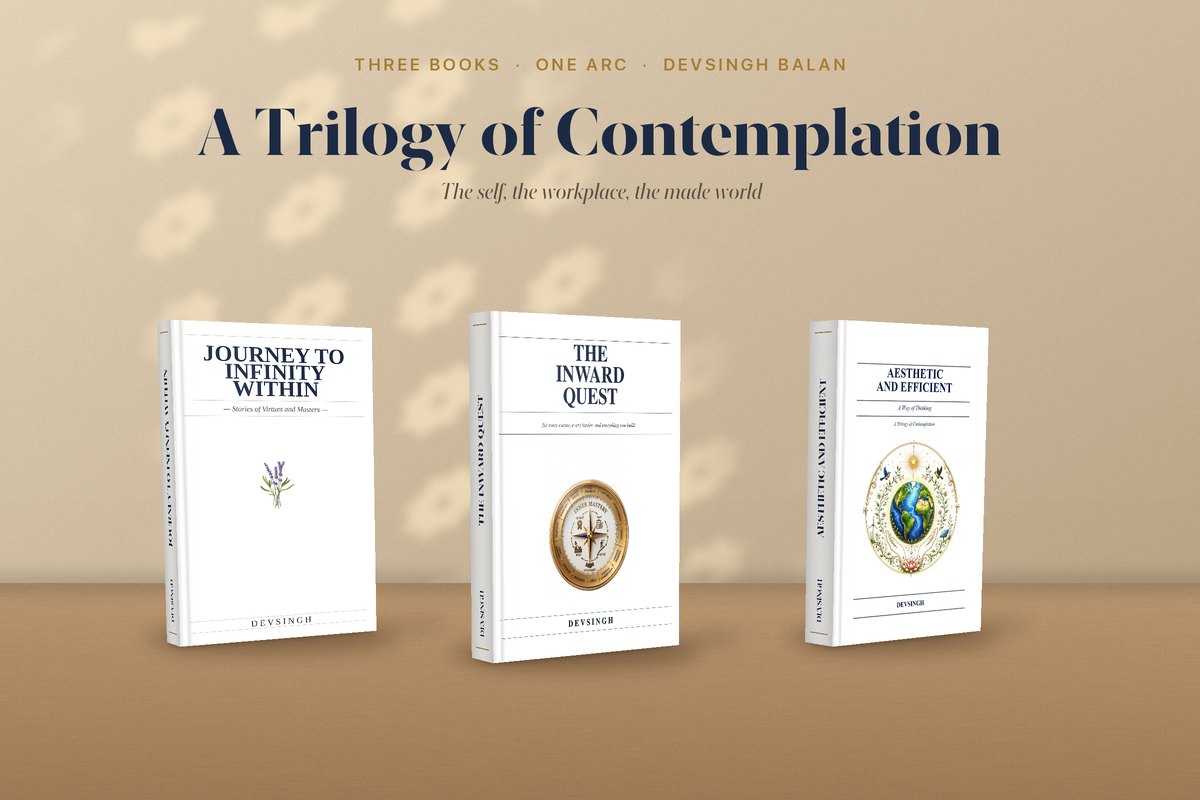
Near the start of Aesthetic and Efficient, Devsingh Balan describes a two-hundred-year-old stone screen and sums it up in five words: “The wall is mostly hole.” The screen cools the room because of what has been cut away. The same idea is a useful way into A Trilogy of Contemplation, the three-book sequence Balan completed in 2026. Each volume works well on its own. The most interesting material, though, sits in the spaces between them, in what carries over from one book to the next. This analysis reads the Trilogy of Contemplation as one work and asks a plain question: what does a reader get from all three that no single volume can give?
Three Books, One Question at Three Sizes
The front matter of the final volume states the plan directly. The three books are one continuous inquiry into seeing clearly, first at the scale of the self, then at the scale of leadership, and finally at the scale of what we make and leave behind. That last line was written after the fact, and it shows. Book Two never mentions a trilogy, and Book One mentions only its successor. The sequence was discovered as much as it was designed, which makes reading it in order more rewarding, not less.
Book One: Journey to Infinity Within
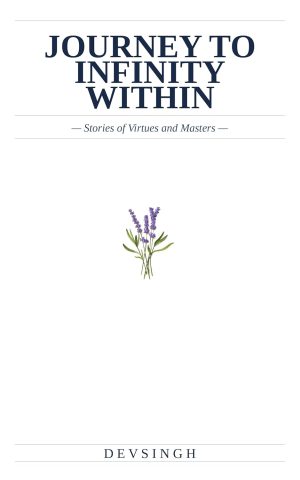
Journey to Infinity Within, subtitled Stories of Virtues and Masters, is the inward volume. It opens as memoir: a Badaga childhood in Ooty, Nilgiri mist that hides everything more than a few feet ahead, a stretch of atheism through his early twenties, and a slow, untidy return to faith through a meditation hall in Bengaluru and the temple at Guruvayur. It then widens into thirty portraits of spiritual teachers, from the Buddha and Mahavira to Ramana Maharshi and Vethathiri Maharishi. And it closes with retold stories arranged around thirty virtues and ten “shadows” such as envy, sloth and shame.
Its thesis comes early. The inner life and the outer life are one life, looked at from two angles. Balan, an aerospace programme manager who never left ordinary working life, puts it in a line that turns out to be a promise: “The meeting room is the battlefield.”
Book Two: The Inward Quest
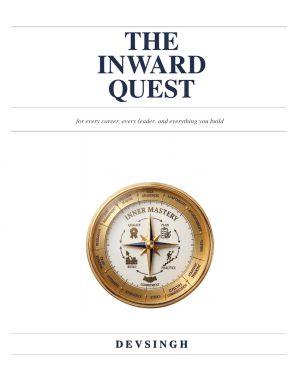
The Inward Quest keeps that promise literally. It began, the author explains, as part of the same manuscript as Book One, and was split off so that each could do its job more cleanly. The foundation is internal; the focus is entirely professional. Short anonymous scenarios open each section: a director freezing in a meeting, a founder alone in a boardroom, an executive committee relieved to let an AI model choose its redundancies. Analysis follows each one, along with a one-question diagnostic. Fifty profiles of leaders follow, from Ela Bhatt and Verghese Kurien to Taiichi Ohno and Alan Mulally, and a “State of Mind Index” lets a reader look up a feeling (“I have achieved the goal and feel nothing”) and jump to the relevant section.
Book Three: Aesthetic and Efficient
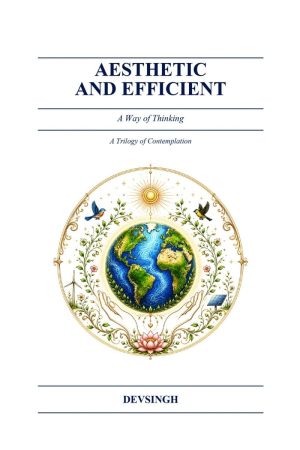
Aesthetic and Efficient: A Way of Thinking turns the same gaze outward again, this time onto objects. Its seven short “Movements” pass through termite mounds, temple stone, the Apollo guidance computer and Balkrishna Doshi’s Aranya housing. They arrive at four questions to ask of anything you make, buy or keep: what was this before, where does it end, can it come back, and who is it really for? A closing chapter, “One House, Three Rooms,” finally names the shape of the whole sequence.
The Thread That Holds the Trilogy of Contemplation Together
The connecting idea is attention. Book One trains it in solitude, through stillness, mantra and noticing grace in ordinary moments. Book Two moves it into crowded rooms, where its job is to catch a reaction as it fires and widen the gap before you respond. Its final section changes mode and asks how a leader learns to see, which is exactly the question Book Three opens with. The third book uses the word “attention” around thirty times and treats it as the faculty we were trained out of when beauty was handed over to professional designers.
A reader who goes through all three in order starts to notice echoes the author never points out. In Book One, Michelangelo makes a figure by removing the marble that is not the figure. In Book Three, the Kailasa temple at Ellora is cut downward out of a single rock. And in Book One, rushing a foundation means you “borrow” time and repay it later with interest. Book Two says quality is not inspected into work at the end, and Book Three praises nature for deciding as late as honestly possible. Read one at a time, these look like separate maxims. Read in sequence, they are the same instinct showing up in a monastery, an office and a workshop.
The handover from Book Two to Book Three is the most deliberate of these echoes. Book Two’s last part steps away from scenarios and into nature parables, and one section, on form, space and balance, already reads like a sketch for the next book: bamboo that grows strong because of its joints, dandelion seeds built light enough to travel, tensegrity structures that stand because opposing forces are balanced. The profiles in Book Two point the same way. Adriano Olivetti treated the design of a factory as a moral choice, and Olive Dennis redesigned railway carriages around the passengers who sat in them. Within the Trilogy of Contemplation, the leadership book is where the design book begins.
There is a second, quieter thread. The trilogy grows more sceptical as it goes. Book One retells miracles without comment, though it ends with a sober appendix on recognising a cult. Book Two calls itself a practitioner’s synthesis rather than new research. And book Three openly debunks the golden ratio and corrects the popular story about how termite mounds cool themselves. The writer who began by trusting the masters ends by checking the evidence, and readers who stay for all three volumes watch that discipline form.
What Reading All Three Gives You
These are the gains that only appear across the full sequence:
- One habit instead of three topics. Spirituality, management and sustainability usually sit on different shelves. Here they become a single practice applied at three scales, which is easier to remember and easier to use.
- A ladder of difficulty. Stillness alone is the easiest setting. Stillness across the table from a colleague you disagree with is harder. Stillness at the till, holding something you have not bought yet, may be hardest of all, because habit and advertising push the other way.
- The shadow side, carried forward. Book One’s ten shadows become Book Two’s “Shadow Checks”, where decisiveness can turn into impatience in disguise. Book Three applies the same caution to objects made for a category of buyer rather than a real person.
- Tools that fit together. The State of Mind Index (Book Two) tells you what you are feeling at work. The four questions (Book Three) tell you what to do with your hands and your money. The cult checklist (Book One) tells you whom not to follow while you work it out.
- A householder’s path, start to finish. None of the three asks you to leave your job or family. The whole Trilogy of Contemplation assumes a reader with a commute, a manager and a cluttered kitchen, which is rarer in contemplative writing than it should be.
Where the Trilogy of Contemplation Gives Ground
Reading in order also exposes the seams.
- The middle sections run long. Book One’s thirty portraits fill roughly a third of its length, and Book Two’s fifty leader profiles fill around forty per cent of its pages, all following one template. Both work better as reference shelves to dip into than as chapters to read straight through.
- Facts are looser early on. Book One places Thiruvannamalai a short distance from Ooty, which it is not, and states several miracle stories as plain history. Book Three, by contrast, keeps its sources in an appendix and flags its own uncertainties.
- The links are mostly retrospective. Apart from one sentence of front matter and a seven-paragraph closing chapter in Book Three, the volumes rarely refer to each other. Readers have to do much of the connecting themselves.
- The style repeats. All three lean on the “not this, but that” sentence. Book Three’s moved chair and chipped cup return about six times, and its habit of leaving people unnamed until the appendix will frustrate some readers.
Where to Begin the Trilogy of Contemplation
Reading in publication order gives the full effect, but each volume is a fair way in.
| If you are | Start with | Then read |
|---|---|---|
| A spiritual seeker, or new to Indian teachers | Journey to Infinity Within | The Inward Quest, to see the practice tested at work |
| A manager or founder short on time | The Inward Quest | Journey to Infinity Within, for the foundations Book Two assumes |
| Drawn to design, craft or living with less | Aesthetic and Efficient | Journey to Infinity Within, for the stillness the four questions depend on |
| Planning to read all three | Journey to Infinity Within | The Inward Quest, then Aesthetic and Efficient |
Read These Next
If the Trilogy of Contemplation suits you, these books sit nearby:
- Autobiography of a Yogi by Paramahansa Yogananda, the book that started Balan’s own return to faith, and the clearest ancestor of Book One.
- Meditations by Marcus Aurelius, the source of the “governing faculty” that runs through Book Two.
- A Pattern Language by Christopher Alexander, which Book Three credits for treating good design as something ordinary people already recognise.
- The Untethered Soul by Michael A. Singer, for readers who want Book One’s inward turn without the hagiography.
For more in this vein, see our list of books to read when you feel lost in life and our six books that strengthen mindset and character.
Frequently Asked Questions
What is the reading order of A Trilogy of Contemplation?
Journey to Infinity Within is Book One, The Inward Quest is Book Two, and Aesthetic and Efficient: A Way of Thinking is Book Three. All three were published in 2026.
Do you need to read the Trilogy of Contemplation in order?
No. Each book stands on its own, and Book Two says so explicitly. Reading in order is what turns three good books into one argument.
Who is Devsingh Balan?
He grew up in the Badaga community of Ooty in the Nilgiri Hills and works as an aerospace programme manager in Bengaluru, where he still lives with his family. He came to spiritual practice after several years as an atheist, and later took initiation in the Ramakrishna Math and in Vethathiri Maharishi’s SKY Yoga lineage. Journey to Infinity Within was his first book.
One House, Three Rooms
Balan’s own closing image is a house whose interior walls were never load-bearing. You can pass through all three rooms in a single afternoon without noticing a threshold. “The separation was a habit, not a law,” he writes, and the Trilogy of Contemplation exists to break that habit. Its subject is a single skill, the jaali‘s skill of letting light in through what it leaves out, practised in three rooms until it no longer matters which one you are standing in. Read one volume and you will find something useful. Read all three and you start to notice how the rooms connect, at your desk and in your shopping as much as anywhere else.
Cite this analysis
“A Trilogy of Contemplation by Devsingh Balan: Reading the Three Books as One.” The Bookish Elf, 10 Oct. 2026, https://www.bookishelf.com/a-trilogy-of-contemplation-by-devsingh-balan/.
The Bookish Elf. (2026, October 10). A Trilogy of Contemplation by Devsingh Balan: Reading the Three Books as One. https://www.bookishelf.com/a-trilogy-of-contemplation-by-devsingh-balan/
The Bookish Elf. “A Trilogy of Contemplation by Devsingh Balan: Reading the Three Books as One.” October 10, 2026. https://www.bookishelf.com/a-trilogy-of-contemplation-by-devsingh-balan/.