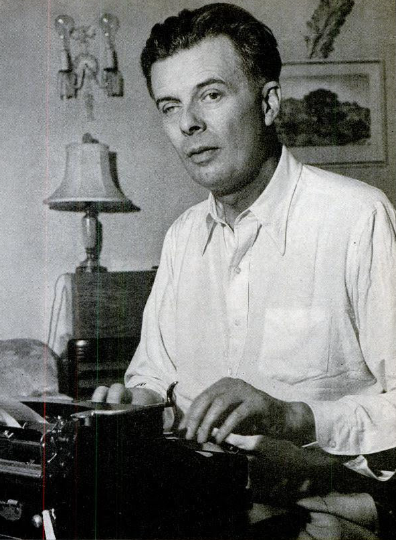
Aldous Huxley
Aldous Huxley (1894 to 1963), the English novelist, essayist and philosopher, was born in Godalming on 26 July 1894 into the well-known Huxley family. He was educated at Eton and took a degree in English literature at Balliol College, Oxford. His output ran to nearly 50 books of fiction, essays, travel writing, poetry and screenplays, and from 1937 he made his home in Los Angeles.
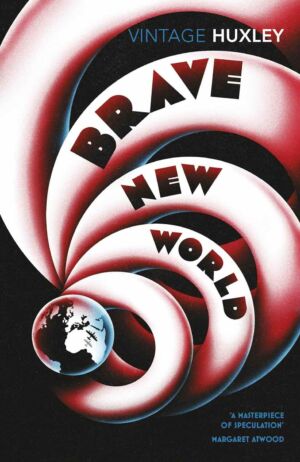
He began with short stories and poems and served as editor of Oxford Poetry, a literary magazine, then wrote novels both satirical and serious, among them Crome Yellow, Antic Hay and Point Counter Point. Brave New World (1932), his best known book, imagines a dystopia; his last novel, Island (1962), describes a utopia. He was a pacifist, and mysticism drew his interest: The Perennial Philosophy (1945) compares Eastern and Western mystical thought, and The Doors of Perception (1954) describes his own experience with mescaline. Nine times he was put forward for the Nobel Prize in Literature.
The Bookish Elf has reviewed 1 book by Aldous Huxley, mostly classic and dystopian, published by Chatto & Windus, first published in 1932.
- Nominated nine times for the Nobel Prize in Literature
- Companion of Literature, Royal Society of Literature, 1962
- James Tait Black Memorial Prize
1As a young writer he was editor of Oxford Poetry.
2The Doors of Perception records his own experiment with mescaline.
3His last twenty-six years were spent in Los Angeles.
Awards & honours
1 recordedLiterary prizes
Books
1 bookFrequently asked questions
How many Aldous Huxley books has The Bookish Elf reviewed?
We have reviewed 1 book by Aldous Huxley: Brave New World.