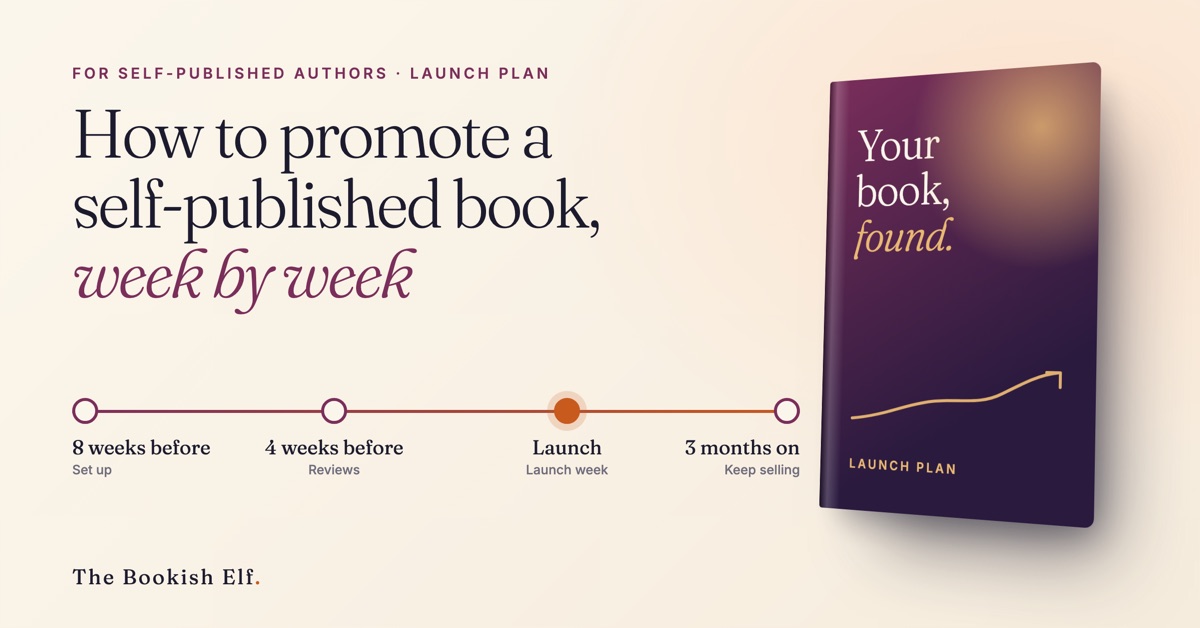
How to promote a self-published book comes down to doing things in the right order. Start eight weeks before launch: get your Amazon page ready, build a small mailing list and put early copies in readers’ hands. Use launch week to turn those readers into reviews. Save ads and paid promotions for after the page has proved it can sell, then spend the following three months on book clubs, price promotions and creators.
A lot of self-published promotion starts on publication day, with a half-finished page and nobody to tell. The plan below runs from eight weeks before launch to three months after. It assumes your editing and cover are done. Prices are in US dollars and were checked on 2 November 2026, unless a different date is given.
How to promote a self-published book: the plan at a glance
| When | Main job | Likely cost |
|---|---|---|
| 8 to 7 weeks before | Amazon page, pre-order, mailing list | Free to start |
| 6 to 5 weeks before | Review copies, reader and creator outreach | $30 a year for delivery |
| 4 to 3 weeks before | Book promotions, schedule emails, make videos | Depends on the sites you choose |
| 2 weeks before to launch | Review reminders, launch email, start ads | You set the budget |
| Weeks 1 to 4 after | Measure, fix the page, follow up | Small |
| Months 2 and 3 | Book clubs, price promotions, interviews | Varies |
What should you do 8 weeks before launch?
Finish the Amazon page first. Everything you do later sends people here. Write the description as a pitch to a reader, not a plot summary, and choose your categories with care. KDP lets you select three, and asks you to look at where similar books sit.
Set up the pre-order if you have an ebook. KDP pre-orders are for ebooks only, and you can set a date up to 18 months ahead. Choose a date you can hit. The final manuscript is due at least 72 hours before release, and a missed deadline cancels the pre-order and refunds your buyers.
Add A+ Content. This is the images, text and comparison tables section further down your page. It is available for pre-orders, and approved content should appear within eight business days.
Claim your book in Author Central. Add your photo and biography. Amazon asks for this step before you can advertise, so do it now.
Start your email list. MailerLite’s free plan covers up to 250 subscribers and 2,500 monthly emails, which is plenty at this stage. Put a sign-up form on a simple author website and offer something worth having, such as a bonus chapter or a short story. Tell family and friends, but ask them to join only if they read your genre, because a list of polite relatives teaches you nothing.
If you want a trade review, you may already be late for standard service. Kirkus and BlueInk both quote seven to nine weeks, though each sells a faster tier at extra cost. Our guide to how much book marketing costs lists their current prices.
How do you get reviews before launch?
Weeks six and five are for review copies. Prepare your ebook file and a one-page sheet with the cover, blurb, genre, comparable titles and publication date.
Then work through three groups, in this order:
- Readers you already have. Your mailing list, writing group and beta readers come first. BookFunnel’s First-Time Author plan delivers files to their devices and includes 500 downloads a month.
- Review communities. NetGalley reaches professional readers. Check its current fee, and whether a writers’ organisation you belong to offers a shared listing.
- Book bloggers. Read a blog’s submission page, then write a short personal note that shows you know what they cover. A review-only tour from Goddess Fish is $75 for 4 to 8 stops if you would rather pay someone to organise it.
Ask for an honest review, give people a date and leave it there. Some readers will not finish, and that is normal.
This is also the point to bring in outside help if you lack the time. The Bookish Elf’s promotion services for self-published books are built around this window: we suggest starting six to eight weeks before publication, though we also work with books that are already out.
How do you use Bookstagram and BookTok as a self-published author?
Start in weeks six to three, because creators plan their reading well ahead. You have two jobs here, and they need different effort.
Reach out to creators. Look for smaller accounts whose comment sections show real readers discussing your subgenre. Follower counts tell you less. Vappingo’s September 2026 BookTok guide suggests a tracking sheet with each creator’s name, genre fit, contact route, date approached and outcome, so nobody gets pitched twice. Many will read for free. Those who charge set their own rate, so agree the fee, format and date in writing before any money moves.
Post your own content. You do not need thirty finished videos. The same guide recommends planning from about ten reader-facing hooks, each of which can become a recommendation, a trope post or a reply to a comment. Lead with what readers want from the book: the trope, the setting, the one-line premise. Your publishing story interests other writers more than it interests buyers.
Bookstagram rewards a good photograph and a caption with a real opinion, and BookTok rewards a fast hook. Our piece on how the two communities work is useful background if you are new to either. Pick the one you can keep up for three months, because a dead account looks worse than none.
What should you do in the last 4 weeks before launch?
Plan your launch price and promotions. Decide whether you will launch at a discount, then book newsletter slots for launch week or just after. Newsletters such as Bargain Booksy and The Fussy Librarian sell bargain slots by genre. Check live prices when you book, and buy one or two slots at most for now.
Write your emails. Plan three: a cover reveal or sample chapter, a launch-day announcement and a thank-you with a review request. Schedule them now, while you are calm.
Add your review quotes. When early reviews arrive, put the strongest lines on your page and in your emails, with permission and credit.
Prepare your ads. Amazon says moderation usually takes 24 hours but can take three business days, so build campaigns ahead of launch week. Choose keywords your readers actually search for. Amazon also recommends running seasonal campaigns for at least four to six weeks, which matters if your book suits Christmas, summer or another date.
What should you do in launch week?
Spread your activity across the week so that sales do not rise and fall on one day. A simple order:
- Launch day: email your list, post your own announcement and thank your early readers.
- Days 2 to 3: remind early readers that the book is live and reviews are now open.
- Days 3 to 5: run your first newsletter slot.
- Days 5 to 7: turn on Amazon Ads at a modest daily budget. Daily budgets are not paced through the day, so a small one can run out early.
Run ads last on purpose. Clicks cost money, and a page without reviews gives a stranger little reason to buy.
What should you do in the first month after launch?
Stop adding tasks and start measuring. Follow the path a reader takes: profile visits, outbound clicks, sales or borrows. If people click but do not buy, the problem is usually the page, the price or the cover. If nobody clicks, the problem is the content or the targeting.
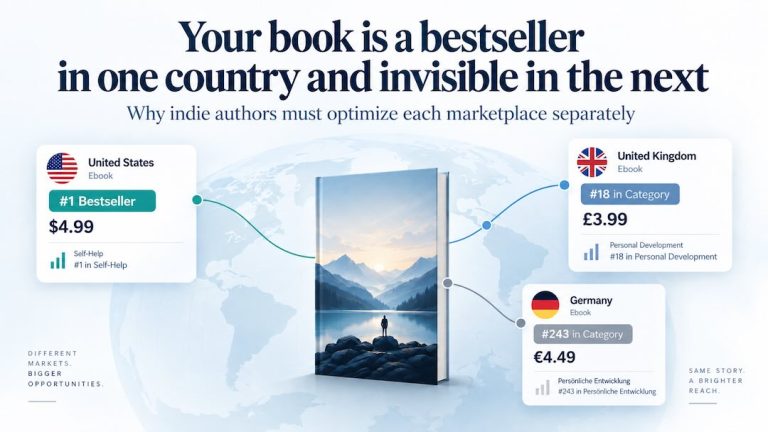
Check each store separately too, because each Amazon marketplace ranks your book on its own. Cut ad keywords that spend without selling. Send one more gentle review request to early readers. A Goodreads Giveaway can put your book on readers’ shelves. Check the current fee and eligible countries first. Goodreads and similar reading platforms are also a good place to answer reader questions.
How to promote a self-published book 2 to 3 months after launch
Many authors stop promoting at this point, but three things still work well at low cost.
Book clubs. Write eight to ten discussion questions and put them on your website and at the back of your ebook. Then offer to join a session by video, which costs nothing but an evening. Virtual book clubs make this far easier than it was, and your local library may run a group too. Paid book club listings exist too, but they are usually a poor first buy for a debut.
Price promotions. If your ebook is in KDP Select, you can run up to five free days in each 90-day period, or a Kindle Countdown Deal once the book has been enrolled for 30 days. Select requires the ebook to stay exclusive to Amazon. Pair the deal with a newsletter slot and, if you have reviews by now, apply for a BookBub Featured Deal. BookBub needs a free price or a discount of at least 50%, and selection is not guaranteed, so have a second plan ready.
Reviews and interviews that outlast launch. A review or interview on an established book site keeps working in search after your launch fades. Our author reviews and interviews reach a 200K+ audience and give you quotable lines for your Amazon page.
At the end of month three, look back at what sold. Keep the two activities that worked and drop the rest. Then start again from the mailing list, which is the one audience you own.
FAQ about promoting a self-published book
When should you start promoting a self-published book?
Eight weeks before launch is a workable minimum. Start earlier if you want a trade review, because standard service at Kirkus and BlueInk takes seven to nine weeks.
What is the best way to promote a self-published book for free?
Fix your Amazon page, build a mailing list and send review copies to readers who enjoy your genre. A free plan and your own time cover all three.
Do Amazon Ads work for a new book?
They work better once your page has reviews and a clear description. Start with a low daily budget and judge results on sales.
How do authors get on BookTok without paying?
Offer free copies to smaller creators in your subgenre, and post your own short videos built around tropes and hooks. Many creators read books they choose for free.
How do you get a book club to read your self-published book?
Start local. Offer your library or bookshop group discussion questions, a free video visit and a copy for the organiser. Then ask readers to recommend you to their own groups.
Put your book in front of readers
Our book marketing services pair your launch with reviews, features and social promotion on The Bookish Elf.
See our book marketing services