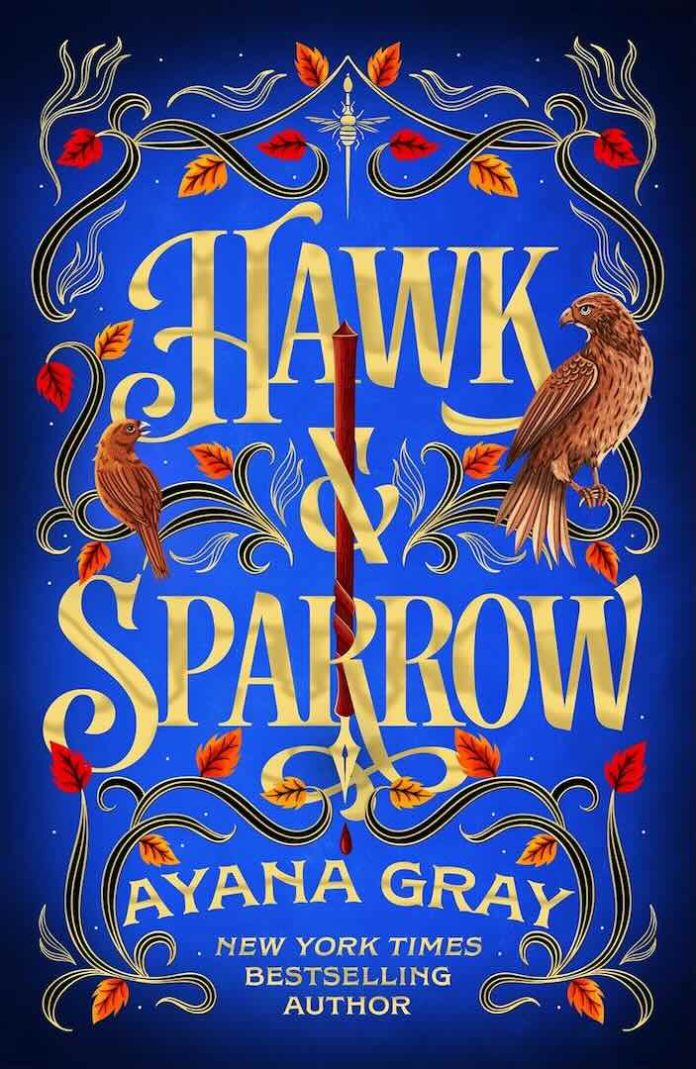
An inventor unveils a wooden box on a museum stage. Type in a prompt, flip a switch, and a ribbon of paper comes out with a magic spell printed on it. Anyone can read it aloud. Anyone at all. In the audience, a sorcerer who has spent nine years learning that language watches a man who has spent none of them conjure a dragon out of the room’s candle flames, and his face does something complicated. Two hours later the inventor is dead in a hedge maze. Hawk & Sparrow by Ayana Gray opens with one of the sharpest premises in this year’s young adult fantasy, and then spends three hundred pages deciding what to do with it.
Where Hawk & Sparrow Sits on Ayana Gray’s Shelf
Gray built her name on the Beasts of Prey trilogy, then wrote I, Medusa for adults. This is a different animal from either: a Gilded Age secondary world, a locked-city murder, a fake courtship, and a heroine who solves things by noticing them.
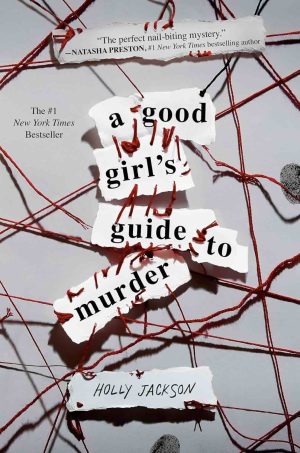
The comparison most readers will reach for is a period A Good Girl’s Guide to Murder with magic in it, and that is roughly fair. Vesper Evans is nineteen, writes for a dying newspaper under her initials because bylines by women do not sell, and reads people the way Holmes reads mud on a boot. Maximilian Kite is twenty, owns a coal empire, and is the most eligible bachelor in the city. He hires her to clear his name. She takes the job because her paper is three months behind on rent.
What separates Hawk & Sparrow by Ayana Gray from the crowded shelf it lands on is not the romance, which is competent and familiar. It is the class writing. Gray has thought hard about the economics of her invented city, and it shows in small places: the laundresses who stop returning Vesper’s smile once she starts wearing tailored clothes, the tenement units split between three families, the clerk who bars a woman from a public archive and then explains, pleasantly, that she will never prove it.
The Machine at the Centre of the Argument
The Gladwell Machine is the best idea in the book, and Gray refuses to settle it.
Magic here is a language called Thaumaric. Learning it takes years at institutions only the rich can afford, which makes sorcery less a gift than a subscription. The machine takes a plain-language prompt and returns an incantation, so a laundress or a miner could do what a Kite does. Vesper sees a great equaliser. Max sees a device that lets people speak sentences they cannot read, in a language where a mispronounced word turns air into poison, and he says so in a coffeehouse argument that is the strongest scene in the novel.
He also says something sharper: that a machine and a button are not the same as a person learning a craft, and asks how she would feel if it happened to writing. She calls that gatekeeping. He calls it protection. Neither is entirely wrong, and Hawk & Sparrow by Ayana Gray never tells you which side to take. Given what the world is currently arguing about, this will land harder on some readers than the jacket copy suggests.
What works
The best parts of Hawk & Sparrow by Ayana Gray are the ones furthest from the murder.
- Max’s illness. He has an intolerance to the energy sorcery runs on. Every spell costs him hours of pain, and he hides it behind cosmetic magic and a reputation for vanity, because a sorcerer who cannot cast is no leader. It is the most interesting thing about him.
- The deduction set pieces. Vesper dismantles a bully’s necklace with a lecture on how red diamonds form, and gets past a hostile clerk using nothing but a handkerchief and his cat allergy.
- The crime boss. A chapter two thirds through hands the novel to a small elderly woman selling pies at a market, and it is worth the price of admission.
- The factory sequence. A fire in a garment works with the doors locked from the outside, and the owners arriving to worry aloud about the stock. Anyone who knows the history of the Triangle Shirtwaist factory fire will recognise the source, and Gray does not flinch.
- The period texture. Chapter headings carry a date and a time, and November 1898 is tracked so tightly you always know how many days are left.
Where Hawk & Sparrow Gives Ground
Three things hold Hawk & Sparrow by Ayana Gray back.
- The mystery takes the scenic route. A wealthy industrialist absorbs most of the middle third as a suspect, and a long excursion into a criminal syndicate ends in a polite conversation and no new evidence. Both stretches are enjoyable. Neither moves the case.
- The solution arrives by luck. After weeks of legwork, the final piece turns up because Vesper happens to notice a charm on a bracelet in moonlight. For a book that has spent its length insisting deduction is a discipline, that is a soft landing.
- The villain structure sags. The novel stages a confrontation, closes it, then produces a second one that deflates the first rather than compounding it.
The romance is well done but assembled from parts you have met before: the ruse, the wardrobe montage, the storm that strands her at his house. Readers who came for that will be happy. Readers who came for the machine may find the plot keeps interrupting the argument.
Do You Need to Have Read Ayana Gray Before?
No. Hawk & Sparrow by Ayana Gray is a standalone with no connection to her earlier work, though the ending leaves one thread loose and a sequel would surprise nobody. Readers who know her only from I, Medusa should expect a lighter register: this is young adult, most of the violence happens off the page, and the romance stops at kissing.
Content Notes for Hawk & Sparrow
Hawk & Sparrow by Ayana Gray is gentler than its body count suggests, but the list is real. There is murder by poisoning and by blunt force, a shooting in a crowd, a strangulation attempt, and a near-drowning under ice. A childhood tenement fire kills the heroine’s parents and younger sister, and the book returns to it in nightmares more than once. There is a burning factory whose workers cannot get out, police violence against strikers, an arranged marriage between a nineteen-year-old and a man of fifty-seven, a young woman socially ruined over a kiss, sustained workplace misogyny, and a chronic illness the sufferer hides out of shame. A child is seriously ill with tuberculosis.
Read it if / Skip it if
Read it if you want a period whodunnit where the fantasy world has an economy; if a heroine who wins arguments with footnotes sounds like a good evening; if you have opinions about who gets to own a skill.
Skip it if you need a mystery you cannot outpace; if fake-dating plots are worn out for you; if a book that argues with itself and declines to conclude will only frustrate.
Read these next
Five for readers who finish Hawk & Sparrow by Ayana Gray and want more of the same air:
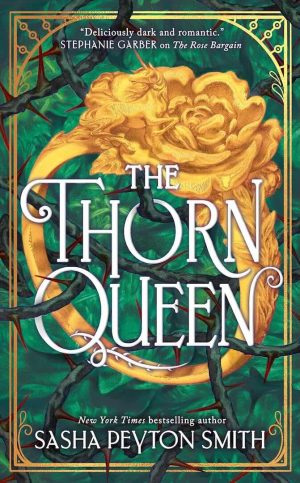
- The Thorn Queen by Sasha Peyton Smith. Period magic, a young woman with something to prove, and a similar taste for the grim underside of a glittering city.
- A Good Girl’s Guide to Murder by Holly Jackson. The modern benchmark for a teenage investigator with a notebook and no jurisdiction.
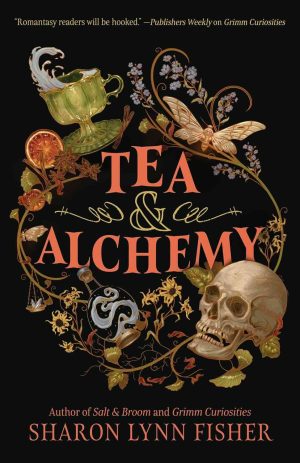
- Tea & Alchemy by Sharon Lynn Fisher. For the gaslamp mood with the murder rate lowered considerably.
- I, Medusa by Ayana Gray. Her adult novel, and the better book, though a much heavier one.
- The best gothic romance novels, our guide for anyone who liked the manor and the storm most of all.
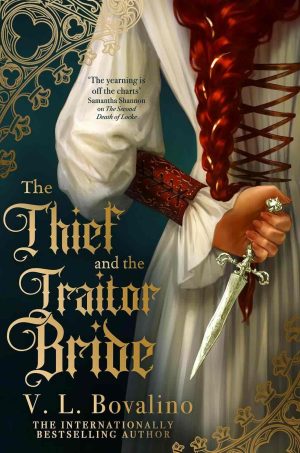
For another pair of partners who cannot afford to trust each other, The Thief and the Traitor Bride by V.L. Bovalino puts an estranged married couple on the same mission.
The Last Word
Late on, Vesper stands in an aviary while an ornithologist explains that the chestnut sparrow is the smallest of its kind, the best at solving problems, and constantly underestimated. A few feet away, Max is admiring a hawk. She decides the pairing is doomed, which tells you where the title comes from and roughly how subtle the book means to be about it. That is Hawk & Sparrow by Ayana Gray in miniature: the imagery is obvious, the feeling underneath it is not. Gray has written a mystery a practised reader will solve early, wrapped around a question about access and craft that nobody has solved at all. The murder is the part the book thinks it is about. The argument is the part you will still be having a week later, most likely with yourself.