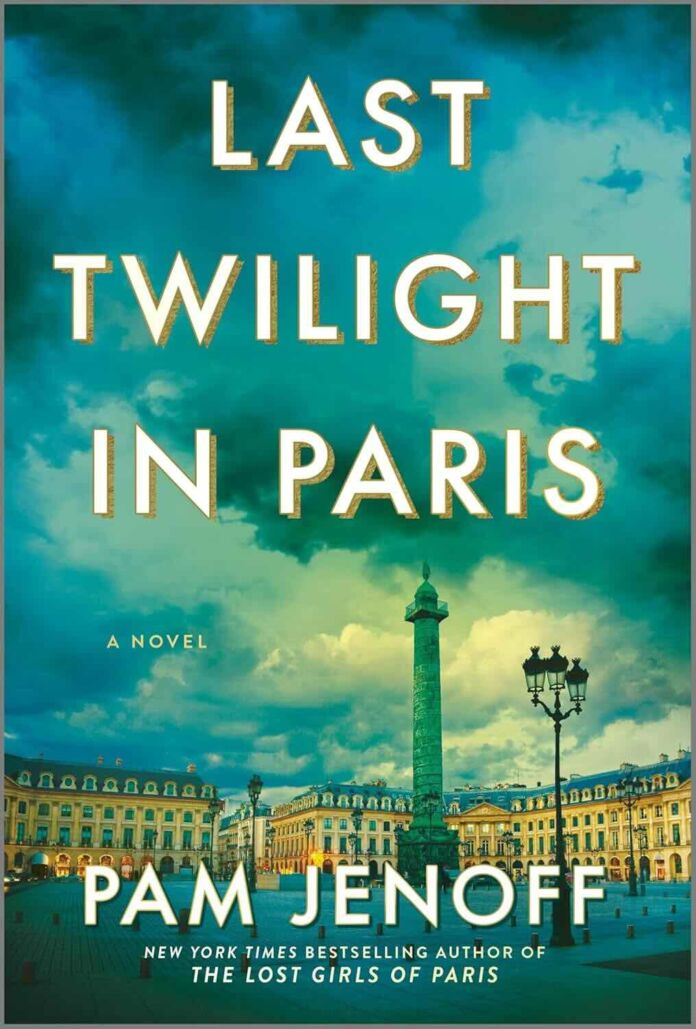
In her latest historical fiction masterpiece, New York Times bestselling author Pam Jenoff weaves an intricate tale of mystery, love, and survival centered around a Parisian department store during World War II. “Last Twilight in Paris” showcases Jenoff’s remarkable ability to blend historical facts with compelling fiction, though occasionally the parallel narratives compete for emotional resonance.
Plot and Structure
The novel unfolds through two interconnected timelines. In 1953 London, we follow Louise Burns, a former Red Cross volunteer turned housewife, who discovers a mysterious half-heart necklace that triggers memories of her wartime experiences and the death of her friend Franny. The second timeline, set in 1940s Paris, follows Helaine Weil, a young Jewish woman imprisoned in the Lévitan department store, which the Nazis transformed into a sorting facility for stolen Jewish possessions.
Strengths and Literary Merit
Jenoff’s greatest triumph lies in her meticulous research and ability to bring lesser-known historical events to light. The author’s portrayal of Lévitan as a “prison department store” is particularly haunting and based on true events. The writing is crisp and evocative, especially in scenes depicting wartime Paris and the psychological impact of imprisonment.
Some of the most powerful passages come from Helaine’s perspective:
“The space they had shared and filled with laughter and love felt small and drab without him, a shell of what it had once been… The world they had created together was gone, as though it had never existed at all.”
Character Development
Primary Characters:
- Louise Burns: A complex protagonist whose postwar struggles feel authentic and relatable
- Helaine Weil: A particularly well-drawn character whose growth from sheltered daughter to survivor is compelling
- Gabriel Lemarque: The cellist whose story ties multiple plot threads together
- Franny Beck: Though deceased early in the narrative, her presence haunts the story effectively
Critical Analysis
While the dual timeline structure is generally effective, there are moments when the transitions feel abrupt, potentially disrupting the narrative flow. The 1953 sections occasionally lack the same intensity as the wartime sequences, though this may be intentional to highlight the contrast between periods.
Areas for Improvement
- The resolution of certain plot threads, particularly involving Ian’s betrayal, feels somewhat rushed
- Some secondary characters could have been more fully developed
- The coincidences that drive the plot occasionally strain credibility
Historical Context and Accuracy
One of the novel’s greatest strengths is its illumination of a little-known aspect of the Holocaust: the use of department stores as sorting facilities for stolen Jewish property. Jenoff handles this sensitive material with appropriate gravity while maintaining narrative momentum.
Comparison to Other Works
Readers familiar with Jenoff’s previous works like “The Kommandant’s Girl” and “The Lost Girls of Paris” will recognize her skilled handling of wartime narratives. The book also shares thematic elements with works like Kristin Hannah’s “The Nightingale” and Martha Hall Kelly’s “Lilac Girls,” though Jenoff’s focus on the unique setting of Lévitan sets it apart.
Writing Style and Prose
Jenoff’s prose is elegant yet accessible, with particularly strong descriptive passages of wartime Paris. Her dialogue rings true to both time periods, though occasionally modern phrasings slip into the 1940s sections.
Impact and Resonance
The novel’s exploration of postwar trauma and the lingering effects of wartime experiences feels particularly relevant. Both Louise and Joe’s struggles to reconnect after the war offer a touching portrayal of marriage under strain.
Final Verdict
“Last Twilight in Paris” is a good read for its:
- Innovative use of historical material
- Strong character development
- Compelling mystery elements
- Important historical revelations
However, some plot conveniences and pacing issues prevent it from achieving perfection.
Recommendation
This book is highly recommended for readers who:
- Enjoy World War II historical fiction
- Appreciate dual-timeline narratives
- Are interested in lesser-known aspects of Holocaust history
- Value character-driven mysteries
Closing Thoughts
Despite its minor flaws, “Last Twilight in Paris” represents another strong addition to Jenoff’s impressive body of work. The author continues to find fresh angles on World War II history while creating engaging, emotionally resonant narratives.
The novel’s greatest achievement may be its reminder that the effects of war ripple through generations, and that healing often requires confronting painful truths. Through Louise and Helaine’s intertwined stories, Jenoff demonstrates how the past continues to shape our present, and how understanding history can lead to personal redemption.
Last Twilight in Paris serves as both a gripping mystery and a poignant reminder of the human capacity for resilience in the face of unimaginable adversity. While not without its imperfections, it stands as a worthy addition to the genre of World War II historical fiction.







