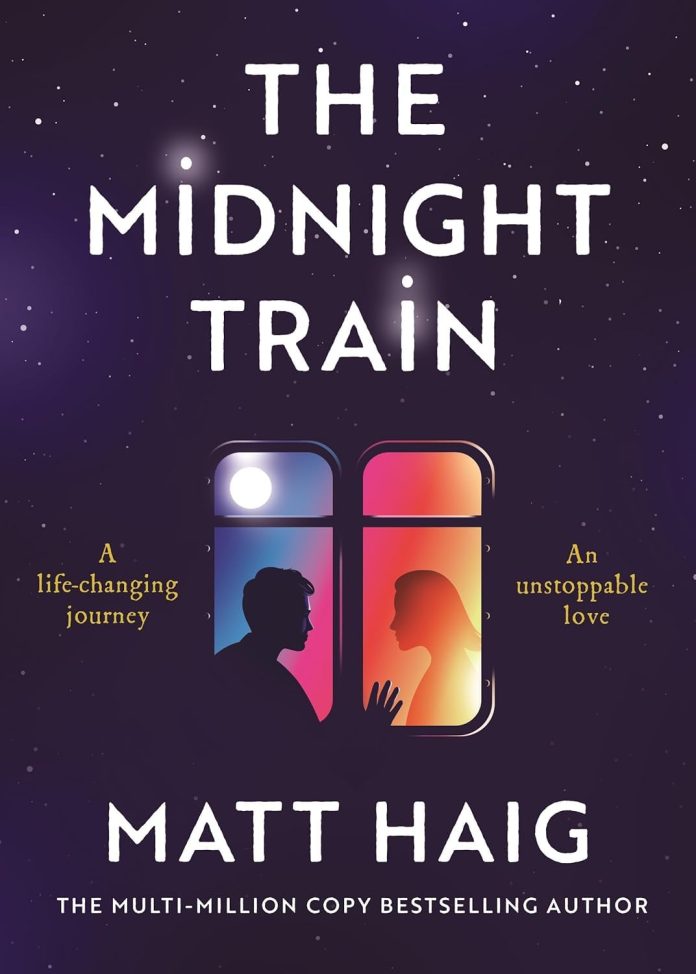
There is a particular kind of book that makes you want to stop, look up from the page, and ring someone you have not spoken to in too long. The Midnight Train by Matt Haig is one of those books. It arrives nearly six years after The Midnight Library, and rather than offering a tidy sequel, it builds a companion piece. The two novels now sit on the shelf like siblings politely arguing about how a life ought to be lived.
What You Are Stepping Into
The Premise in Brief
Wilbur Budd is eighty-one, wealthy, a celebrated bookseller, and quite alone in a large Bedfordshire house. After a phone call from someone he has not heard from in decades, he finds himself, very politely and very inconveniently, dead. From there, his life flashes by exactly as the cliché promises, only the flashing happens through the windows of an old steam engine. His guide is a ghost named Agnes Bagdale, who knew him as a coin-less child loitering in her Sheffield bookshop. Together they ride through his story, pausing at the places that shaped him.
The blurb sets up the central tension cleanly. Wilbur wants to go back to his honeymoon in Venice with Maggie, the woman he loved before he gave it all away. The Midnight Train can take him there. Whether changing the past is permitted, possible, or wise becomes the engine of the plot. Matt Haig keeps things spoiler-light in his blurb, and so will this review.
The Sheffield Heart of the Story
Haig writes Sheffield with the deep affection of someone who knows what the city sounds like on a quiet Saturday afternoon. Glossop Road, Endcliffe Park, the long-gone Coles Corner, the Crucible on its opening night, the milk bars and bookshops of a working-class North turning slowly into the sixties and seventies. The atmosphere is sketched with such warmth that even readers who have never set foot in Yorkshire will feel they have lived there for an afternoon. Venice, the other anchor of the novel, glows just as kindly. The canal-light, the Titian references, the bookstall on the Rialto Bridge, all of it earns its place.
Maggie, and the People Around Her
The relationship between Wilbur and Maggie is the soul of the book, and Maggie is the finer creation of the two. She is observant, funny in a needling sort of way, an artist who knows herself early. She gives Wilbur a vocabulary for light and shadow, for chiaroscuro, that he carries through every decade. When she is on the page, the prose lifts. When she is not, the absence is the point.
Other figures land just as cleanly. Charlie Applewood, the maths-and-music best friend. Dougie, the older brother whose rebellion casts a long shadow. Edith, the mother whose grief curdles into resentment. Mr Parkin, the rent-collector who turns out to be more than a villain. Even Agnes, prim and clipped and quietly heartbroken, becomes a character worth missing by the final page.
The Voice on the Page
Anyone who has read Matt Haig before will recognise the sentence rhythm here. Short paragraphs, sudden aphorism, a sly fondness for the small comic aside. The book is built from very brief chapters, sometimes only a line or two long, which gives the whole thing the feel of a film cut together by someone who loves their footage too much to leave any of it behind. Haig leans into the railway metaphor without becoming silly about it, and the philosophical asides have the easy warmth of a friend talking, not a lecturer talking down.
Lines That Stay With You
A handful of ideas linger after the book is closed. The thought that some days are Russian doll days, holding every day that comes after them. The notion that time turns houses into museums and lovers into strangers. These are the moments where The Midnight Train by Matt Haig earns its keep.
What Works Beautifully
A handful of things stood out as the strongest threads of the novel:
- The bookshop scenes, especially the early apprenticeship at Bagdale’s, are written by someone who clearly loves the trade and its small, daily rituals.
- Maggie’s letter, glimpsed only in fragments, carries more emotional weight than entire chapters often manage.
- The Venice setting acts as both bookend and beating heart, with canal-light and art references doing real work rather than just decoration.
- The Nora Seed cameo is handled with restraint and gives long-time Haig readers a quiet shiver of recognition without leaning on it.
- The pacing of regret is genuinely well-judged in the second half, particularly in chapters set in New York and a Pimlico pizza restaurant.
Where the Train Slows Down
Now to the truthful part. The Midnight Train by Matt Haig is not without its flaws, and the mixed praise it has received feels earned. The premise sits very close to The Midnight Library, and at times the book seems to be having the same conversation with itself that the earlier novel already had. The cosmic mechanics of the train are deliberately fuzzy, which is fine until the final stretch, when the rules suddenly start to matter and the reader has to take them on trust.
Wilbur, for long stretches, is a passive protagonist. His ghost is constantly urging his younger self to act, which is the book’s neatest dramatic trick, but it can also tip into pleading. A few philosophical passages restate ideas the reader has already absorbed an hour ago. A tighter edit might have trimmed twenty short chapters without anyone noticing they were gone.
There is also a slight predictability to the romantic arc. Anyone who has read a regret-and-redemption novel will see the destination from a long way off. The pleasure here lies in the scenery, not the surprise.
Where It Sits in the Midnight World Series
Matt Haig has confirmed this as the second book in what is now being shelved as The Midnight World series.
Book 1: The Midnight Library
The Nora Seed novel that became a global phenomenon. A library between life and death, where Nora samples the lives she did not lead.
Book 2: The Midnight Train
The book under review here. A train through life after death, where Wilbur revisits the one life he did lead.
The connection is thematic rather than narrative. You can read either first. The earlier book asks what other lives you could have lived. The Midnight Train by Matt Haig asks what you actually did with the one you have. Reading them back to back is a strangely moving experience, like overhearing two old friends finishing each other’s arguments.
For Readers New to Matt Haig
His back catalogue is generous. How to Stop Time, The Humans, The Radleys, and The Life Impossible are the natural fiction next stops. Reasons to Stay Alive, The Comfort Book, and Notes on a Nervous Planet are the non-fiction companions, while A Boy Called Christmas sits at the children’s end of the shelf.
If You Loved This, Try These
For readers who finish The Midnight Train by Matt Haig and want the same emotional weather:
- The Midnight Library by Matt Haig, the obvious and necessary companion read.
- A Christmas Carol by Charles Dickens, the foundational ghost-led life review.
- Life After Life by Kate Atkinson, for another novel about second chances and the shape of a life.
- The Time Traveler’s Wife by Audrey Niffenegger, for the love-across-time tone.
- The Five People You Meet in Heaven by Mitch Albom, a kindred spirit in afterlife storytelling.
- A Man Called Ove by Fredrik Backman, for a similar warm reckoning with a stubborn man’s late chapters.
- The Invisible Life of Addie LaRue by V. E. Schwab, for memory, love, and bargains with time.
The Last Stop
The Midnight Train by Matt Haig is not a perfect novel, but it is a generous one. It is gentler than its premise suggests, sharper than its reputation as a comfort-read might imply, and quietly insistent that the small things, a bench in Endcliffe Park, a record played in an empty house, a friend at lunch, are what survive a life. Readers who loved The Midnight Library will find a softer, more melancholy cousin here. Those who did not will probably feel the same way about both. By the time you finish The Midnight Train by Matt Haig, the book has done what only the better novels do. It has made you want to phone someone before it gets too late.







