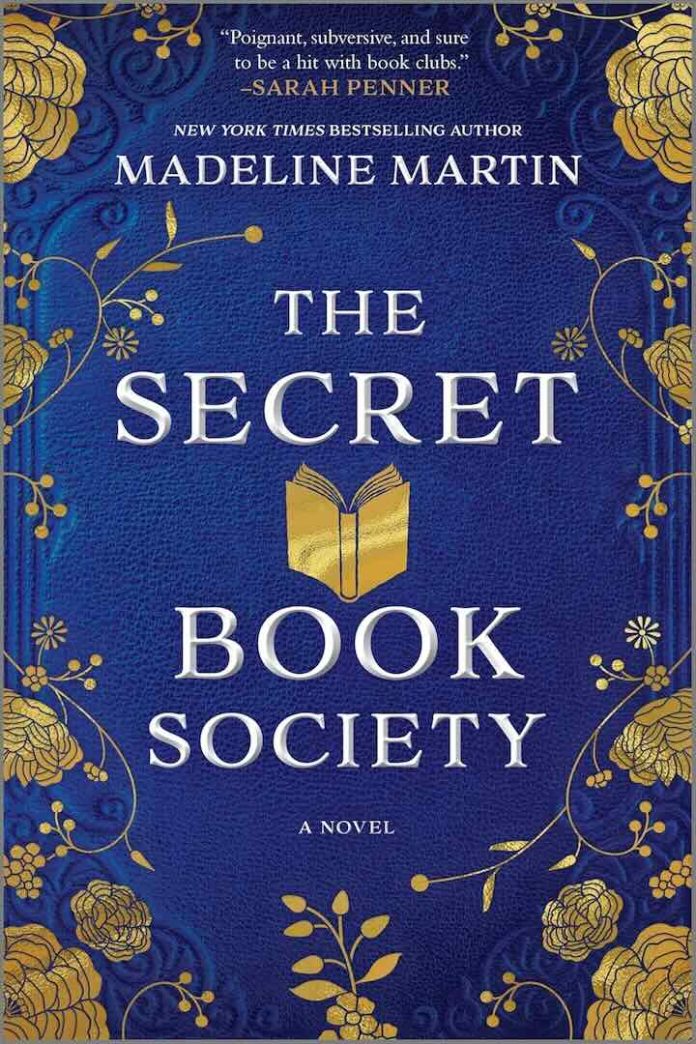
In the gaslight-illuminated streets of 1895 London, Madeline Martin weaves a story that feels both historically grounded and urgently contemporary. The Secret Book Society presents itself as more than just another Victorian historical fiction novel—it’s a carefully constructed narrative about the transformative power of literature and female solidarity in an era when women’s voices were systematically silenced.
The story centers on three women who receive mysterious invitations to tea with the enigmatic Lady Duxbury: Eleanor Clarke, trapped in an abusive marriage while desperately protecting her young son; Rose Wharton, an American “dollar princess” struggling to find her place in English aristocratic society; and Lavinia Cavendish, a passionate young woman whose family fears her literary inclinations might drive her to madness. Each woman carries the weight of societal expectations, their individual struggles forming a tapestry of feminine oppression that Martin handles with both sensitivity and unflinching honesty.
Character Development: The Heart of the Narrative
Martin’s greatest strength lies in her character development. Eleanor’s transformation from a cowering wife to a woman willing to defend herself with a hatpin is both believable and inspiring. The author doesn’t rush this evolution; instead, she allows Eleanor’s courage to grow organically through her exposure to empowering literature and supportive friendships. The scenes depicting Eleanor’s abuse are handled with careful restraint—Martin conveys the horror without sensationalizing it, focusing instead on the psychological impact and Eleanor’s internal journey toward self-preservation.
Rose’s arc as an American transplant offers fascinating insights into the cultural tensions of the era. Martin skillfully explores how Rose’s “American boldness” becomes both her strength and her liability in English society. The revelation of Theodore’s visits to brothels while restricting Rose’s reading creates a powerful contrast that highlights the hypocrisy of Victorian moral standards.
Lavinia’s story resonates particularly strongly in contemporary times. Her family’s fear that passionate reading might lead to madness reflects historical anxieties about women’s intellectual capabilities, yet Martin imbues Lavinia with genuine literary passion that feels authentic rather than performative. Her secret poetry writing and eventual romance with the bookish Mr. Wright provide hope without sacrificing the novel’s more serious themes.
The Mysterious Lady Duxbury: A Masterful Creation
Lady Duxbury herself is perhaps Martin’s most complex creation. Through diary entries that Eleanor discovers, readers learn of Clara’s horrific past—kidnapping, forced marriage, sexual assault, and the loss of her child. Yet Martin avoids turning her into a simple victim. Instead, Lady Duxbury emerges as a woman who has transformed her trauma into purpose, using her wealth and position to create safe spaces for other oppressed women.
The mystery surrounding Lady Duxbury’s three deceased husbands adds an intriguing element of suspense. Martin handles the revelation that at least one death was justified self-defense with remarkable nuance, avoiding both the glorification of violence and the condemnation of a woman protecting herself from abuse.
Historical Authenticity and Atmospheric Writing
Martin’s research shines throughout the novel. From the detailed descriptions of Victorian social hierarchies to the authentic portrayal of women’s legal vulnerabilities, the historical backdrop feels lived-in rather than researched. The author’s inclusion of period-appropriate literature—from Jane Austen to Edgar Allan Poe—demonstrates both her literary knowledge and her understanding of how books shaped Victorian women’s worldviews.
The atmospheric writing particularly excels in scenes set in Lady Duxbury’s library, which becomes almost a character itself. Martin describes it as a sanctuary where “rows and rows and rows of books” offer “adventures” and access to “characters” and “worlds.” This reverence for literature permeates the entire narrative, making the reader understand why these books matter so desperately to the protagonists.
Pacing and Structure: Both Strength and Weakness
The novel’s structure, alternating between the three women’s perspectives with occasional diary entries from Lady Duxbury, generally works well. However, some middle chapters feel overly deliberate in their pacing. Martin sometimes lingers too long on tea conversations when the plot demands more momentum, particularly during the build-up to Eleanor’s crisis.
The climactic scenes, however, are expertly handled. Eleanor’s final confrontation with Cecil is both terrifying and cathartic, while the asylum rescue sequence maintains appropriate tension without becoming melodramatic. Martin’s decision to keep the resolution of Cecil’s death ambiguous—was it murder or accident?—respects both Eleanor’s agency and the reader’s intelligence.
Literary Themes and Social Commentary
Beyond its entertainment value, The Secret Book Society offers thoughtful commentary on women’s intellectual freedom. Martin explores how controlling what women read serves as a mechanism of broader control over their thoughts, relationships, and autonomy. The contrast between the men’s access to explicit material (Theodore’s prostitution guides) and the women’s restrictions on novels like Jane Eyre effectively illustrates this hypocrisy.
The book club itself becomes a metaphor for female solidarity in the face of patriarchal oppression. Martin shows how shared reading experiences can create bonds that transcend class differences—the merchant’s wife Eleanor finds kinship with the aristocratic Lady Duxbury and the American Rose through their common literary ground.
Minor Criticisms
While generally well-executed, the novel has some weaker elements. The romance subplot between Lavinia and Mr. Wright, while sweet, feels somewhat underdeveloped compared to the more complex relationships between the women. Additionally, some of the dialogue occasionally veers toward the overly formal, sacrificing natural flow for period authenticity.
The resolution, while satisfying, wraps up perhaps too neatly. Eleanor’s newfound freedom, Rose’s pregnancy announcement, and Lavinia’s engagement all converge in the epilogue in a way that feels slightly contrived, though admittedly emotionally satisfying.
Martin’s Writing Style and Literary Merit
Martin writes with a clear, accessible style that serves the story well without calling attention to itself. Her prose has moments of genuine beauty, particularly in descriptions of the women’s emotional states and their relationships with books. The author demonstrates skill in balancing multiple narrative threads without losing coherence, though some readers may find the alternating perspectives occasionally jarring.
The book succeeds in what it sets out to do: creating an immersive historical world where modern readers can recognize themselves in women struggling for intellectual and personal freedom. Martin avoids the trap of making her Victorian characters think like contemporary women while still making their motivations comprehensible to modern sensibilities.
Comparison to Martin’s Previous Works
Readers familiar with Martin’s previous novels—The Last Bookshop in London, The Librarian Spy, and The Keeper of Hidden Books—will recognize her consistent themes about the power of literature during times of oppression. However, The Secret Book Society feels more intimate than her wartime novels, focusing on personal rather than historical trauma while maintaining the same reverence for books and reading.
This novel demonstrates Martin’s growth as a writer, particularly in handling complex trauma narratives with sensitivity and creating fully realized female characters who feel authentic to their historical period while remaining relatable to contemporary readers.
Verdict and Recommendations
The Secret Book Society succeeds as both historical fiction and as a celebration of literature’s transformative power. While it has minor pacing issues and occasionally relies on convenient plotting, the strength of its characters and the authenticity of its historical world make it a compelling read.
This book will particularly appeal to readers who enjoyed:
- The Midnight Library by Matt Haig – for its celebration of books and reading
- The Seven Husbands of Evelyn Hugo by Taylor Jenkins Reid – for its strong female characters and secrets
- The Invisible Bridge by Julie Orringer – for its historical detail and character development
- The Book Thief by Markus Zusak – for its reverence of literature during dark times
- The Silent Companions by Laura Purcell – for its Victorian gothic atmosphere
The novel stands as both an entertaining historical drama and a thoughtful exploration of how literature can provide solace, strength, and solidarity in the face of oppression. While not perfect, it’s a worthy addition to the growing canon of novels celebrating the transformative power of reading and female friendship.
Recommended for: Historical fiction enthusiasts, book club readers, and anyone interested in Victorian women’s stories told with both historical accuracy and contemporary relevance.







