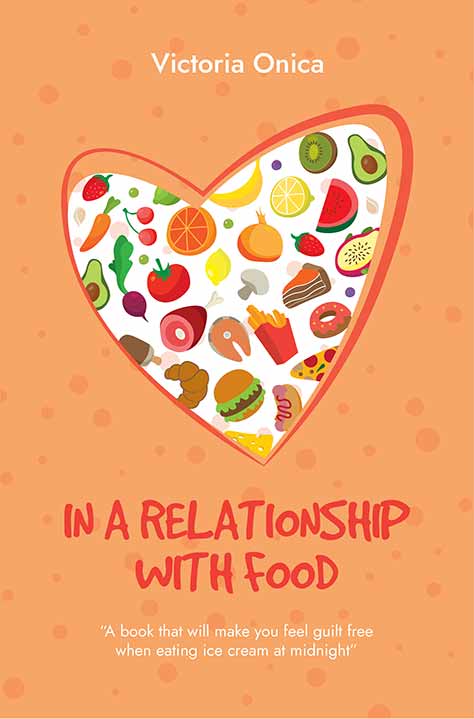
Title: In a Relationship with Food
Author: Victoria Onica
Publisher: Independently Published
Genre: Health & Wellness, Food & Lifestyle
First Publication: 2022
Language: English
Book Summary: In a Relationship with Food by Victoria Onica
Having a healthy relationship with food is not about having dates with food each week,
and saying “I love you” to that tiramisu cake every day.
A Healthy relationship with food is about: observation, balance, mindfulness, and joy. This
book will get you through the history of food and how it evolved through different periods of
time. This will help you understand how food changed its purpose, from being a source of
fuelling our body, to a guilty pleasure for our soul.
Victoria Onica, herself has been through a tough path to having a healthy relationship
with food. Since she was 13 years old, she has been through various diets and loss weights
programs that only made her hide her anxiety by eating junk food. Through these
years, she learnt how to eat mindfully and feel fulfilled with her healthy relationship with
food.
Hоw common аnd еffоrtlеѕѕ it іѕ to еаt in an unсоntrоllеd, unаwаrе, mіndlеѕѕ mаnnеr?
Whаt іѕ mіndful eating? “Eating mindfully” A Diet? What’s wrong with dieting? How will
awareness help me eat better? How does mindfulness help people with different kinds of
eating issues? All answers to these questions can be found in In a Relationship with Food.
Flip a coin, yes you got me right, flip a coin whenever you feel like eating a whole pizza by
yourself. Remove distractions, minimize comfort eating, delay eating and more mindful
eating motivator to be found in the book. Loaded with practical exercises to support you
in your relationship with food journey, this book will empower you to eat what your
heart desires and when it desires, get you out of that toxic relationship with food and
make you eat sweets at midnight without feeling any guilt.
Book Review: In a Relationship with Food by Victoria Onica
In a Relationship with Food by Victoria Onica is written with the intention of enlightening readers about their eating habits, including how much they eat, what they consume, and why they eat in certain ways—sometimes without being aware of it or being able to realise it. There are both good and destructive styles of eating, and we can never entirely get rid of the mindlessness. This book will assist us in making more informed decisions about the food that we consume, whether we are cooking for ourselves or others, or dining at a restaurant.
The majority of us don’t eat because we’re hungry, and what’s even more concerning is that we don’t stop eating when we’re already full. Instead of using hunger as a sole determinant of how much and for how long we eat, we turn to external signals. The topic is brought to the reader’s attention in a significant way, and there will be a lot more people thinking about it after reading this book.
In a Relationship with Food explores our preferences with regard to eating, namely what leads us to eat, what causes us to love food, and what causes our eating routines. Victoria Onica explains, with the use of studies and research, that practically all of our choices about food and eating are psychological, and that even though we believe we have control over these decisions, we really don’t. She discusses a number of cases and examines a variety of different scenarios, all of which are quite fascinating to read.
Aside from this, the overall premise of the book is to provide a strategy for dieting that is grounded in reason and logic and that the author refers to as “mindful eating.” In contrast to extreme diets, which are either difficult to follow or ineffective, she gives various advice based on studies that may help individuals lose weight gradually but steadily with just a little adjustment to their lifestyle. These guidelines should help people keep the weight off after it has been lost.
Victoria Onica’s In a Relationship with Food includes a lot of fascinating studies on the factors that influence our food intake. For example, we should not be eating while engaged in other activities. Although multitasking saves time, doing so while eating presents a number of serious issues. Studies have shown that dividing your attention between eating and another activity, such as watching television or listening to the radio, makes it more likely that you will consume an excessive amount of food. Your ability to concentrate and be aware will be hindered if you try to do two things at the same time. This compromises your ability to choose foods wisely.
“In a Relationship with Food” is not a book on dieting, but at the end of each chapter, Victoria Onica does provide suggestions on how to quickly cut out the calories by avoiding mindless eating each day, which causes us to gain weight over time. One of the most essential takeaways from this book is the need to develop a heightened sense of self-awareness about all of the aspects of our everyday eating that remain invisible.
In a Relationship with Food by Victoria Onica combines diet instructions with lessons on the cognitive flaws in the human psyche that make dieting necessary for so many of us. I absorbed a lot of information and made mental notes on various strategies to improve my eating habits. This is a book that flows effortlessly and entertains while imparting valuable information to its readers. The book promotes better health, makes you ponder deeply about food, and gives you more motivation to improve your eating habits and eat better.







