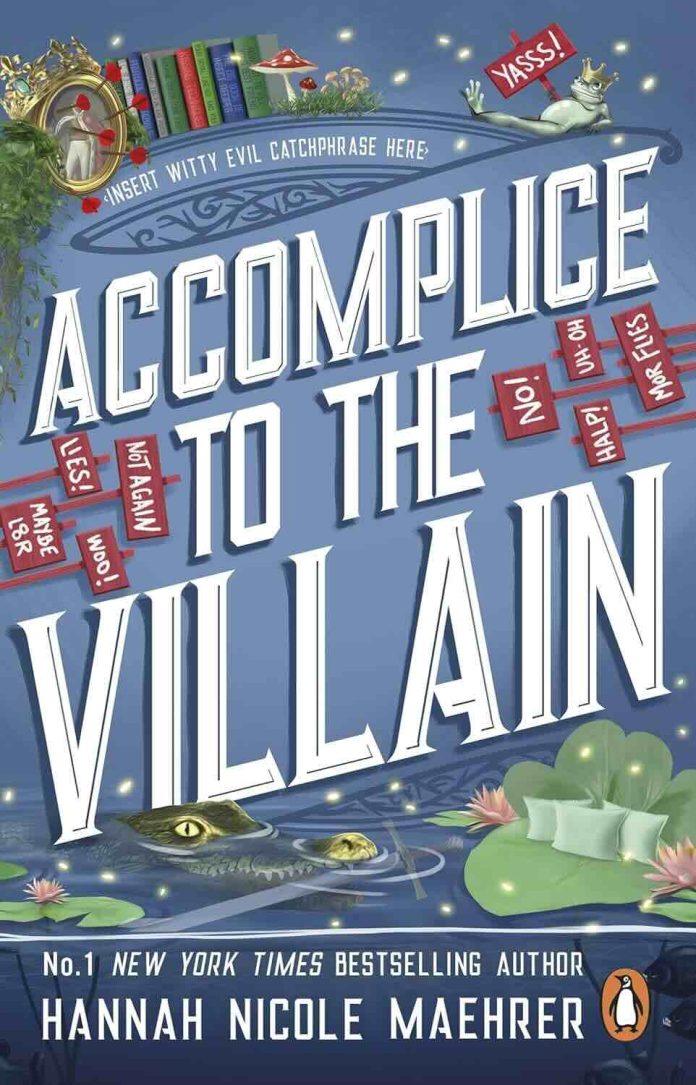
Hannah Nicole Maehrer’s Accomplice to the Villain delivers the long-awaited conclusion to her beloved Assistant to the Villain series, bringing Evie Sage and Trystan Maverine’s slow-burn romance to a crescendo that’s been three books in the making. After the workplace comedy gold of Assistant to the Villain and the darker political intrigue of Apprentice to the Villain, this final installment strikes an impressive balance between humor, heart, and high-stakes fantasy adventure.
The series has always been Maehrer’s love letter to the morally gray love interest—those complex characters who blur the lines between heroism and villainy. In Accomplice to the Villain, she finally allows her readers to witness the full transformation of both her protagonists as they navigate prophecies, family betrayals, and the ultimate question: can love truly conquer predetermined fate?
Plot and Pacing: A Juggling Act of Heart and Chaos
The third book opens with Evie now officially promoted to Trystan’s apprentice, but their relationship remains frustratingly complicated. The plot weaves together multiple storylines: the mysterious curse that has transformed Prince Alexander into a frog named Kingsley, the growing instability of Rennedawn’s magical balance, and the looming threat of a prophecy that suggests Evie and Trystan are destined to destroy each other.
Maehrer’s pacing has notably improved since the first book. Where Assistant to the Villain sometimes felt scattered with its office comedy antics, and Apprentice occasionally bogged down in political maneuvering, Accomplice maintains a steady momentum that propels readers through its 85 chapters. The author skillfully alternates between Evie’s sunshine perspective and Trystan’s brooding internal monologue, creating a dual narrative that enriches both characters’ development.
However, the book’s greatest strength—its ambitious scope—occasionally becomes its weakness. Maehrer attempts to resolve multiple plot threads simultaneously: the romantic tension, the magical prophecy, family betrayals involving both Evie’s parents and Trystan’s manipulative mother Amara, and the broader political implications for Rennedawn. While most threads tie together satisfyingly, some resolutions feel slightly rushed, particularly the complex magical explanations surrounding the curse-breaking mechanics.
Character Development: Growth Through Adversity
Evie Sage: From Assistant to Accomplice
Evie’s character arc across the series represents one of young adult fantasy’s more nuanced coming-of-age journeys. In this final installment, she faces her most challenging test: accepting that loving someone doesn’t mean sacrificing her own identity. Maehrer writes Evie’s internal struggle with authentic emotion as she grapples with a destiny that labels her the “villain” while Trystan becomes the “hero.”
The author deserves credit for not falling into the trap of making Evie’s growth dependent solely on her romantic relationship. Her evolution from eager assistant to confident apprentice to true partner feels earned through her actions, not just her feelings. Her decision-making becomes more strategic, her magical abilities more controlled, yet she retains the optimistic humor that made readers fall in love with her character.
Trystan Maverine: The Villain’s Redemption
Trystan’s character development proves more complex and arguably more satisfying. Maehrer has spent two books establishing his moral ambiguity, and in Accomplice, she allows him to fully embrace both his capacity for darkness and his ability to choose love. His internal monologue reveals the depth of his transformation, though he maintains the sardonic wit that defines his character.
The revelation of his true magical nature and his willingness to sacrifice everything for Evie creates genuinely emotional moments. Maehrer particularly excels in writing his vulnerability—scenes where Trystan drops his villainous facade reveal a man who’s learned to love despite every reason not to.
Supporting Cast: A Rich Ensemble
The supporting characters receive more development in this installment. Clare’s relationship with Tatianna adds depth to the found family dynamic, while the mystery surrounding Prince Alexander’s curse provides emotional weight to what could have been merely comic relief. Even Kingsley the frog emerges as a more complex character than his previous appearances suggested.
However, some secondary characters feel underutilized. Blade and Gideon, who showed promise in earlier books, remain somewhat peripheral. The workplace ensemble that made the first book so charming takes a backseat to the romantic and magical plotlines, which may disappoint readers who loved the office comedy elements.
Writing Style: Humor Meets Heart
Maehrer’s writing style has matured considerably throughout the series. Her signature humor remains intact—Evie’s internal commentary and her banter with Trystan continue to provide laugh-out-loud moments. The author’s background as a BookToker shows in her instinctive understanding of what readers want: swoon-worthy romantic moments balanced with genuine character development.
The dialogue sparkles with wit, particularly in scenes between Evie and Trystan. Maehrer has mastered the art of sexual tension through conversation, creating exchanges that crackle with unresolved feelings and unspoken desires. Her descriptive prose has also improved, painting vivid pictures of magical moments without becoming overly flowery.
However, the book occasionally suffers from pacing issues common to conclusions of long series. Certain emotional beats feel rushed while others linger longer than necessary. The climactic scenes, while satisfying, could have benefited from more buildup to increase their emotional impact.
Romance: The Slow Burn Finally Ignites
After three books of will-they-won’t-they tension, Maehrer finally allows her protagonists to acknowledge their feelings fully. The romantic payoff feels earned rather than rushed, built on a foundation of genuine partnership and mutual respect rather than mere attraction.
The love scenes, while tastefully handled for the young adult audience, carry real emotional weight. Maehrer writes physical intimacy as an extension of emotional intimacy, showing how Evie and Trystan’s connection transcends both destiny and circumstances.
The prophecy element adds an interesting layer to their romance—the idea that they’re fated to destroy each other creates genuine stakes while exploring themes of choice versus destiny. Their decision to fight fate together rather than accept its predetermined outcome provides a satisfying romantic resolution that feels true to both characters.
World-Building: Magic with Consequences
Maehrer’s world-building reaches its strongest point in Accomplice to the Villain. The magical system, while sometimes complex, creates interesting consequences for character actions. The concept of Rennedawn’s magical balance affecting everything from individual powers to the stability of the kingdom itself provides urgency to the plot.
The author’s exploration of different magical abilities—from Evie’s rainbow-colored magic to Trystan’s death magic to the enchantress Belinda’s transformative powers—creates a rich magical landscape. The connection between magic and emotion, particularly in the romantic elements, feels organic rather than forced.
However, some magical explanations become convoluted, particularly regarding the curse-breaking mechanics and the prophecy’s true meaning. While complexity can enhance fantasy world-building, occasional moments of over-explanation slow the narrative momentum.
Themes: Choice, Love, and Identity
The book’s central theme examines whether people can transcend their predetermined roles. Evie and Trystan both struggle with labels—assistant/villain, hero/villain, lover/destroyer—and their journey toward self-definition resonates beyond the fantasy elements.
Maehrer also explores family dynamics, particularly the impact of parental manipulation and betrayal. Both protagonists must confront parents who’ve used them for personal gain, leading to character growth that feels authentic and necessary.
The theme of found family versus blood family runs throughout the series and reaches satisfying resolution in this book. The bonds Evie and Trystan form with their chosen family prove stronger and more meaningful than their biological relationships.
Technical Critique: Strengths and Weaknesses
Strengths:
- Character Voice Consistency: Maehrer maintains distinct narrative voices for both protagonists throughout the dual perspective structure
- Emotional Authenticity: The feelings between characters feel genuine rather than manufactured for plot convenience
- Humor Integration: Comedy enhances rather than undermines emotional moments
- Series Continuity: References and character development from previous books create satisfying callbacks for longtime readers
- Romantic Tension: The slow-burn romance pays off with emotionally satisfying resolution
Areas for Improvement:
- Pacing Inconsistencies: Some scenes feel rushed while others drag, particularly in the middle sections
- Resolution Complexity: Multiple plot threads sometimes compete for attention, diluting individual impact
- Supporting Character Development: Some ensemble members introduced in earlier books feel underutilized
- Magical System Clarity: Certain supernatural explanations become overly complicated
- Climax Buildup: The final confrontations could have benefited from more sustained tension-building
Comparative Analysis: How It Measures Against Contemporary Fantasy Romance
Within the current landscape of fantasy romance, Accomplice to the Villain occupies an interesting niche. Unlike darker adult fantasy romance or lighter young adult paranormal romance, Maehrer’s work bridges both demographics successfully. The book shares DNA with Sarah J. Maas’s young adult work but maintains a lighter tone, while offering more substantial character development than many contemporary romantasy novels.
The workplace elements that defined the first book place it in conversation with contemporary romance novels, while the magical world-building aligns it with fantasy tradition. This hybrid approach creates a unique reading experience that explains the series’ broad appeal across age groups.
Compared to other morally gray love interest stories, Trystan Maverine stands out for his genuine character development rather than simply being mysterious and brooding. Maehrer allows him real growth and vulnerability, making his eventual redemption feel earned rather than assumed.
Final Verdict: A Worthy Conclusion to a Beloved Series
Accomplice to the Villain succeeds as both a standalone romantic fantasy and as the culmination of a three-book character journey. While it doesn’t quite achieve perfection—few series conclusions do—it delivers on the promises Maehrer made to her readers in the earlier installments.
The book will particularly appeal to readers who’ve invested in Evie and Trystan’s relationship throughout the series. The romantic payoff feels satisfying without being saccharine, and the character development provides emotional depth beyond the romantic elements.
New readers might find themselves occasionally lost in the complex mythology and character relationships, making this definitively a book for series fans rather than newcomers. However, for those who’ve followed the journey from the beginning, Accomplice provides the emotional resolution that makes the entire series worthwhile.
Maehrer has crafted a fantasy romance that takes its emotional stakes seriously while never losing sight of the joy and humor that make fantasy escapism so appealing. The book reminds readers why they fell in love with morally complex characters and the redemptive power of choosing love over predetermined fate.
For fans of the series, Accomplice to the Villain delivers everything they’ve been waiting for. For newcomers to Maehrer’s work, it suggests an author who understands what makes fantasy romance compelling: characters worth caring about, relationships worth rooting for, and the belief that people can transcend their worst impulses when they find something worth fighting for.
Similar Books to Explore
If you enjoyed Accomplice to the Villain, consider these similar fantasy romance novels:
- Divine Might series by Jenna Wolfhart – Features workplace fantasy elements with romantic tension
- From Blood and Ash by Jennifer L. Armentrout – Offers similar morally gray love interests and destiny themes
- Red Queen series by Victoria Aveyard – Explores themes of predetermined roles versus personal choice
- Shadow and Bone trilogy by Leigh Bardugo – Features complex magical systems and villain/hero dynamics
- Crown of Feathers series by Nicki Pau Preto – Combines found family themes with fantasy romance elements
- Caraval series by Stephanie Meyer – Balances whimsical fantasy with romantic development
- The Wicked Trilogy by Jennifer L. Armentrout – Features supernatural romance with workplace elements







