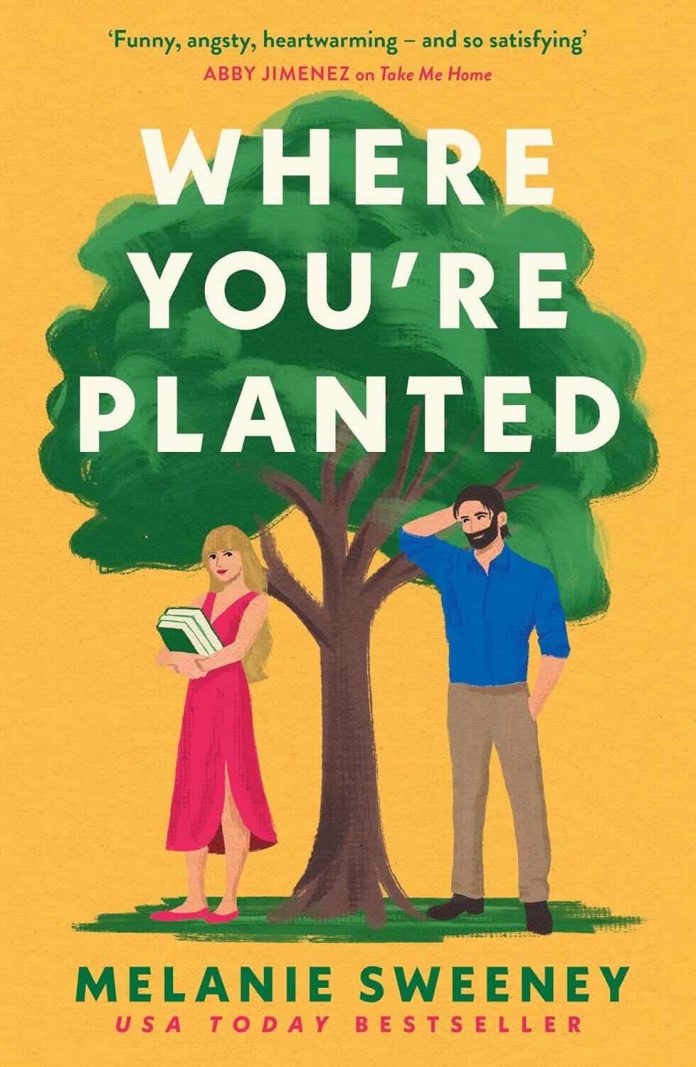
Melanie Sweeney’s sophomore novel demonstrates the delicate art of nurturing both plants and people back to life after devastation. Following her acclaimed debut Take Me Home, Sweeney plants us firmly in post-Hurricane Harvey Houston, where the Grant Gellman Library has been forced to relocate into the adjacent Lerner Botanic Gardens after catastrophic flooding. What emerges is a tender exploration of resilience, community, and the courage to put down roots again.
The premise alone—a children’s librarian and a grumpy botanist forced to share space—promises classic romantic comedy territory. But Sweeney elevates this setup with authentic emotional depth drawn from her own experience living through Hurricane Harvey. The result is a romance that feels both escapist and grounded in very real struggles of climate change, community institutions under threat, and the challenge of rebuilding not just buildings, but lives.
Characters Who Bloom Before Our Eyes
Tansy Perkins: More Than Sunshine
Tansy Perkins embodies the “sunshine” half of this grumpy-sunshine pairing, but Sweeney wisely avoids making her relentlessly peppy. As a single mother juggling multiple roles—children’s librarian, interim branch manager, and devoted parent to eight-year-old Briar—Tansy carries the weight of protecting everyone she loves. Her fierce determination to save her library branch reveals layers beneath the bright clothes and berry-red lipstick.
Sweeney excels at showing Tansy’s protective instincts without making her seem helpless. When she risks her life during the hurricane to save two parakeets, it establishes her as someone who acts on compassion despite danger. This same impulse drives her desperate fight to keep her library alive, even when facing impossible odds and bureaucratic indifference.
The author particularly shines in depicting Tansy’s relationship with her daughter Briar. Their mother-daughter dynamic feels authentic, especially in showing how Tansy’s fierce independence sometimes conflicts with her need for partnership. Briar’s attachment to Jack’s baseball cap serves as a touching symbol of the connections that form unexpectedly in crisis.
Jack Reid: Grumpiness with Purpose
Jack Reid could have easily fallen into the tired trope of the unnecessarily hostile love interest, but Sweeney gives his grumpiness genuine motivation. His preference for plants over people stems from a messy divorce six years prior and a deep-seated need for control over his environment. When the library staff “invades” his carefully maintained territory, his irritation feels earned rather than manufactured.
What makes Jack compelling is how Sweeney reveals his capacity for kindness beneath the prickly exterior. His rescue of Tansy and Briar during the hurricane establishes him as fundamentally decent, even when he’s being difficult. His growing attachment to both mother and daughter unfolds gradually, allowing readers to see past his defensive barriers.
The author handles Jack’s character arc with particular skill when he realizes he’s applied for the same grant funding that could save Tansy’s library. This conflict creates genuine stakes and forces both characters to examine what they’re truly fighting for.
The Romance: Slow-Burn with Real Heat
Sweeney excels at building romantic tension through small moments and shared struggles. The initial antagonism between Tansy and Jack feels genuine—born from stress, conflicting priorities, and legitimate grievances rather than artificial misunderstandings. When they’re forced to collaborate on the spring festival, their grudging respect develops into something deeper.
The physical chemistry between them simmers effectively throughout the book. Sweeney writes intimate scenes with both heat and emotional resonance, particularly in showing how both characters crave connection despite their fears. Their week of “playing house” while Briar visits her father provides space for their relationship to deepen beyond the initial attraction.
However, the romance occasionally suffers from pacing issues. The transition from antagonists to lovers sometimes feels rushed, particularly given Jack’s established commitment to avoiding relationships. While their chemistry is undeniable, the emotional journey could have used more breathing room to feel fully earned.
Community as Character
One of the novel’s greatest strengths lies in its portrayal of community resilience. Sweeney creates a rich ensemble of supporting characters who feel like real people with their own stories. From Kai’s enthusiastic personality to Irma’s dry wisdom, the library staff becomes a chosen family worth rooting for.
The author’s background living through Hurricane Harvey lends authenticity to the story’s exploration of disaster recovery. The descriptions of the flooded library—books turned to “soggy pulp,” personal mugs “broken pieces littering the tile floor”—feel viscerally real. Sweeney captures both the devastation and the community spirit that emerges in crisis, showing how strangers become helpers and institutions become lifelines.
The botanic gardens setting provides more than just pretty scenery. Sweeney uses the natural environment to explore themes of growth, adaptation, and the delicate balance required for things to flourish. The parallel between nurturing plants and nurturing relationships feels organic rather than heavy-handed.
Where the Soil Could Be Richer
While Where You’re Planted succeeds in many areas, it’s not without its growing pains. The plot occasionally relies too heavily on external conflicts—grant applications, bureaucratic deadlines, custody arrangements—to drive the story forward. The internal character development sometimes takes a backseat to these plot mechanisms.
The book’s treatment of single motherhood, while generally positive, occasionally veers into territory that feels didactic. Tansy’s fierce independence is admirable, but the narrative sometimes seems to apologize for her need for help or partnership. The criticism she receives from her ex-husband Charlie about being “barely treading water” feels designed to create conflict rather than genuine character exploration.
Additionally, while the Houston setting is vividly rendered, some readers might find the extensive focus on local details occasionally slows the narrative pace. The botanical information, while clearly researched, sometimes reads more like educational content than natural story elements.
The Author’s Growing Garden
Compared to Sweeney’s debut Take Me Home, this sophomore effort shows both ambition and growth. Where her first novel focused on family dynamics and small-town romance, Where You’re Planted tackles larger themes of community resilience and environmental challenges. The writing demonstrates increased confidence in handling multiple plot threads and deeper emotional complexity.
However, the book also reveals some of the notorious “sophomore slump” challenges. The author seems to be pushing herself to address more serious themes while maintaining the romance genre’s expectations for happily-ever-after endings. The balance doesn’t always feel seamless, though the attempt is admirable.
A Love Letter to Libraries and Librarians
Sweeney’s background research into library operations shows throughout the novel. Her portrayal of Tansy as a children’s librarian feels authentic, from the chaos of toddler story times to the administrative pressures facing public institutions. The book serves as both a romance and a gentle advocacy piece for the vital role libraries play in communities.
The author’s note reveals that the story was inspired by actual librarians who relocated their services following Hurricane Harvey, lending additional emotional weight to Tansy’s struggles. This real-world grounding elevates the romance beyond pure escapism into something that honors actual resilience and service.
The Verdict: Room to Grow
Where You’re Planted delivers on its promise of a heartwarming romance while attempting to address weightier themes of community, climate change, and institutional resilience. While it doesn’t always achieve perfect balance, Sweeney’s genuine emotion and careful character development make this a satisfying read for romance enthusiasts who appreciate stories grounded in real-world challenges.
The novel works best when focusing on the small, intimate moments between its characters—Briar’s attachment to Jack’s hat, the gradual softening of Jack’s protective barriers, Tansy’s fierce love for both her daughter and her work. These human connections anchor the larger themes and remind us why love stories matter, especially in difficult times.
Despite its occasional pacing issues and tendency toward didactic moments, Where You’re Planted succeeds as both an entertaining romance and a thoughtful exploration of how communities rebuild after disaster. Sweeney shows real growth as a novelist, and readers will likely find themselves invested in this garden of characters she’s cultivated.
Final Thoughts
This book will particularly appeal to readers who enjoyed the community-focused romances of authors like Christina Lauren or Annabel Monaghan. It’s a solid choice for anyone seeking romance with substance, though those preferring lighter contemporary romance might find the Hurricane Harvey backdrop occasionally heavy.
Sweeney has created a romance that grows on you—much like the gardens that provide its setting. While not every seed she plants fully blooms, there’s enough beauty in what flourishes to make this a worthwhile addition to any romance reader’s collection.
Similar Books You Might Enjoy
If you loved Where You’re Planted, consider these comparable reads:
- Beach Read by Emily Henry – Contemporary romance with emotional depth and career challenges
- The Unhoneymooners by Christina Lauren – Enemies-to-lovers with humor and heart
- What Happens In Amsterdam by Rachel Lynn Solomon – Romance with weather/natural elements theme
- The Seven Husbands of Evelyn Hugo by Taylor Jenkins Reid – Character-driven story with community themes
- Fang Fiction by Kate Stayman-London – Contemporary romance with strong female protagonist
- Expiration Dates by Rebecca Serle – Emotional contemporary fiction with relationship focus







