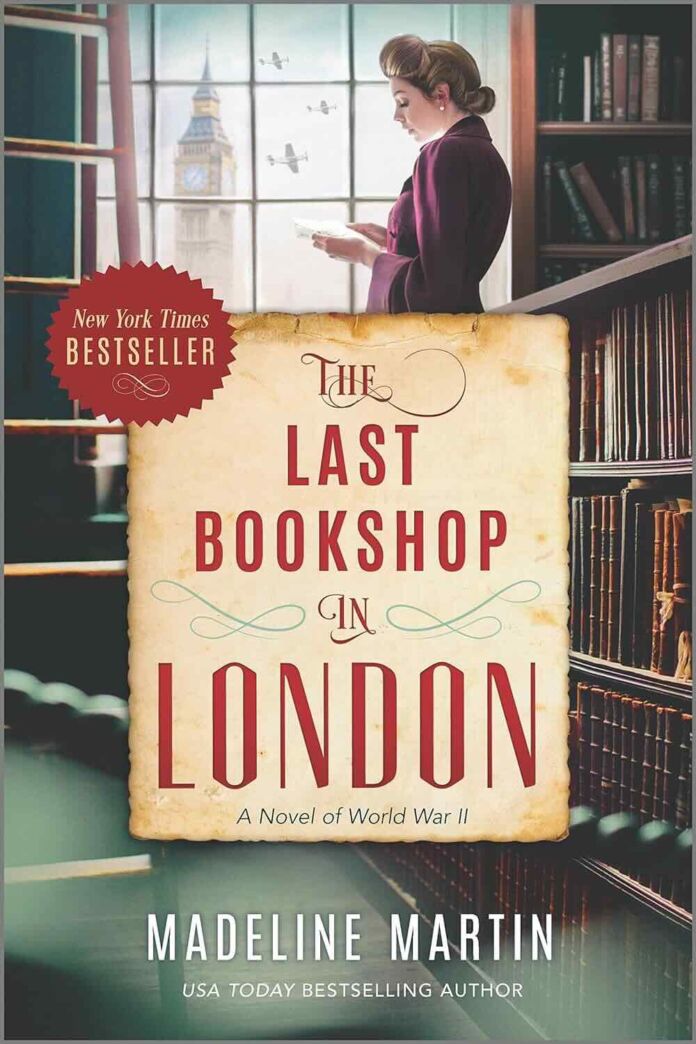
In the darkest of times, it’s often the smallest lights that shine the brightest. Madeline Martin’s “The Last Bookshop in London” is a testament to this truth, illuminating the power of literature to uplift the human spirit even in the face of unimaginable adversity. Set against the backdrop of World War II London, this historical fiction novel weaves a tale of courage, community, and the transformative power of books that will resonate with readers long after they’ve turned the final page.
A Timeless Story of War and Words
As the storm clouds of war gather over Europe in August 1939, young Grace Bennett arrives in London with dreams of a new life in the bustling city. What she finds instead is a capital bracing for conflict, its streets lined with sandbags and its windows covered in blackout curtains. Fate leads her to Primrose Hill Books, a dusty old bookshop that becomes her unlikely sanctuary and the catalyst for her personal transformation.
Martin’s prose is as crisp and evocative as a black-and-white photograph from the era. She skillfully recreates the atmosphere of wartime London, from the eerie wail of air raid sirens to the camaraderie of strangers huddled in Underground stations during bombing raids. The author’s meticulous research shines through in the small details that bring the setting to life, such as the government-issued ration books and the ubiquitous “Keep Calm and Carry On” posters.
Characters Who Leap Off the Page
At the heart of the story is Grace, a protagonist whose growth from timid country girl to resilient bookseller is both believable and inspiring. Her journey of self-discovery parallels London’s own transformation during the war years. The supporting cast is equally well-drawn, from the curmudgeonly Mr. Evans, owner of Primrose Hill Books, to the colorful array of customers who find solace within its walls.
One of the novel’s strengths lies in its portrayal of the bonds forged in times of crisis. The sense of community that develops among the bookshop’s patrons is palpable, reminding us of the human capacity for kindness and solidarity in the face of adversity. Martin excels at showing how books can serve as both escape and connection, offering a lifeline to those grappling with the harsh realities of war.
A Love Letter to Literature
“The Last Bookshop in London” is, at its core, a love letter to the written word. As Grace discovers the joy of reading and begins to share that passion with others, we’re reminded of the transportive power of stories. The scenes where she reads aloud to people sheltering from air raids are particularly poignant, highlighting how literature can provide comfort and hope in the darkest of times.
Martin’s own love of books is evident in the way she weaves literary references throughout the narrative. From Charles Dickens to Jane Austen, the classics mentioned serve not just as window dressing but as integral parts of the characters’ emotional journeys. Bibliophiles will delight in these nods to beloved works, while casual readers may find themselves inspired to pick up some of the titles mentioned.
A Delicate Balance of Drama and Romance
While the wartime setting provides plenty of dramatic tension, Martin strikes a fine balance between the larger historical events and the personal stories of her characters. The budding romance between Grace and the dashing RAF pilot George Anderson adds a touch of sweetness to the narrative without overshadowing the more serious themes.
The author doesn’t shy away from depicting the harsh realities of the Blitz, including scenes of destruction and loss that are all the more affecting for their understated presentation. Yet, even in its darkest moments, the novel never loses sight of the resilience and hope that characterized the British spirit during this time.
A Few Minor Quibbles
If there’s a criticism to be made, it’s that some of the plot developments feel a bit too convenient at times. The speed with which Grace adapts to her new role as a bookseller, for instance, might strain credulity for some readers. Additionally, while the majority of the characters are well-rounded, a few of the antagonists verge on caricature.
These are minor quibbles, however, in what is overall a richly satisfying read. Martin’s pacing is spot-on, keeping the pages turning while allowing enough breathing room for character development and historical detail.
A Worthy Addition to the WWII Fiction Genre
“The Last Bookshop in London” stands out in the crowded field of World War II fiction by focusing on the home front rather than the battlefield. It offers a fresh perspective on a well-trodden historical period, reminding us that heroism comes in many forms – including the simple act of keeping a bookshop open in the face of nightly bombings.
Fans of authors like Kristin Hannah (“The Nightingale“) and Anthony Doerr (“All the Light We Cannot See“) will find much to appreciate here. Martin’s previous works, including her Scottish historical romances, have earned her a devoted following, and this foray into WWII fiction is sure to expand her readership.
Final Thoughts
“The Last Bookshop in London” is a gem of a novel that manages to be both a compelling piece of historical fiction and a heartfelt ode to the enduring power of literature. Madeline Martin has crafted a story that is at once intimate and sweeping, offering a window into a pivotal moment in history while exploring timeless themes of love, loss, and the human need for connection.
As we follow Grace’s journey from reluctant bookseller to passionate reader, we’re reminded of our own relationships with books and the ways in which stories can shape our lives. In a world that sometimes seems as chaotic and uncertain as wartime London, “The Last Bookshop in London” offers a comforting reminder of the solace and strength we can find within the pages of a good book.
Beautifully written, meticulously researched, and deeply moving, this novel is a must-read for anyone who believes in the power of words to light the way through dark times. It’s a story that will linger in your mind long after you’ve closed the cover, much like the beloved books that line the shelves of Primrose Hill Books.
In Summary:
- Engaging and well-researched historical fiction set in WWII London
- Strong character development, particularly of the protagonist, Grace
- Vivid portrayal of life during the Blitz
- Thoughtful exploration of the power of literature and community
- Well-balanced mix of drama, romance, and historical detail
- A few minor issues with plot convenience and character depth
- Highly recommended for fans of WWII fiction and book lovers alike
“The Last Bookshop in London” is more than just a war story or a tale of personal growth – it’s a testament to the resilience of the human spirit and the enduring power of books to bring light to even the darkest of times. Madeline Martin has penned a novel that is sure to find a cherished place on many readers’ bookshelves, right alongside the classics it so lovingly celebrates.







