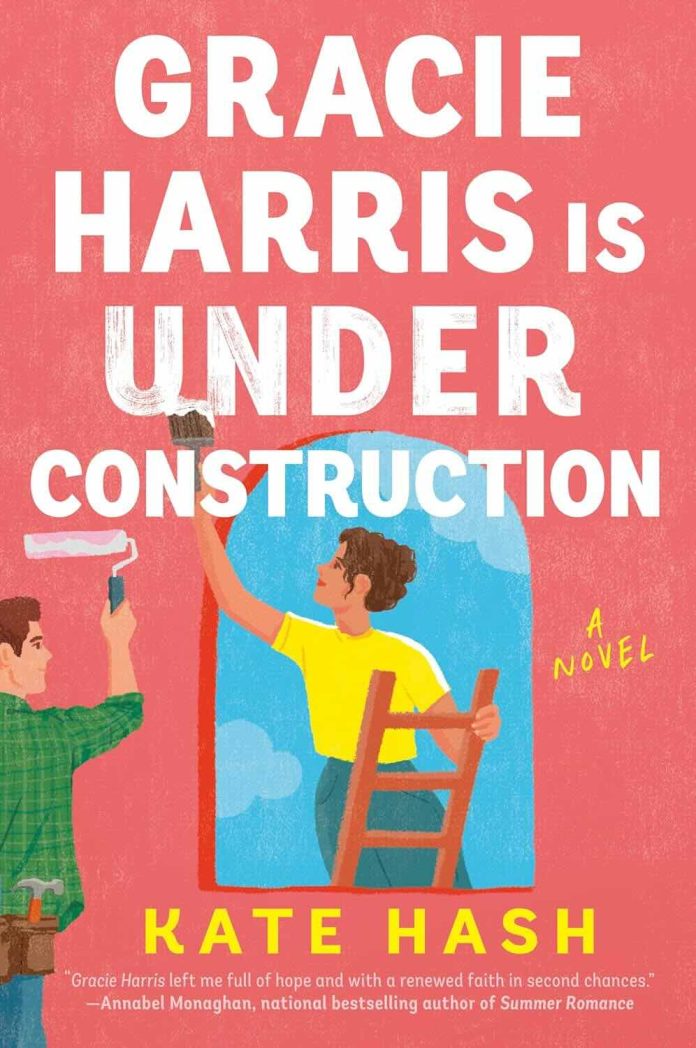
Kate Hash’s debut novel, “Gracie Harris Is Under Construction,” arrives like a gentle rain after a drought—welcome, necessary, and surprisingly refreshing. This isn’t your typical romance novel where grief serves as mere backstory; instead, Hash constructs a nuanced exploration of how love can bloom again from the ruins of devastating loss. Set against the charming backdrop of fictional Canopy, North Carolina, the novel follows widowed mother Gracie Harris as she attempts to rebuild both her late husband’s dream mountain house and her own shattered life.
The premise reads almost like contemporary women’s fiction by committee: recently widowed writer with viral essay success escapes to mountain retreat, meets handsome contractor, finds love again. Yet Hash elevates this familiar framework through authentic emotional depth and a protagonist who refuses to be reduced to her trauma or her healing journey.
The Architecture of Character Development
Hash’s greatest strength lies in her portrayal of Gracie herself. Rather than crafting a perfect grieving widow who gracefully transitions from sorrow to joy, Hash presents us with a woman who is messy, contradictory, and achingly real. Gracie grapples with the guilt of potentially moving forward while simultaneously craving connection and normalcy. Her internal monologue sparkles with wit even in darkness, whether she’s hiding behind a bookstore counter to avoid a confrontational reader or explaining to her children why their father’s death made her famous.
The character of Josh Anderson, the contractor who becomes Gracie’s love interest, presents both opportunities and challenges for Hash’s narrative. Josh is refreshingly grounded—a man dealing with his own professional burnout who finds purpose in restoration work. His patience with Gracie’s complicated emotional landscape feels genuine rather than saintly, and Hash wisely gives him his own agency and desires rather than making him exist solely for Gracie’s healing.
However, Josh occasionally veers into wish-fulfillment territory. His immediate understanding of Gracie’s needs, his comfort with her children, and his perfect timing in emotional moments sometimes feel too convenient. Real relationships, even healing ones, typically involve more friction and misunderstanding than Hash allows this couple to experience.
The Supporting Cast: Children as Real People
One of the novel’s most impressive achievements is Hash’s treatment of Gracie’s children, twelve-year-old Ava and ten-year-old Benji. Rather than depicting them as plot devices or obstacles to romance, Hash presents them as fully realized individuals processing their own grief while simultaneously worrying about their mother’s wellbeing. Ava’s protective instincts toward her mother, balanced with her age-appropriate desire for her mom to find happiness again, rings particularly true.
Benji’s quiet maturity and practical nature provide both comic relief and emotional weight. His casual acceptance of Josh’s presence in their lives doesn’t feel rushed or unrealistic—it reflects a child’s innate ability to recognize kindness and stability when he sees it.
Setting as Character: The Magic of Small-Town Canopy
Hash’s fictional mountain town of Canopy becomes almost a character in its own right, clearly inspired by the author’s love for western North Carolina communities like Brevard and Highlands. The Drip coffee shop, with its mismatched furniture and local art, serves as Gracie’s sanctuary and creative workspace. Lenny’s restaurant becomes a hub for both nourishment and gossip, while the local hardware store represents Josh’s domain of competence and community connection.
The town’s rhythm—swelling with summer visitors and camp families before settling into quieter local life—mirrors Gracie’s own emotional ebb and flow throughout the season. Hash understands that place can be transformative, and Canopy’s embrace of Gracie feels both welcoming and realistic.
Narrative Structure: The Art of Dual Timelines
Hash employs a clever structural approach, weaving Gracie’s current summer renovation project with flashbacks to her life with Ben and the immediate aftermath of his death. These temporal shifts never feel jarring; instead, they illuminate how the past continues to inform the present without imprisoning it.
The novel’s framing device—Gracie’s work on her memoir about the first year of widowhood—allows Hash to explore the complicated relationship between lived experience and public narrative. Gracie’s struggle with her viral essay fame and the expectations it creates provides sharp commentary on how society commodifies grief and healing.
Emotional Authenticity Versus Romantic Convention
Where Hash truly succeeds is in her unflinching portrayal of grief’s ongoing presence even in moments of joy. Gracie doesn’t “get over” Ben’s death to make room for Josh; instead, she learns to carry her love for Ben while opening herself to new possibilities. This emotional complexity elevates the romance beyond simple replacement theory.
The novel’s central metaphor—renovation as both literal and emotional rebuilding—never feels heavy-handed. The house’s gradual transformation parallels Gracie’s own healing, but Hash resists making the comparison too neat or the progress too linear.
Yet “Gracie Harris Is Under Construction” occasionally succumbs to romance novel predictability. Certain plot conveniences—Josh’s immediate availability, his perfect skill set, the town’s unanimous embrace of Gracie—sometimes strain credibility. The novel’s timeline, compressed into a single summer, asks readers to accept rapid emotional development that might feel more earned across a longer period.
Writing Style: Conversational Grace with Literary Ambition
Hash writes with the accessibility of commercial women’s fiction while reaching toward more literary depths. Her prose feels natural and unforced, particularly in dialogue between Gracie and her children or in Gracie’s internal observations about small-town life. The author clearly understands how contemporary women think and speak, avoiding both millennial slang and outdated references.
Some of the novel’s strongest passages occur when Hash allows Gracie’s voice as a writer to emerge. Gracie’s process of crafting her viral essays, her relationship with her editor, and her anxiety about public reception all feel authentically rendered—likely drawing from Hash’s own background in content creation.
However, the narrative occasionally falls into tell-rather-than-show patterns, particularly when establishing emotional stakes or explaining character motivations. Some pivotal emotional moments could benefit from more subtle development rather than explicit articulation.
Thematic Resonance: More Than Just Recovery
While romance drives the plot, Hash weaves in broader themes about reinvention in midlife, the challenge of raising children through trauma, and the ways communities can provide healing. The novel’s exploration of how public grief can become a commodity feels particularly timely in our social media age.
“Gracie Harris Is Under Construction” also tackles the practical realities of single parenting—from managing child schedules to handling home repairs—without romanticizing the struggle or making Gracie’s competence feel superhuman.
Minor Criticisms and Areas for Growth
Hash’s debut shows tremendous promise but reveals some areas where future works might strengthen. The novel’s pacing occasionally rushes emotional development, particularly in the final third where Gracie’s readiness for new love might benefit from more gradual evolution.
Additionally, while the small-town setting provides charm, some secondary characters lean toward archetype rather than individuality. The gossipy restaurant owner, the wise bookstore proprietor, and the helpful hardware store manager, while pleasant, could use more distinctive characteristics.
The novel’s resolution, while satisfying on an emotional level, ties up loose ends perhaps too neatly. Real life, even happy real life, typically involves more ongoing complexity than Hash’s conclusion allows.
Recommendations for Similar Reads
Readers who appreciate Hash’s blend of emotional depth and romantic possibility in “Gracie Harris Is Under Construction” should explore:
- “Beach Read” by Emily Henry – Similar themes of writers finding love while processing life changes
- “The Seven Year Slip” by Ashley Poston – Contemporary romance with grief elements and magical realism
- “People We Meet on Vacation” by Emily Henry – Friends-to-lovers dynamics with emotional complexity
- “The Unhoneymooners” by Christina Lauren – Romantic comedy with deeper emotional undercurrents
- “Eleanor Oliphant Is Completely Fine” by Gail Honeyman – Character-driven story of healing and connection
For readers seeking more grief-focused narratives with romance elements, consider Joan Didion’s “The Year of Magical Thinking” or Cheryl Strayed’s “Wild,” though both lean more literary than commercial.
Final Verdict: A Promising Foundation
“Gracie Harris Is Under Construction” succeeds as both accessible entertainment and thoughtful exploration of love after loss. Hash demonstrates genuine understanding of how real people navigate impossible circumstances, and her portrayal of family dynamics feels lived-in rather than manufactured.
While the novel doesn’t reinvent the contemporary romance genre, it brings fresh perspective to familiar themes. Hash’s background in travel writing and content creation serves her well in crafting a protagonist whose professional struggles feel authentic and whose voice remains engaging throughout.
The book’s greatest achievement lies in its refusal to suggest that new love erases old pain. Instead, Hash proposes that healing involves expansion rather than replacement—that hearts, like houses, can be renovated without losing their essential character.
For readers seeking romance that acknowledges life’s complexities while still providing genuine hope, “Gracie Harris Is Under Construction” offers a solid foundation. Hash has built something worthy here, even if a few finishing touches might make future works truly spectacular.
- Bottom Line: Kate Hash’s debut, Gracie Harris Is Under Construction, delivers an emotionally honest romance that treats grief with respect while celebrating the possibility of second chances. Despite occasional pacing issues and romance novel conveniences, the book succeeds through authentic characters and genuine heart. A strong foundation for what promises to be an interesting literary career.







