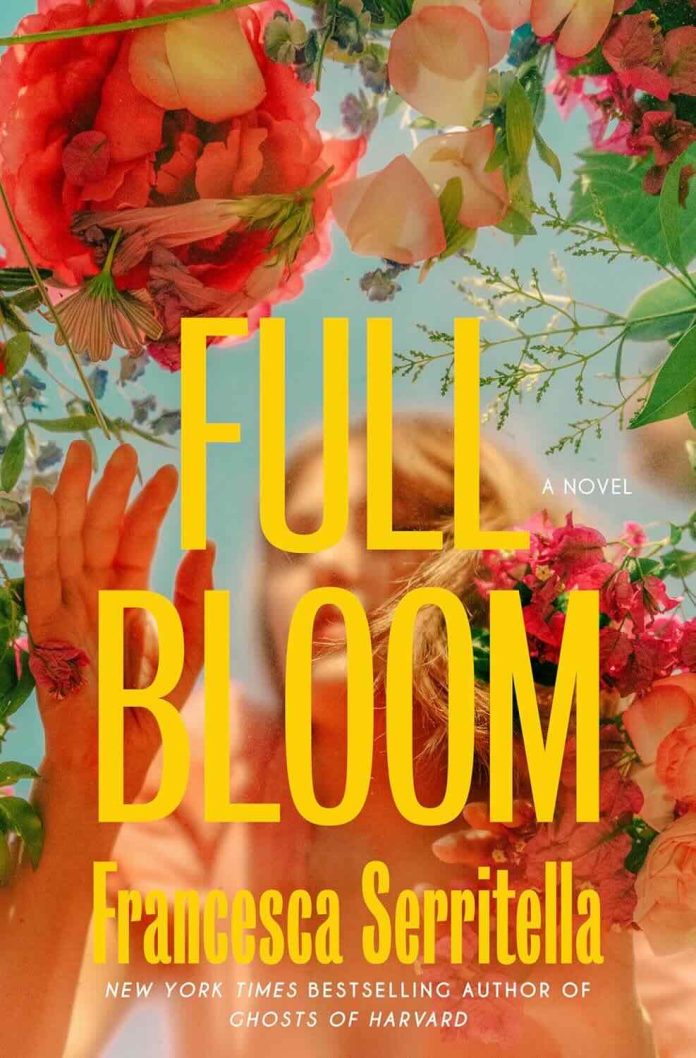
Francesca Serritella crafts a mesmerizing tale of transformation and self-discovery in Full Bloom, a novel that seductively blends magical realism with contemporary women’s fiction. Following her acclaimed debut Ghosts of Harvard, Serritella demonstrates remarkable range by diving into the intoxicating world of perfume and the dangerous allure of manufactured confidence.
The novel follows Iris Sunnegren, a thirty-five-year-old lighting designer trapped in professional stagnation and romantic disappointment. Fresh from a devastating breakup with her long-term partner Ben, Iris finds herself overlooked at work while watching her friends achieve the traditional milestones that seem perpetually out of reach. Serritella skillfully establishes Iris as an everywoman figure whose struggles with imposter syndrome and self-doubt will resonate deeply with readers navigating similar life transitions.
The Mysterious Gift of Transformation
The catalyst for change arrives through Mireille Rapacine, Iris’s enigmatic French neighbor who emerges as one of fiction’s most compelling characters. A retired master perfumer with a dark past, Rapacine creates a bespoke fragrance that promises to unlock Iris’s hidden potential. Serritella’s portrayal of the perfume-making process reveals extensive research into the art of fragrance composition, lending authenticity to the magical elements without sacrificing believability.
The perfume itself becomes a character in the story—a mysterious elixir that amplifies desire and confidence while raising profound questions about authenticity and empowerment. Serritella wisely avoids oversimplifying the perfume’s effects, instead exploring how it serves as both liberation and potential trap for women seeking agency in a male-dominated world.
A Dangerous Dance with Power
As Iris discovers her newfound magnetism, Serritella expertly navigates the complex terrain between empowerment and exploitation. The author’s background as the daughter of bestselling novelist Lisa Scottoline shows in her sophisticated understanding of character development and moral complexity. Iris’s professional breakthrough with charismatic real estate mogul Jonathan Wolff showcases Serritella’s keen insight into workplace dynamics and the uncomfortable reality of how attractiveness can influence career advancement.
The relationship between Iris and Wolff crackles with tension, though Serritella maintains careful ambiguity about whether their connection stems from genuine compatibility or the perfume’s influence. This uncertainty becomes the novel’s driving force, creating sustained dramatic tension that keeps readers questioning every interaction and motivation.
Complex Romantic Entanglements
Equally compelling is Iris’s relationship with Gabe DiDonato, a talented glass artist whose working-class background contrasts sharply with Wolff’s elite world. Serritella crafts their romance with particular nuance, exploring how class differences and economic insecurity can undermine even passionate connections. Gabe emerges as a fully realized character rather than a simple romantic foil, his artistic integrity and emotional honesty providing counterpoint to the novel’s themes of artifice and manipulation.
The author demonstrates remarkable skill in depicting physical attraction and sexual tension without resorting to cliché. The scenes between Iris and Gabe pulse with authentic chemistry, while her complicated feelings toward Wolff simmer with dangerous possibility. Serritella understands that true sexual tension often lies in what remains unspoken and unexpressed.
Shadows from the Past
Perhaps the novel’s greatest strength lies in its gradual revelation of trauma’s lasting impact on identity formation. Iris’s childhood survival of a house fire that killed her parents adds psychological depth to her character’s fear of taking risks and claiming power. Serritella handles this backstory with exceptional sensitivity, avoiding exploitation while demonstrating how early trauma can shape adult behavior patterns.
The revelation of cousin Jacob’s role in Iris’s survival—and his subsequent struggle with addiction—adds layers of guilt and obligation that feel genuinely earned rather than manufactured for dramatic effect. These elements elevate the novel beyond simple wish fulfillment into something more psychologically complex and emotionally resonant.
Critiques and Considerations
While Full Bloom succeeds admirably in most respects, certain elements feel less fully developed. Some secondary characters, particularly Iris’s friends Hannah and Roman, occasionally serve more as plot devices than fully realized individuals. The pacing in the middle section sometimes feels rushed, with Iris’s professional and romantic developments happening almost too quickly to feel entirely believable.
Additionally, while Serritella’s research into perfumery is impressive, some readers may find the magical realism elements clash with the otherwise grounded contemporary setting. The perfume’s powers sometimes feel inconsistent, working more or less effectively as the plot demands rather than following clearly established rules.
The novel’s exploration of female ambition and desire occasionally veers toward didactic territory, though Serritella’s skill with character development generally prevents this from becoming problematic. Some critics might argue that the book’s focus on physical transformation as a path to empowerment sends mixed messages about female agency and authentic self-expression.
Thematic Richness and Social Commentary
Despite these minor shortcomings, Full Bloom by Francesca Serritella succeeds as both entertaining fiction and thoughtful social commentary. Serritella demonstrates sophisticated understanding of contemporary women’s experiences, from fertility concerns to workplace discrimination to the complex navigation of power dynamics in romantic relationships. The novel’s examination of how society values female beauty and sexuality while simultaneously punishing women for leveraging these assets feels particularly relevant.
The perfume serves as an elegant metaphor for the artificial enhancements many women feel pressured to employ—from cosmetic procedures to personality adjustments—in order to succeed in a world that demands both authenticity and perfection. Serritella’s refusal to provide easy answers about whether such strategies represent empowerment or capitulation demonstrates admirable moral complexity.
Literary Craftsmanship
Serritella’s prose style shows significant growth from her debut novel, displaying increased confidence and sophistication. Her descriptions of New York City feel lived-in and authentic, while her rendering of the Hamptons social scene reveals sharp observational skills and subtle humor. The author demonstrates particular strength in writing sensory details, making effective use of scent, texture, and visual imagery to create immersive scenes.
The novel’s structure, organized around perfume terminology (Head Notes, Heart Notes, Base Notes), feels organic rather than gimmicky, reflecting the author’s thorough understanding of her subject matter. This attention to craft details suggests an author who takes her work seriously while maintaining accessibility for general readers.
Comparisons and Context
Readers who enjoyed Full Bloom by Francesca Serritella might appreciate similar explorations of female transformation and empowerment in contemporary fiction:
- The Seven Husbands of Evelyn Hugo by Taylor Jenkins Reid – for its examination of female ambition and the price of success
- The Invisible Bridge by Julie Orringer – for its blend of historical detail and emotional depth
- Big Little Lies by Liane Moriarty – for its complex portrayal of modern women’s lives
- The Devil Wears Prada by Lauren Weisberger – for its workplace dynamics and fashion industry insights
- Practical Magic by Alice Hoffman – for its magical realism and focus on female relationships
Final Verdict
Full Bloom establishes Francesca Serritella as a significant voice in contemporary women’s fiction, demonstrating remarkable growth from her already impressive debut. While the novel occasionally struggles with balancing its magical elements against its realistic foundation, it succeeds admirably as both escapist entertainment and thoughtful exploration of female empowerment’s complexities.
Serritella’s sophisticated understanding of perfume as both literal craft and metaphorical device creates a unique reading experience that lingers long after the final page. The novel’s refusal to provide simple answers about authenticity, desire, and power reflects an author unafraid to grapple with difficult questions about what it means to be a woman seeking fulfillment in contemporary society.
For readers seeking intelligent escapism that doesn’t sacrifice psychological depth or social awareness, Full Bloom by Francesca Serritella delivers an intoxicating blend of romance, suspense, and self-discovery. Serritella has created a seductive page-turner that manages to be both deeply satisfying and genuinely thought-provoking—a rare achievement in contemporary fiction.
The novel ultimately argues that true empowerment comes not from external enhancements but from the courage to embrace one’s authentic self, flaws and all. This message, wrapped in Francesca Serritella’s elegant prose and compelling storytelling, makes Full Bloom a worthy addition to any reader’s collection and confirms its author as a talent worth watching.







