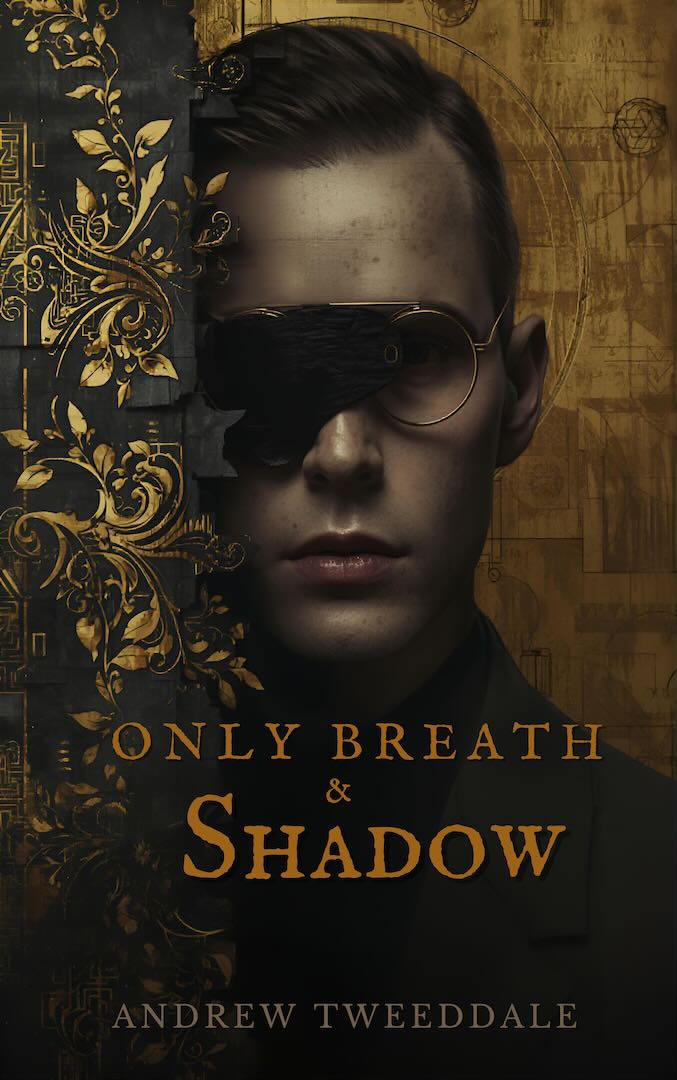
There is a particular kind of novel that refuses to raise its voice. It trusts the reader to lean in, listen, and feel the tremor under the prose. Only Breath & Shadow by Andrew Tweeddale belongs to that quiet, confident tradition. Set in Vienna in the late 1930s, it closes the Castle Drogo arc with a story that listens harder than it shouts, and somehow ends up saying more than most novels twice its volume.
The book opens in the life of Christian Drewe, a British gentleman who lost his sight and part of his face at the Somme. He has made a home in the Inner Stadt for over a decade, keeping the routines of a man who measures distance in footsteps and identifies bakeries by the warmth of yeast in the air. Tweeddale sets up the city as Christian knows it. Church bells, tram rails, the smell of roasted coffee beans, the soft grit of cobblestones under a cane. It is Vienna rendered as an audible manuscript, and it is one of the finest opening impressions in recent literary fiction.
The World Around Christian Begins to Tilt
What makes the first third of the book so effective is how gently the menace arrives. A rude remark in a café. A shop window painted with a crude slur. A friend, Tomas, packing for Prague. Paul O’Montis, the cabaret satirist, growing careless on stage. Christian’s Jewish friends Otto and Anna Friedmann go quiet at dinner. The Anschluss lands not as a thunderclap but as a change of air pressure.
Tweeddale writes this with enormous restraint, and that restraint is why it hurts. He trusts the reader to remember what 1938 meant. He does not explain. And he simply lets Christian’s world tilt, degree by degree, until the floor has moved and every familiar thing has started to slide.
A Protector Who Cannot See
One of the quiet triumphs of Only Breath & Shadow by Andrew Tweeddale is how it handles Christian’s blindness. This is not a character whose disability is ornamental. The author has clearly studied the practical reality of living without sight, and he writes it with the patience of someone who has watched, listened, and thought. Christian counts doors. He uses a roped swimming line like Ariadne’s thread. He reads braille in the park. And he knows Frau Huber is worried by the rhythm of her footsteps before she says a word.
When Christian takes on the role of secret guardian to the four Friedmann children, the tension tightens into something close to unbearable. Imagine hiding four frightened young people in an Aryan building in Vienna under Gestapo watch, and doing it without being able to check if the curtains are drawn or if a child’s shadow falls across the floor. Tweeddale does not dramatise this. He lets the facts do the work.
What Makes the Central Premise Hit So Hard
- Christian’s moral clarity is sharper than the sighted characters around him
- The children are drawn as individuals, not a symbolic group
- The act of hiding is physical labour, not abstract heroism
- Every creak of a floorboard carries the weight of lives
Claire, Frau Huber, and a Very Unlikely Household
Claire Astor, the American cabaret singer who drifts into Christian’s life through Paul O’Montis, is one of the most fully inhabited female leads in recent historical fiction. She is not a love interest on a pedestal. She is tired, ambitious, funny, privately grieving, and capable of hard decisions. Her friendship with Christian is one of the most honest things in the book, and it earns every inch of its slow turn.
Then there is Frau Huber, Christian’s housekeeper, who deserves her own separate write-up. She is flint, loyalty, sarcasm, and mother, all packed into one small Viennese frame. She answers to nobody. The scenes between her and the children are small miracles of characterisation, and Tweeddale never overplays her.
The Author’s Quiet Ambition
Andrew Tweeddale has a gift for blending fact and invention without the join showing. He folds the real 1939 rescue mission of Gil and Eleanor Kraus into the story with respect, and he does the same for the cabaret artist Paul O’Montis, whose path from Berlin stardom into silence is a heartbreak on the edges of the narrative. The 1938 Évian Conference sits inside the book like a still, cold weight. The moral argument of the novel is stated plainly by the preface. Blind eyes see better than blind hearts. The story earns that line.
Readers coming to the Castle Drogo series for the first time should know that Only Breath & Shadow by Andrew Tweeddale is the closing volume of a trilogy that also includes Of All Faiths & None and A Remembrance of Death. Each stands on its own, and each enriches the others. You can begin here and be rewarded. You can also read the series in order and find Christian Drewe quietly moving through the margins of the earlier books before stepping into full light in this one.
Prose, Pacing, and the Writer’s Craft
Tweeddale’s prose is lean, observant, and musical without ever drawing attention to itself. Sentences have room to breathe. Dialogue carries a soft British dryness. The pacing is patient for the first half, then tightens like a held breath as the rescue plan forms. There is a set piece involving trains, a decoy, and a border crossing that I will not describe, but I will say this. It reads like the work of a writer who has thought very carefully about what courage actually costs.
Reasons to Pick It Up
- A morally complex historical novel that trusts its reader
- A protagonist whose blindness is rendered with rare care
- Real history folded in with craft and respect
- Characters who feel fully alive long after the last page
- A resolution that honours everything the book has asked of you
Who This Book Is For
- Readers of literary historical fiction set around the Second World War
- Anyone drawn to quiet, character-driven moral storytelling
- Readers who enjoyed popular history writing about the Kraus mission
- Fans of the earlier Castle Drogo novels who want the arc closed
Similar Books to Read Next
If Only Breath & Shadow by Andrew Tweeddale moves you, these titles sit on the same shelf in spirit.
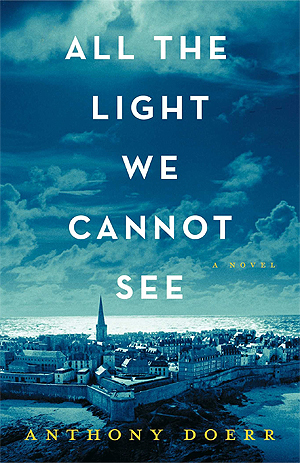
- All the Light We Cannot See by Anthony Doerr
- The Nightingale by Kristin Hannah
- Alone in Berlin by Hans Fallada
- The Invisible Bridge by Julie Orringer
- We Were the Lucky Ones by Georgia Hunter
- Sarah’s Key by Tatiana de Rosnay
- City of Thieves by David Benioff
Closing Note
There are books you read and books that read you back. Only Breath & Shadow by Andrew Tweeddale is the second kind. It asks quiet questions about sight, about conscience, about what an ordinary person owes a stranger, and it asks them in a voice that never rises. By the final pages, the title stops feeling poetic and starts feeling like a diagnosis of the world. We are all, in some small measure, only breath and shadow, and the question is what we do with the brief warmth of the first and the long reach of the second.
This is literary fiction of a very high order, and it deserves a wide and thoughtful readership.