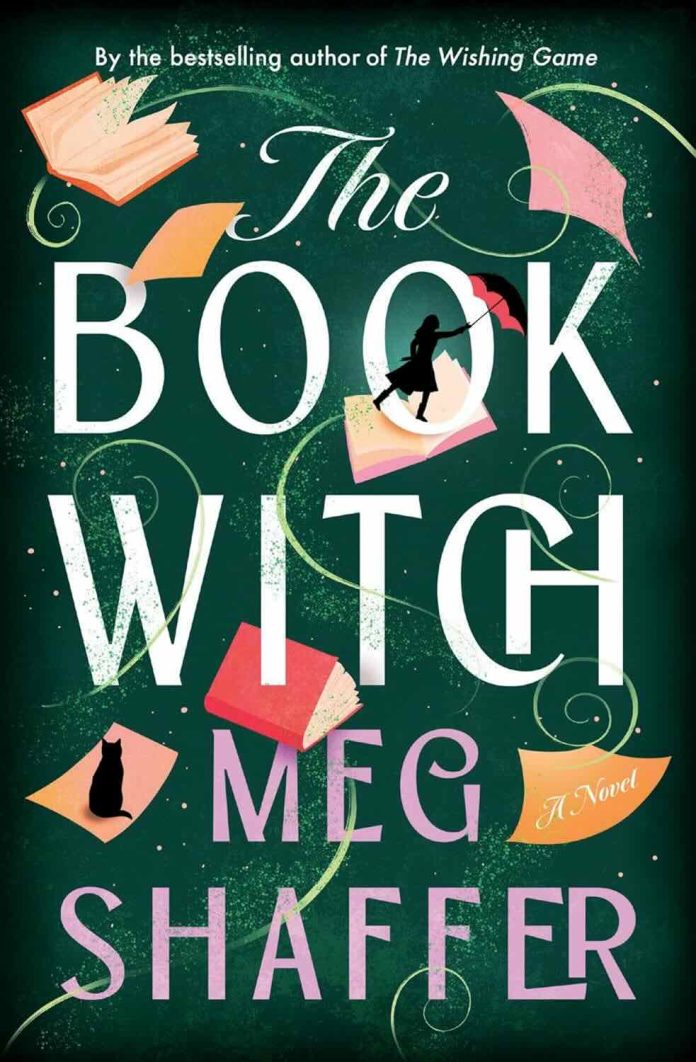
There is a specific kind of reader who has, at some point, loved a fictional character so fiercely that closing the book felt like a small grief. Meg Shaffer built an entire novel around that feeling, and the result is one of the stranger, warmer, more genuinely affecting reading experiences of recent years. The Book Witch by Meg Shaffer follows Rainy March, a third-generation Book Witch from Fort Meriwether, Oregon, who protects works of fiction from people who want to erase them from the inside out. She has faced Cthulhu, dodged gangsters in Depression-era Chicago, argued with the ghost of Marley. She carries a magic umbrella, travels with a Russian Blue cat named Koshka, and operates under a strict code of rules. The most important rule: never fall in love with a fictional character. She is already, very much, in love with the Duke of Chicago.
The Voice Carries the Whole Book
First-person narration lives or dies by the narrator. Rainy March earns her place on the page from the opening line. Her voice is dry, warm, and funny in the way of someone who knows she is being ridiculous and does not particularly care. She names her car the Sun Buggy. She apologizes to her umbrella. And she recites coven rules the way a person recites a speed limit they have no intention of following. Shaffer has always excelled at creating characters with that rare quality: self-awareness that does not tip into self-consciousness. Rainy knows who she is and what she wants, which makes the novel’s central tension land with real weight. She cannot have what she wants.
The book is framed as Rainy’s own case files, journal entries written in real time as the plot unravels around her. The structure is clever without calling attention to itself. Each chapter moves with the brisk, knowing energy of a golden-age detective novel, which suits a story whose love interest is, by profession, a 1940s private eye. For readers who come for the romance, the slow-burn between Rainy and the Duke is one of the more genuinely pleasurable forbidden-love setups in recent fiction.
Rules, Riddles, and the March Hare
The plot of The Book Witch by Meg Shaffer moves across three connected crises. Pops, Rainy’s beloved grandfather and the family’s original Book Witch, vanishes without explanation. A rare book is stolen from the coven. And the solution to both problems runs through a Lewis Carroll character at a tea party.
The mystery structure is one of the novel’s genuine pleasures:
- Rainy and the Duke trace clues through Alice in Wonderland, Arthurian legend, and The Great Gatsby, each story world rendered with its own texture and internal logic.
- The villain organisation, the Burners, erase books from the inside out, raising the stakes of every mission beyond the personal and into something approaching cultural catastrophe.
- The central mystery hinges on a secret hidden inside a Nancy Drew novel. In retrospect, this is exactly where a secret like this belongs.
The pacing holds well through the first half. The middle section, in which Rainy hunts for the March Hare across real-world Oregon landmarks, stretches longer than necessary. Readers may feel she circles the answer one or two times too many before arriving at it. This is a minor frustration rather than a fatal flaw, and Shaffer compensates by keeping the Rainy-and-Duke dynamic sharp throughout.
The Metafictional Core, and What It Costs
This is where The Book Witch by Meg Shaffer takes its biggest swing. Without revealing the specifics, Shaffer leads Rainy into territory most novels of this kind politely avoid: the question of whether the narrator herself is real. The Hall of Mirrors sequence, in which Rainy meets the woman who wrote her into existence, is the novel’s finest stretch of pages. It is melancholy, funny, and genuinely strange, and it earns the emotional weight it asks of the reader.
The revelation that Rainy is a fictional character is quietly telegraphed early enough that attentive readers will see it coming. Those who prefer their metafictional moments to arrive as a genuine shock may find the official confirmation softer than expected. That said, Shaffer’s handling of the aftermath compensates with real feeling. The funeral scene, in which hundreds of readers raise black umbrellas to honour a writer who was, for most of them, entirely invisible, is quietly devastating. The scene where a security guard at an enchanted forest park unknowingly meets the fictional detective who saved his life during a lockdown has no business being as moving as it is. It is.
Where the Magic Holds and Where It Wavers
The Book Witch by Meg Shaffer has considerable strengths:
- The Duke of Chicago is one of the most enjoyable love interests in recent literary fantasy: period-appropriate charm, genuine kindness, and a talent for one-liners that does not grate.
- Koshka, the Russian Blue familiar, provides consistent comic relief without becoming a gimmick. He bites Duke on the ankle when he gets flirtatious, which is simply correct behaviour.
- The book’s seven-section genre structure (titled Romance, Mystery, Fantasy, and so on) gives the narrative a satisfying architectural sense.
- The theme of books as lifelines runs beneath every scene, illustrated through secondary characters whose lives changed because of a story, and it never tips into sentimentality.
Some aspects do not land as cleanly:
- The seven genre sections, while charming as a concept, make tonal shifts between chapters feel occasionally abrupt rather than orchestrated.
- The Pops storyline resolves quickly, and his reunion with Rainy happens largely off the page, which undercuts the urgency the novel spent chapters building.
- The volume of literary references, while clearly a labour of love, occasionally reads as a catalogue rather than an atmosphere.
Who Should Read This and What to Read Next
The Book Witch by Meg Shaffer is the kind of novel that makes an ideal gift for someone who treats fiction as a survival mechanism rather than a hobby. It is best read by those who have ever felt that their attachment to a particular character or story was a little too personal to explain out loud.
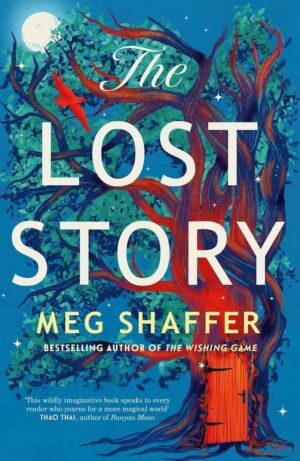
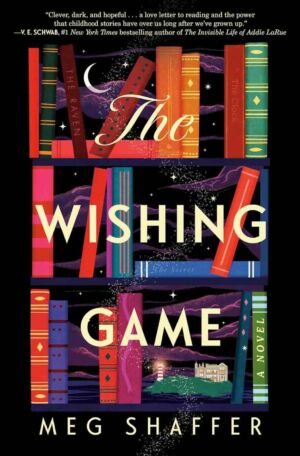
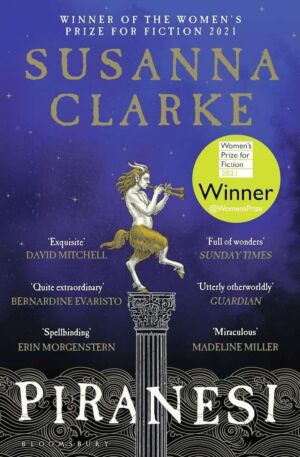
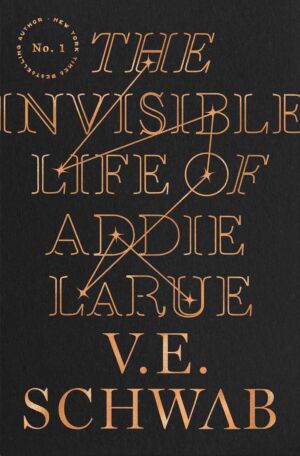
Readers who want more from this world should begin with Shaffer’s earlier novels: The Wishing Game and The Lost Story share the same warmth and literary affection. For the book-hopping premise taken in a more satirical direction, the Thursday Next series by Jasper Fforde remains the gold standard. Piranesi by Susanna Clarke offers metafiction that trusts readers to hold genuine ambiguity. Inkheart by Cornelia Funke covers similar ground with more earnestness and less irony. The Invisible Life of Addie LaRue by V.E. Schwab shares the forbidden-love structure and literary sensibility.
A Final Word
What Shaffer does best across all her fiction is make the argument that reading is not a pastime but a form of survival. The Book Witch by Meg Shaffer adds to that argument by asking what it might cost to live entirely inside a story, to be made of words, and to love someone equally fictional. The answer is complicated, a little heartbreaking, and finally hopeful. The last line does exactly what a last line should: it sends you back to the beginning.