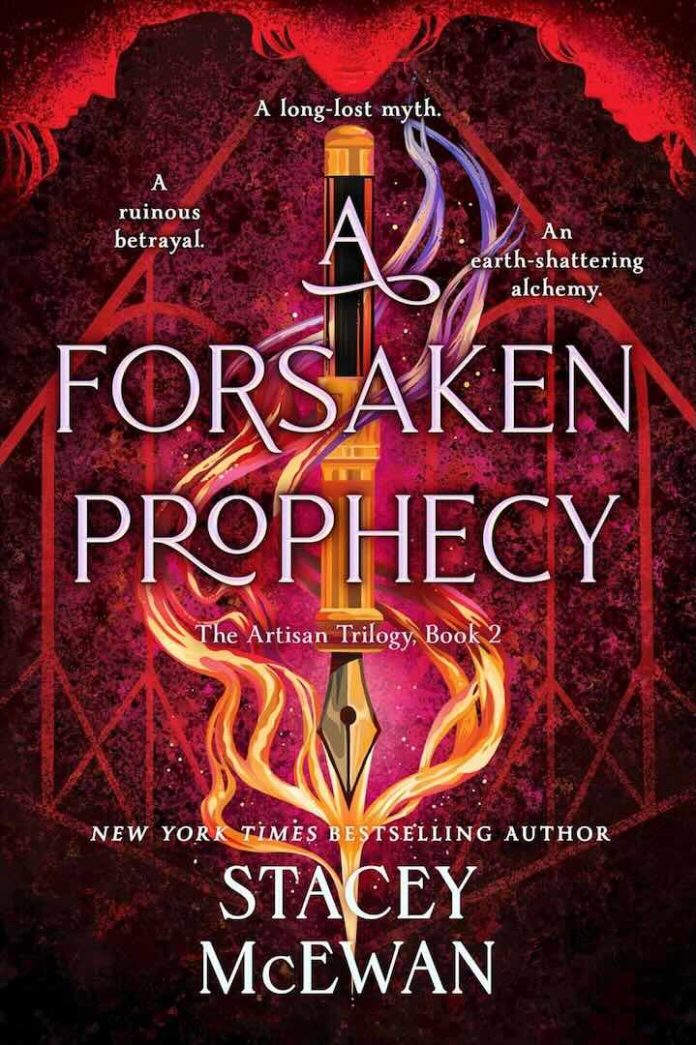
Some sequels tiptoe back into their world, worried about losing the reader. This one comes in swinging, boots caked in tunnel mud, a bullet still lodged in someone’s shoulder. A Forsaken Prophecy by Stacey McEwan is the middle book of the Artisan Trilogy, and it opens moments after the smoke clears on A Forbidden Alchemy, with its two leads captured, wounded, and no longer sure they can stand to look at each other. If you came for comfort, McEwan has other plans for you.
Where the Story Stands
For readers new to the series, a quick map of the ground. The Artisan Trilogy is set in Belavere Trench, a grim, gaslamp-and-gunpowder society split down the middle. On one side sit the Artisans, the ruling class whose magic runs on a substance called idium. On the other are the Craftsmen, the miners and laborers who dig that magic out of the earth for pennies and lungfuls of dust. Book one, A Forbidden Alchemy, threw childhood friends Nina Harrow and Patrick Colson together on opposite sides of that divide. This sequel picks up the fallout, and a third, still-untitled book is on the way to close the arc.
The premise here is lean and mean. Patrick, the last living Alchemist, and Nina, the only known earth Charmer, are prisoners of the House. A narrow escape, an ancient prophecy about an endless vein of idium, and a ragged flight across dying Craftsman towns give the book its spine. What raises the stakes is that idium itself is running dry, which means the Artisans are getting desperate and cruel in equal measure.
A World of Cathedral Magic and Colliery Grit
The setting is where the book earns most of its keep. McEwan clearly loves the texture of this place, and it shows in the small things: the smell of damp timber in a mine shaft, a church statue frozen mid-suffering, the way a foreman spits before he threatens you. Readers have taken to calling the series “Peaky Blinders with magic,” and that shorthand fits the mood better than most comparisons could.
A few elements that stand out:
- The magic system, built around idium and the “siphoning” of ranked abilities, feels tied to labor and class rather than to a floating school of wizards.
- The class war reads as genuinely political, with the Miners Union, hostage-taking, and factory towns all sketched in convincing detail.
- The mythology of the three daughters and the Stewards gives the prophecy plot real weight, folding folk song and heresy into the worldbuilding.
The result is a fantasy that smells of coal and incense rather than lavender. It is one of the more grounded second acts I have read in the current romantasy wave, and it is the reason A Forsaken Prophecy by Stacey McEwan holds together even when the plot machinery creaks.
The People Who Carry the Weight
“A Forsaken Prophecy” is told through a rotating cast of first and close-third viewpoints, and McEwan uses that structure well. Nina and Patrick anchor the book, but the author hands chapters to a wider circle so that no single grudge gets the last word.
The core voices you will follow include:
- Nina, whose grief and fury drive the prophecy hunt, and whose sharp tongue keeps the sentiment in check.
- Patrick, colder and more gangster this time out, nursing both a wound and a betrayal he refuses to forgive.
- Theo, Nina’s first love and the most interesting moral knot in the book, forever changing color to survive.
- Lord Tanner and Lord Shop, antagonists given enough interior life to be unsettling rather than cartoonish.
- A handful of secondary voices, including Donny, Polly, and a closing chapter that reframes what comes next.
Theo deserves special mention. He is the character most likely to spark arguments in reading groups, a young man who keeps insisting he is not the villain while doing villainous things, and McEwan resists the urge to make him simple. Tanner, meanwhile, is a genuinely chilling portrait of entitlement, and his chapters supply some of the book’s most disquieting moments.
The Romance: Slow Burn With Soot On It
Billed as a sizzling romantasy, the book is more accurately a slow, aching, second-chance burn shadowed by betrayal. Patrick spends much of the story wishing he never had to see Nina again, and their reconciliation is earned inch by inch rather than handed over. For readers who love yearning, buried tenderness, and the ache of two people orbiting each other while pretending not to, this delivers. Those hoping for wall-to-wall heat may find the temperature runs cooler and sadder than the marketing suggests, at least until the back third.
The love triangle with Theo is handled with more care than the trope usually gets. It is less about which boy wins and more about who Nina is willing to become, which keeps it from feeling like filler.
Where It Wavers
An honest review has to admit that the middle book here shows some middle-book strain, and this is where A Forsaken Prophecy by Stacey McEwan divides its readers. A four-star reception feels right: strong, but not flawless.
The main sticking points:
- A saggy middle. The town-to-town flight repeats a rhythm (arrive, grieve, argue, decode a clue, move on) often enough that the momentum dips before the final act reclaims it.
- Prophecy pacing. The idium mystery advances in convenient beats, and a late reveal or two lands more because the plot needs it than because it was seeded cleanly.
- Bridge-book syndrome. As the connective volume in a trilogy, it spends real energy repositioning pieces for book three, so a few threads feel parked rather than resolved.
- A cliffhanger that will test patience. The ending pivots hard toward the finale, and readers who dislike waiting may close the book more frustrated than satisfied.
None of these sink “A Forsaken Prophecy”, but they are worth naming so the right readers pick it up for the right reasons.
Prose and Pacing
McEwan’s writing is her steadiest strength. Her sentences are muscular and sensory, dropping into working-class dialect for her miners and sharpening into cold formality for her lords. She writes violence without flinching and tenderness without sugar, and her chapters tend to end on a hook that pulls you into the next viewpoint. It is worth noting the book carries mature content, including wartime violence, an attempted assault, and references to abuse, so readers who want a soft read should know that going in.
Who Will Love It
- Fans of slow-burn, second-chance romance who like their couples wounded and wary.
- Readers who want fantasy with class politics and industrial grime rather than palace ballrooms.
- Anyone who enjoyed book one and wants the world deepened, not merely repeated.
- Multi-POV lovers who like villains with interior lives.
Readers who need tidy resolutions or a fast, breezy plot may want to wait until the finale is out and read the pair back to back.
Books to Read Next
If this world grabs you, try these:
- Ledge and the rest of McEwan’s Glacian Trilogy, her earlier work, for more of her harsh landscapes and prickly heroines.
- These Violent Delights by Chloe Gong, for star-crossed lovers tangled in rival factions and period menace.
- Powerless by Lauren Roberts, for a forbidden romance across a hard class divide.
- The Plated Prisoner series by Raven Kennedy, a blurb comparison that shares the gilded-cage tension.
- An Ember in the Ashes by Sabaa Tahir, for oppression, rebellion, and dual-POV heartbreak.
Final Word
A Forsaken Prophecy is a darker, sadder, more politically serious book than its cover promises, and it is stronger for it. The pacing stumbles and the ending will frustrate the impatient, yet the world is rich, the characters are morally tangled, and the emotional payoff in the closing chapters is real. As a bridge to the finale, A Forsaken Prophecy by Stacey McEwan does the hard, unglamorous work of a second act, and it left me genuinely eager to see how she lands the trilogy.







