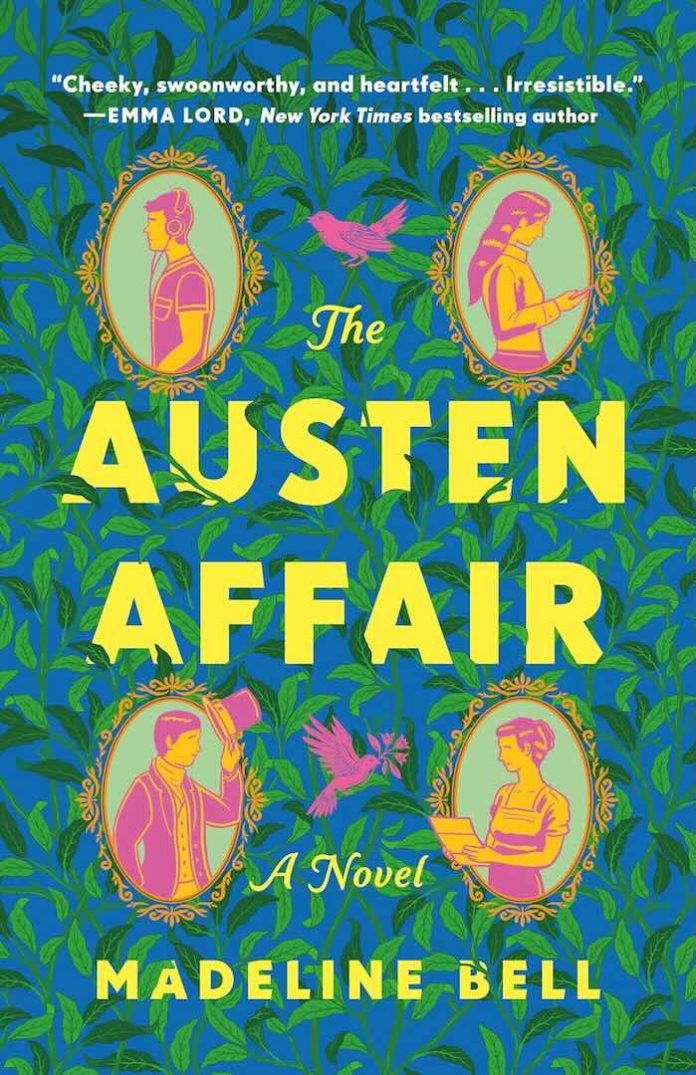
Madeline Bell’s debut novel, The Austen Affair, arrives with the ambitious task of blending contemporary romance with Regency-era sensibilities, all while paying homage to Jane Austen’s enduring legacy. What emerges is a surprisingly sophisticated narrative that transcends the typical fish-out-of-water time travel premise to deliver something genuinely heartfelt and cleverly constructed.
The story follows Tess Bright, a struggling actress whose career hangs by a thread after being fired from her previous television role. Landing the lead in a Northanger Abbey adaptation represents both her last chance at professional redemption and a deeply personal tribute to her late mother’s love of Austen. Standing in her way is Hugh Balfour, a classically trained British actor whose Method approach and dismissive attitude toward Tess creates immediate friction on set. When a lightning strike during filming sends both actors back to 1815, they must navigate Regency society while searching for a way home.
Character Development: From Caricature to Complexity
Bell demonstrates remarkable skill in transforming what could have been stock romance characters into genuinely compelling individuals. Tess begins as the archetypal “hot mess” heroine—late to set, eating in costume, prone to anxiety—but Bell gradually reveals the grief and determination driving her apparent carelessness. Her devotion to her mother’s memory provides genuine emotional weight to her journey, and her natural empathy serves her well in Regency society.
Hugh’s evolution proves even more impressive. Initially presented as an insufferable Method actor who won’t share a makeup trailer with women, he emerges as someone whose rigid exterior masks deep insecurity and family trauma. Bell’s decision to make Hugh’s Regency ancestor actually be his great-great-great-great-grandfather adds layers of meaning to his character arc, as he literally confronts his family history while learning to embrace vulnerability.
The supporting cast, particularly young George Balfour and the formidable Aunt Fanny, feels authentically Regency while avoiding the trap of historical pastiche. Bell clearly understands Austen’s gift for creating memorable secondary characters who serve both plot and thematic purposes.
Plotting and Pacing: A Well-Orchestrated Dance
The novel’s structure mirrors Austen’s own work in its careful balance of romantic development and social commentary. Bell wisely avoids the common pitfall of rushing the time travel mechanism, instead allowing her characters (and readers) to gradually accept their situation. The search for an electrical machine provides necessary plot momentum while forcing Tess and Hugh to work together despite their mutual antagonism.
The integration of Northanger Abbey elements proves particularly clever. Rather than simply borrowing Austen’s plot wholesale, Bell uses Catherine Morland’s story as a framework while creating her own narrative. The scenes where Tess reads Sense and Sensibility to young George demonstrate Bell’s understanding that Austen’s appeal lies not just in romance but in her ability to create comfort through storytelling.
Bell’s pacing deserves special praise. The contemporary opening establishes stakes and character motivations efficiently, the time travel sequence feels both magical and grounded, and the Regency portion allows for proper character development without dragging. The return to the present feels earned rather than arbitrary.
Literary Merit: More Than Romance
What elevates The Austen Affair above typical genre fiction is Bell’s clear affection for and understanding of Austen’s work. The novel functions as both homage and meta-commentary on our continued obsession with Regency romance. Tess’s relationship with her mother through Austen adaptations feels authentic to how many readers discover and connect with classic literature.
Bell’s prose strikes an appropriate balance between contemporary accessibility and period flavor. Her Regency dialogue convinces without overwhelming modern readers, and her contemporary sections capture the specific anxieties of working actors in today’s social media-driven entertainment industry. The integration of technology—from Twitter harassment to the search for electrical machines—serves thematic rather than merely plot purposes.
The novel’s treatment of grief proves particularly sophisticated. Tess’s mourning for her mother provides emotional authenticity without becoming manipulative, and her journey toward healing feels genuine rather than prescribed by romance conventions.
Cultural Commentary: Hollywood Meets Hampshire
Bell demonstrates sharp insight into both contemporary celebrity culture and Regency social dynamics. The opening sections effectively capture the precarious nature of acting careers, where one misstep can destroy years of work. The social media harassment Tess faces feels unfortunately authentic, and Bell uses it to explore themes of public perception versus private reality.
The Regency sections avoid both excessive modernization and complete historical immersion. Bell acknowledges the era’s limitations while finding genuine pleasure in its social rituals. The dinner party scenes and theatrical preparations capture Austen’s understanding that social interaction can be both performance and genuine connection.
Technical Execution: Strengths and Minor Weaknesses
Bell’s writing demonstrates impressive control for a debut novelist. Her character voices remain distinct, her historical research appears thorough without overwhelming the narrative, and her romantic development feels organic rather than forced. The emotional beats land effectively, particularly Tess’s grief processing and Hugh’s gradual vulnerability.
Minor quibbles include occasional contemporary slang that feels jarring in Regency settings and some plot conveniences around the electrical machine quest. The resolution, while satisfying, relies on coincidences that strain credibility slightly. However, these issues pale compared to the novel’s overall accomplishment.
Comparative Context: Standing Among Time Travel Romance
The Austen Affair joins a crowded field of time travel romances but distinguishes itself through its literary consciousness and character development. Unlike some entries in the subgenre that treat historical settings as mere costume drama, Bell demonstrates genuine respect for both eras she depicts.
Similar Reads Worth Exploring
For readers who enjoyed The Austen Affair, consider these complementary titles:
- “The Jane Austen Society” by Natalie Jenner – Contemporary characters bonding over Austen’s legacy
- “Austenland” by Shannon Hale – Modern woman immersing herself in Regency role-playing
- “The Invisible Bridge” by Julie Orringer – Literary historical fiction with romantic elements
- “Beach Read” by Emily Henry – Contemporary romance between writers with literary depth
- “The Ten Thousand Doors of January” by Alix E. Harrow – Portal fantasy with literary sensibilities
Final Assessment: A Promising Debut
The Austen Affair succeeds as both accessible contemporary romance and thoughtful literary homage. Bell demonstrates remarkable confidence in balancing multiple genre expectations while crafting a story that feels both familiar and fresh. The novel respects its source material while creating something genuinely new.
The book’s greatest strength lies in its emotional authenticity. Both the grief driving Tess and the family trauma affecting Hugh feel real rather than manufactured for plot purposes. Their romantic development emerges naturally from shared experience rather than mere physical attraction.
Bell shows particular skill in her historical sections, creating a Regency world that feels lived-in rather than researched. The integration of actual historical figures and events grounds the fantasy elements effectively. Her treatment of class dynamics and social expectations demonstrates understanding of Austen’s social criticism without heavy-handedness.
While not without minor flaws, The Austen Affair announces Bell as a writer capable of sophisticated emotional storytelling within genre conventions. Readers seeking intelligent escapism with genuine heart will find much to appreciate. The novel succeeds both as romance and as reflection on literature’s power to connect us across time and loss.
This delightful debut suggests great promise for Bell’s future work, combining crowd-pleasing elements with literary ambition in ways that honor both contemporary readers and the classics that inspire them. For anyone who has ever found comfort in a beloved book during difficult times, The Austen Affair offers both entertainment and recognition of literature’s healing power.