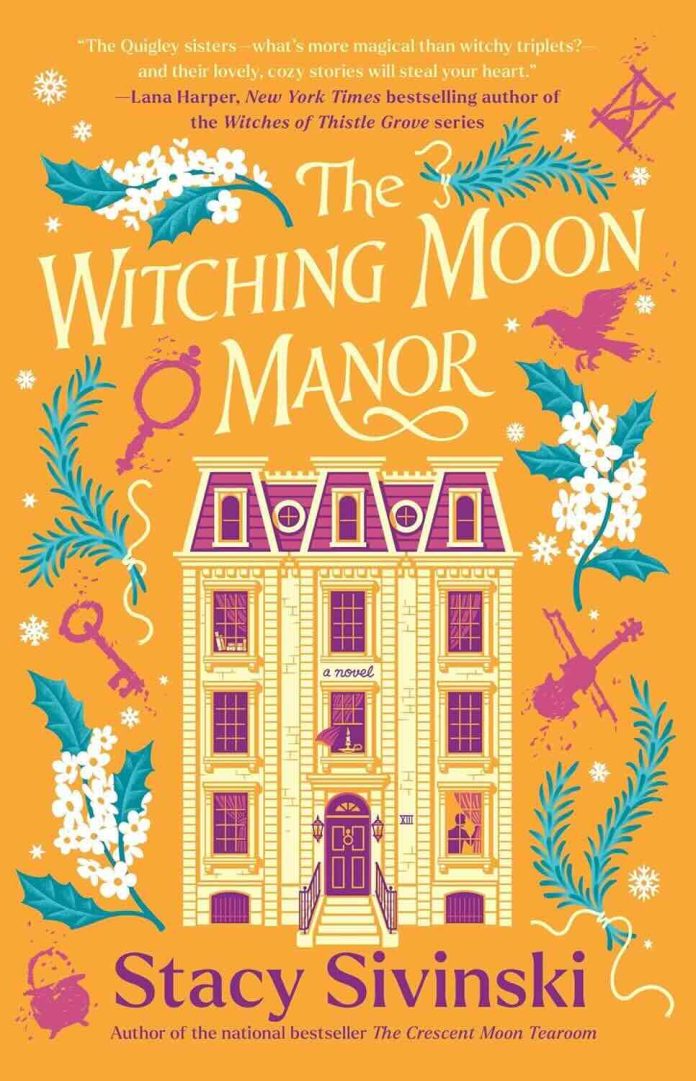
Stacy Sivinski returns with The Witching Moon Manor, the enchanting second installment in The Spellbound Sisters series, proving that lightning can indeed strike twice in the same magical place. Following the beloved debut The Crescent Moon Tearoom, Sivinski weaves another intricate tapestry of sisterhood, destiny, and the delicate balance between what we wish for and what we need.
The story finds the Quigley sisters—Anne, Beatrix, and Violet—scattered across their individual pursuits yet inexorably drawn back to their shared foundation when the threads of fate begin to fray. Anne has stepped into her role as Chicago’s Diviner, shouldering responsibilities that grow heavier with each passing day. Beatrix has embarked on a book tour that should have been triumphant but instead leaves her questioning whether her gift for storytelling has abandoned her. Violet, meanwhile, returns home haunted by a circus accident that shattered her confidence in the air above the crowds she once commanded so effortlessly.
The Art of Magical Realism Done Right
Sivinski’s greatest strength lies in her ability to ground fantastical elements in deeply human emotions and experiences. The magical system remains elegantly simple yet profound—tea leaf readings, fortune telling, and the mysterious Tasks that bind all witches to their destinies. When Mr. Crowley’s unfinished Task begins unraveling the very fabric of fate across Chicago, causing trains to take impossible routes and icicles to bloom like flowers during blizzards, the consequences feel both wondrous and genuinely threatening.
The introduction of necromancy through the mysterious Crowley family adds a darker edge to the cozy magical world established in the first book. The marble mansion marked with Roman numeral XIII serves as an appropriately ominous setting for Anne’s negotiations with forces beyond her usual purview. Yet Sivinski never allows the darkness to overwhelm the inherent warmth that makes this series so appealing.
Character Development That Resonates
Each sister’s journey feels authentic and earned. Anne’s struggle with her expanding responsibilities as Diviner creates genuine tension—she possesses unprecedented power to see the threads of destiny, yet this gift comes with isolation and moral complexity. When faced with completing Mr. Crowley’s Task, knowing it will separate him from his beloved Philip, Anne must grapple with the greater good versus individual happiness.
Beatrix’s writer’s block and subsequent rediscovery of her voice through the enchanted bookshop provides a particularly satisfying arc. Sivinski clearly understands the creative process, and watching Beatrix fall back in love with storytelling feels both personal and universal. The bookshop itself becomes a character, responding to Beatrix’s emotional state and ultimately providing refuge and inspiration.
Violet’s trauma from the circus accident is handled with remarkable sensitivity. Her nightmares of failing to catch Emil during their trapeze act evolve into dreams of possibility rather than regret, showcasing Sivinski’s understanding that healing often requires reimagining our relationship with our fears rather than simply overcoming them.
The Magic of Place and Atmosphere
The Crescent Moon Tearoom continues to be a character in its own right, expanding and contracting to meet the needs of its inhabitants while maintaining its essential warmth. Sivinski excels at creating spaces that feel truly alive—the house shaking its shutters in excitement, adjusting temperature in response to emotions, and generally behaving like a beloved family member who happens to be made of wood and stone.
The contrast between the familiar comfort of the tearoom and the stark, imposing Witching Moon Manor creates effective atmospheric tension. The necromancers’ home, with its marble facade and ominous numbering, represents the weight of magical responsibility that Anne must now shoulder.
Where the Story Stumbles Slightly
While the emotional arcs are beautifully crafted, certain plot elements feel rushed in their resolution. The solution to Mr. Crowley’s dilemma—helping Philip move on so they can journey to the afterlife together—arrives perhaps too neatly. The complex moral question of whether to honor individual choice or serve the greater good deserves more intricate examination.
Additionally, some secondary characters, particularly the other Council members, remain somewhat underdeveloped. Given their importance to Anne’s new role, more depth in these relationships would strengthen the overall narrative foundation.
The Romance Elements
Emil and Violet’s relationship provides genuine emotional weight without overwhelming the story’s focus on sisterhood. Their reunion, sparked by Violet’s dream where she successfully catches him, offers a satisfying resolution to her trauma arc. The romance feels organic rather than obligatory, growing from mutual understanding and shared passion for their art.
Beatrix’s budding relationship with Jennings develops more subtly, providing hope for future books while remaining secondary to her personal growth as a writer.
Themes That Matter
Sivinski explores several profound themes with remarkable deftness. The nature of sacrifice and whether love sometimes requires letting go resonates throughout the narrative. The question of individual desire versus collective responsibility gains complexity through Anne’s position as Diviner—she possesses the power to see what should happen but must grapple with what people want to happen.
The concept of home as both physical place and emotional anchor runs throughout the story. Each sister discovers that while pursuing individual dreams is necessary, the foundation of family provides the strength to take those risks.
Writing Style and Prose
Sivinski’s prose maintains the lyrical quality that made the first book so memorable. Her descriptions engage all the senses—the scent of bergamot and citrus mixing with old books, the sound of wind rattling windows, the weight of destiny pressing against Anne’s shoulders. The writing flows naturally between intimate character moments and broader magical set pieces.
The chapter structure, with each section titled after a symbolic object, continues to work effectively, providing natural breaking points while reinforcing the fortune-telling theme that underlies the entire series.
Final Verdict
The Witching Moon Manor succeeds as both a standalone story and a worthy continuation of The Spellbound Sisters series. While it may not achieve the perfect magical balance of its predecessor, it offers emotional depth, character growth, and the same enchanting atmosphere that readers fell in love with originally.
Sivinski has created a world that feels both magical and grounded, where the extraordinary emerges from the everyday concerns of family, responsibility, and finding one’s place in the world. The book rewards both longtime fans and newcomers with its careful attention to character development and its underlying message that sometimes the greatest magic lies in choosing to stay connected to those who matter most.
For readers seeking cozy fantasy with genuine emotional resonance, sophisticated themes, and the kind of magical world you wish you could step into for afternoon tea, The Witching Moon Manor delivers exactly what the series promises—a place where magic and love intertwine in the most satisfying ways.
Similar Books You Might Enjoy
If The Witching Moon Manor captured your heart, consider these enchanting reads:
- The Ten Thousand Doors of January by Alix E. Harrow – Beautiful prose and magical doorways
- The Once and Future Witches by Alix E. Harrow – Sisterhood and magical resistance
- The Invisible Life of Addie LaRue by V.E. Schwab – Romance and magical consequences
- The Midnight Library by Matt Haig – Philosophical fantasy about life’s possibilities
- The House in the Cerulean Sea by TJ Klune – Cozy fantasy with found family themes
- The Witches of New York by Ami McKay – Historical fantasy featuring sisterhood and tea magic







