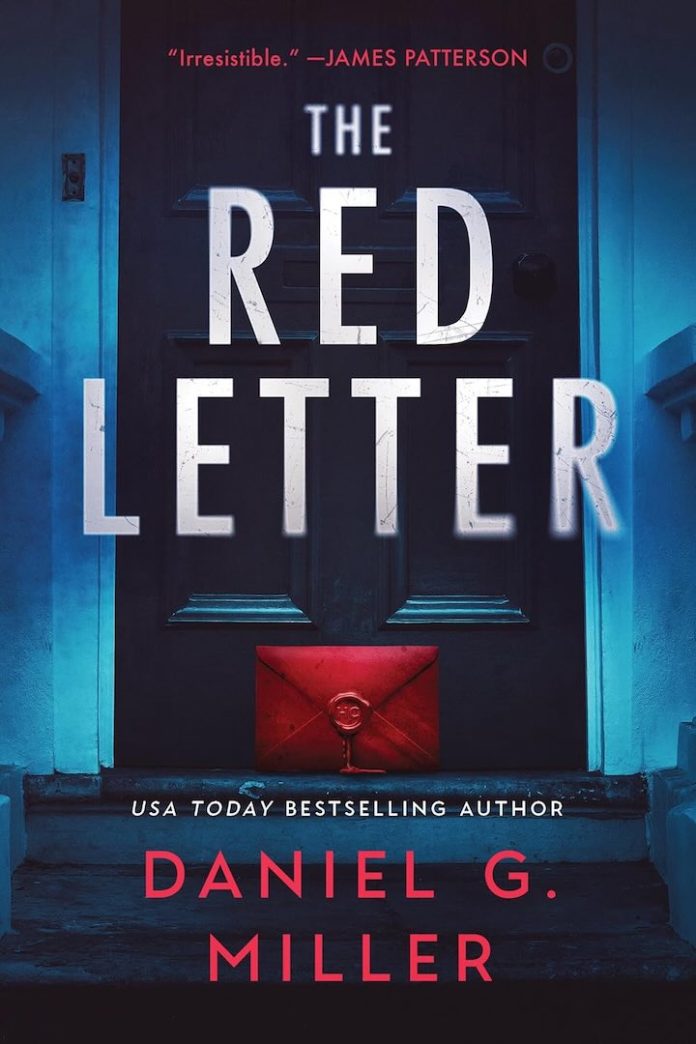
Daniel G. Miller’s The Red Letter marks the compelling second installment in his acclaimed “Orphanage by the Lake” series, following the breakout success of The Orphanage by the Lake. Miller has established himself as a formidable voice in contemporary mystery thrillers, particularly through his nuanced portrayal of private investigator Hazel Cho and her complex world of moral ambiguity and psychological depth.
The series began with Hazel’s haunting encounter at St. Agnes orphanage, where she confronted unimaginable horrors while rescuing abducted children. That debut novel introduced readers to a detective willing to navigate the darkest corners of human nature, setting the stage for what would become an increasingly intricate exploration of trauma, justice, and redemption.
The Heart of the Mystery: Death Comes Calling
The Red Letter plunges readers directly into chaos as Hazel witnesses Father Kenneally’s death through grainy security footage from Old St. Patrick’s Cathedral. The priest dies in violent convulsions, poisoned by tetrodotoxin after receiving a mysterious red letter containing biblical verses and disturbing imagery. What begins as a favor to prosecutor friend Shavali quickly spirals into a web of murders targeting prominent Catholic Church figures.
Miller’s opening immediately establishes the atmospheric tension that permeates the entire novel. The Gothic cathedral setting, with moonlight filtering through stained glass and creating “haunting mix of light and shadow,” serves as both crime scene and metaphor for the moral complexity ahead. The author demonstrates his mastery of scene-setting, transforming familiar New York landmarks into ominous backdrops for psychological terror.
Character Evolution: Hazel’s Deepest Challenge
The strength of The Red Letter lies in Miller’s continued development of Hazel Cho as a protagonist. Unlike many mystery series where characters remain static, Hazel undergoes profound transformation throughout this installment. Her relationship with mayoral candidate Jack Powell provides both emotional anchor and vulnerability, creating personal stakes that elevate the investigation beyond professional obligation.
Miller’s portrayal of their romance feels authentic rather than contrived. Jack’s political ambitions and moral compromises create realistic friction with Hazel’s uncompromising pursuit of truth. Their relationship faces genuine challenges that test both characters’ values, particularly when Hazel discovers Jack’s financial dealings with murder victim Fred Tweed. The author skillfully uses their romantic tension to explore themes of power, corruption, and personal integrity.
The grief Hazel experiences following Jack’s murder represents Miller’s most emotionally sophisticated writing to date. Rather than glossing over trauma’s impact, he demonstrates how loss reverberates through every aspect of her existence. Hazel’s internal monologue reveals someone struggling to maintain professional focus while processing devastating personal loss, creating a psychologically complex portrait of resilience under extreme pressure.
The Killer’s Psychology: Religious Fanaticism Examined
Miller’s exploration of religious extremism through the Red Letter Killer’s perspective provides the novel’s most disturbing and compelling elements. The killer’s chapters, written in first person, reveal a mind convinced of divine mission while perpetrating horrific acts. These sections showcase Miller’s ability to inhabit a disturbed psychology without glorifying violence.
The religious imagery and biblical quotations scattered throughout the killer’s communications create an unsettling atmosphere of perverted faith. Miller demonstrates deep understanding of how extremist thinking operates, showing how genuine religious conviction can be twisted into justification for murder. The killer’s self-perception as God’s instrument reflects real-world religious terrorism while remaining grounded in the story’s specific context.
However, the revelation that Mary/Sister Teresa serves as the primary antagonist feels somewhat underdeveloped. While Miller provides sufficient clues throughout the narrative, her transformation from helpful nun to serial killer lacks the psychological depth that would make this twist truly devastating. The motivation—religious fanaticism combined with past trauma at the orphanage—provides logical foundation but could have been explored more thoroughly.
Investigative Craft: Procedural Excellence
Miller excels at balancing procedural realism with narrative momentum. Hazel’s investigation unfolds through logical steps, from stationery analysis to video examination to following geographical clues. The author clearly researched investigative techniques, incorporating details about tetrodotoxin poisoning, forensic analysis, and surveillance methods that lend authenticity to the proceedings.
The partnership between Hazel and Kenny provides effective contrast to her more solitary work in the first novel. Kenny’s research skills and technological expertise complement Hazel’s intuitive investigative approach, creating natural opportunities for exposition while advancing the plot. Their professional dynamic feels organic rather than forced, contributing to the novel’s overall credibility.
Atmospheric Mastery: New York as Character
Miller’s New York serves as more than backdrop; it becomes integral to the story’s atmosphere and themes. From the Gothic cathedral where Father Kenneally dies to the political fundraisers where power brokers gather, the city’s various settings reflect the moral complexity of the characters who inhabit them. The author demonstrates particular skill in contrasting spaces—the sterile hospital where Kenny recovers versus the warm family gathering where Hazel seeks comfort.
The seasonal backdrop of approaching winter mirrors the emotional landscape as Hazel faces increasing isolation and danger. Miller uses weather and environmental details effectively, creating mood without overwhelming the narrative with unnecessary description.
Technical Execution: Pacing and Structure
The novel’s structure maintains excellent pacing despite its complex plot. Miller alternates between Hazel’s investigation, the killer’s increasingly unhinged perspective, and flashback sequences that gradually reveal crucial backstory. This multi-layered approach creates mounting tension while providing necessary character development and exposition.
Some sections, particularly those involving stationery research and administrative details, occasionally slow the narrative momentum. However, Miller generally maintains reader engagement through compelling character interactions and the constant threat of additional murders.
Thematic Depth: Power, Corruption, and Justice
The Red Letter explores weighty themes without becoming preachy. The Catholic Church’s handling of abuse settlements provides sobering commentary on institutional power and its abuse. Miller examines how powerful organizations protect themselves at victims’ expense, while individual members struggle with moral complicity.
The political subplot involving Jack’s mayoral campaign adds another layer of corruption and compromise. Miller demonstrates how even well-intentioned people become entangled in morally questionable activities when pursuing positions of influence. This theme resonates particularly strongly in contemporary political climate, lending the novel additional relevance.
Series Continuity and Growth
Readers familiar with The Orphanage by the Lake will appreciate how Miller deepens his fictional universe while maintaining accessibility for newcomers. References to Hazel’s previous case provide context without overwhelming new readers, and the psychological aftermath from those events informs her current emotional state.
The series demonstrates clear evolution in Miller’s writing craft. Where the debut focused primarily on external horror, The Red Letter delves deeper into psychological complexity and moral ambiguity. This progression suggests a maturing author willing to challenge both his characters and readers with increasingly sophisticated material.
Areas for Enhancement
While The Red Letter succeeds as an engaging thriller, certain elements could have been strengthened. Mary’s transformation into the primary antagonist, while logically supported, feels somewhat abrupt. Additional scenes exploring her psychological deterioration might have made the revelation more impactful.
The resolution, while satisfying, ties up loose ends rather quickly. Some readers may find the final confrontation and Mary’s capture less climactic than the buildup suggests. Miller demonstrates clear skill in creating tension but could develop more dynamic action sequences.
Similar Reads and Recommendations
Readers who enjoyed The Red Letter should consider exploring similar authors who blend psychological complexity with procedural elements:
- Tana French’s Dublin Murder Squad series – Particularly “In the Woods” and “The Likeness” for their atmospheric approach to trauma and investigation
- Gillian Flynn’s “Sharp Objects“ – For its exploration of female protagonists dealing with personal demons while solving crimes
- Louise Penny’s Inspector Gamache series – Beginning with “Still Life” for character-driven mysteries with moral depth
- Kate Atkinson’s Jackson Brodie novels – Starting with “Case Histories” for their blend of humor and serious themes
- John Hart’s stand-alone thrillers – Particularly “The Last Child” for similar themes of institutional corruption and personal redemption
For readers new to the series, starting with The Orphanage by the Lake provides important character context, though The Red Letter functions effectively as a standalone thriller.
Also worth your time: The Water Lies by Amy Meyerson, another mystery thriller we have covered.
Final Verdict: A Worthy Continuation
The Red Letter confirms Daniel G. Miller’s position as a rising talent in contemporary mystery writing. While not quite matching the raw emotional impact of his debut, this second installment demonstrates growth in character development, thematic sophistication, and atmospheric creation. Miller has crafted a compelling thriller that satisfies genre expectations while exploring deeper questions about faith, power, and moral responsibility.
The novel succeeds primarily through its complex protagonist and carefully constructed atmosphere of mounting dread. Hazel Cho continues to evolve as one of the more interesting detectives in recent mystery fiction, combining professional competence with genuine emotional vulnerability. Miller’s willingness to put his characters through genuine suffering—rather than superficial danger—creates investment that transcends typical genre boundaries.
Despite minor pacing issues and an occasionally rushed resolution, The Red Letter delivers the psychological complexity and procedural satisfaction that mystery readers seek. The novel establishes Miller as an author capable of sustaining a series while continuing to challenge both his characters and his craft. For fans of character-driven mysteries with contemporary relevance, this represents essential reading that builds anticipation for future installments in the Orphanage by the Lake series.







