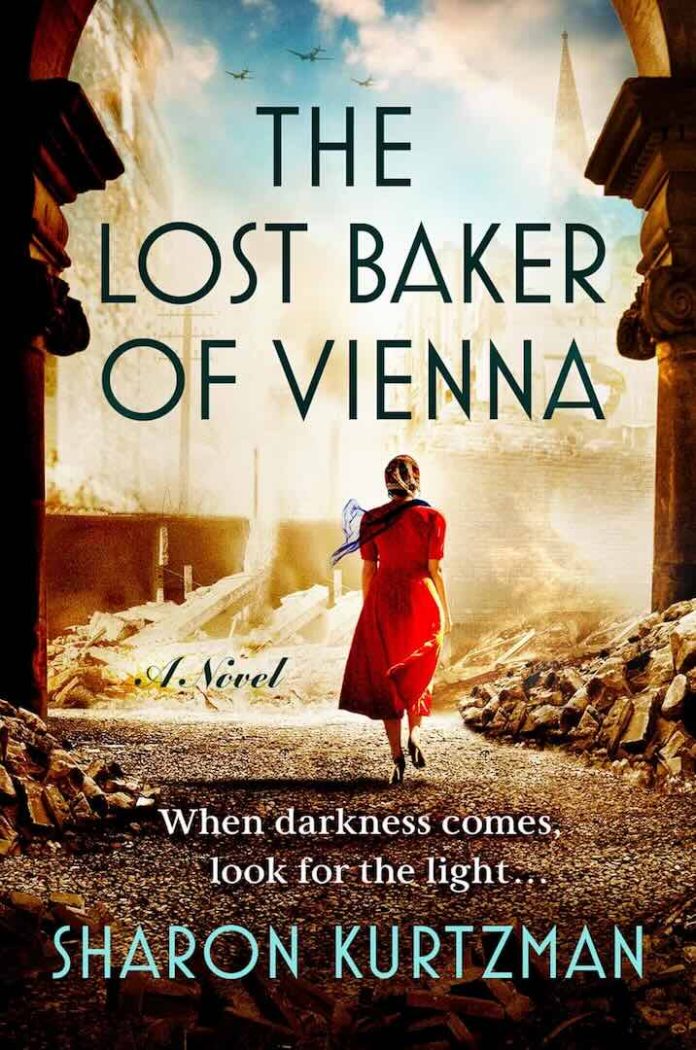
In the landscape of Holocaust literature, where survivor stories have become both sacred testimony and literary touchstones, Sharon Kurtzman’s debut novel “The Lost Baker of Vienna” emerges as a profoundly personal yet universally resonant work that transcends the familiar boundaries of historical fiction. This isn’t merely another war story—it’s an intimate exploration of how the past whispers through generations, revealing itself in the most unexpected moments and places.
A Tale of Two Timelines: Structure That Mirrors Memory
Kurtzman demonstrates remarkable structural sophistication in her dual-timeline narrative, weaving together the stories of Chana Rosenzweig in 1946 Vienna and her great-granddaughter Zoe in contemporary Raleigh, North Carolina. The parallel structure isn’t just a literary device; it becomes a metaphor for how trauma and resilience echo across generations. Like the layers of dough in Chana’s beloved croissants, each timeline enriches the other, creating depth and texture that single-period narratives often lack.
The author’s decision to begin in the present day with Zoe’s discovery of mysterious family documents creates an immediate sense of mystery that propels readers into the past. This technique mirrors the way family secrets often surface—not through grand revelations, but through quiet discoveries that unravel entire histories. Kurtzman’s pacing here is particularly masterful, revealing information at precisely the right moments to maintain tension while allowing emotional resonance to build.
The Heart of Survival: Character Development and Authenticity
Chana Rosenzweig: A Portrait of Complexity
Chana emerges as one of the most compelling protagonists in recent Holocaust fiction. Unlike many fictional survivors who are defined primarily by their trauma, Chana possesses agency, desire, and dreams that extend beyond mere survival. Her passion for baking becomes both refuge and rebellion—a way to reclaim beauty and creation in a world that has shown her primarily destruction.
Kurtzman’s portrayal of Chana’s romantic entanglements with Meyer Suconick and Elias reflects the author’s nuanced understanding of post-war realities. This isn’t simply a love triangle for dramatic effect; it represents the impossible choices faced by displaced persons who must balance survival with desire, security with authenticity. Chana’s internal conflict between accepting Meyer’s protection through marriage and following her heart toward Elias captures the broader tension between pragmatism and hope that defined the refugee experience.
The Supporting Cast: Layered and Authentic
The secondary characters avoid the trap of serving merely as historical window dressing. Ruth, Chana’s mother, embodies the protective desperation of parents who have lost too much to risk losing more. Her insistence that Chana marry Meyer isn’t portrayed as mere controlling behavior but as the calculated decision of someone who understands survival requires uncomfortable compromises.
Meyer himself deserves particular attention. Rather than creating a simple antagonist, Kurtzman presents him as a complex figure whose own survival has required moral flexibility. His work in the black market and his ultimate revelation as Henri Martin in the contemporary timeline creates one of the novel’s most surprising and emotionally satisfying narrative arcs.
The Sensory World of Post-War Vienna
Kurtzman’s background as a food writer serves her exceptionally well in creating the sensory landscape of 1946 Vienna. The descriptions of bread, pastries, and cooking aren’t merely decorative—they become essential elements of character development and thematic exploration. When Chana sneaks into the hotel kitchen at night to bake her father’s recipes, these scenes crackle with both sensuality and spirituality.
The author’s research into post-war Vienna creates an authentic backdrop that avoids both romanticization and excessive grimness. The city emerges as a place caught between destruction and rebuilding, where beauty and danger coexist in every neighborhood, every relationship, every decision. The black market activities, the threat of violence against women, and the bureaucratic obstacles to emigration all feel grounded in historical reality rather than plot convenience.
Contemporary Echoes: Zoe’s Journey
The modern timeline, following Zoe’s investigation into her family’s past, serves multiple functions beyond simple framing device. Zoe’s career as a food journalist creates natural parallels with Chana’s baking, while her complicated relationship with her aging grandfather Aron adds emotional weight to the historical revelations.
Kurtzman uses Zoe’s professional context—working for a culinary magazine, traveling to Vienna for a conference—to explore how family histories influence our choices in ways we might not recognize. The revelation that Henri Martin, the celebrated baker Zoe is interviewing, is actually Meyer Suconick transforms what could have been a simple genealogical mystery into a meditation on identity, reinvention, and the long reach of the past.
Thematic Depth: Beyond Survival
The Alchemy of Memory and Narrative
One of the novel’s most sophisticated themes involves the relationship between memory and storytelling. As Henri/Meyer reveals his version of events to Zoe, readers must grapple with questions of reliability, perspective, and the way survival sometimes requires reconstructing not just circumstances but identity itself. The gradual revelation that Meyer became Henri, that survival required not just escape but complete reinvention, adds layers of complexity to questions about authenticity and transformation.
Food as Cultural Preservation
The baking scenes function as more than beautiful description—they represent cultural continuity in the face of destruction. When Chana recreates her father’s recipes, she’s not just making bread; she’s maintaining connections to a murdered parent, a destroyed community, and a way of life that the Nazis sought to obliterate. This theme resonates particularly strongly in contemporary discussions about cultural preservation and the role of food in maintaining identity across generations.
The Cost of Safety
Perhaps most powerfully, Kurtzman explores the question of what people sacrifice for security. Chana’s arranged engagement to Meyer isn’t presented as simple victimization but as the result of impossible circumstances where every choice carries enormous risk. The novel asks difficult questions about agency, survival, and the price of protection without offering easy answers.
Literary Craftsmanship: Strengths and Weaknesses
What Works Brilliantly
Kurtzman’s prose style deserves particular praise. Her sentences have a clean, elegant quality that serves the story without calling attention to itself. The dialogue feels authentic to both time periods, and her ability to shift between Chana’s more formal speech patterns and Zoe’s contemporary voice demonstrates considerable skill.
The author’s research clearly informs every page without becoming burdensome exposition. Details about displaced persons camps, immigration quotas, and the Brihah organization emerge naturally through character interactions rather than information dumps.
Areas for Critical Consideration
While the dual timeline structure generally succeeds for “The Lost Baker of Vienna”, there are moments where the contemporary sections feel less emotionally compelling than Chana’s story. Zoe’s professional challenges and romantic subplot, while competently handled, occasionally pale in comparison to the life-and-death stakes of the historical narrative.
Some readers might find the revelation of Meyer’s identity as Henri somewhat convenient, though Kurtzman has seeded enough clues throughout to make it feel earned rather than coincidental. The romance between Chana and Elias, while touching, sometimes veers toward the predictable, particularly in their shared scenes in the hotel kitchen.
The novel’s ending, while emotionally satisfying, ties up loose ends perhaps too neatly. The reunion between the separated family members and the establishment of new lives in America provides closure but might strike some readers as overly optimistic given the historical realities facing post-war refugees.
Cultural and Historical Significance
“The Lost Baker of Vienna” makes valuable contributions to Holocaust literature by focusing on the often-overlooked period immediately following liberation. While much fiction about the Holocaust centers on the camps or the war itself, Kurtzman illuminates the complex challenges faced by survivors trying to rebuild their lives in a world that often remained hostile or indifferent to their plight.
The novel also adds to our understanding of the displaced persons experience and the underground networks that helped survivors escape Europe. The depiction of Brihah operations and the black market activities that sustained many refugees provides historical insight wrapped in compelling narrative.
A Personal Literary Achievement
Kurtzman’s author’s note reveals the deeply personal nature of this work—based on her own family’s experiences and her grandmother’s stories. This personal connection adds authenticity and emotional weight to every scene, but more importantly, it demonstrates how family stories can be transformed into universal narratives that speak to readers far beyond the author’s immediate community.
The three years Kurtzman spent researching and writing during the pandemic seems to have intensified the book’s themes about isolation, uncertainty, and the power of family connections to sustain us through difficult times. The novel becomes not just a story about post-war refugees but a meditation on how we find hope and maintain connections across time and circumstance.
Comparisons and Literary Context
“The Lost Baker of Vienna” invites comparison with other dual-timeline historical novels such as Kate Morton’s works or Kristin Hannah’s “The Four Winds.” However, Kurtzman’s focus on the immediate post-war period and her use of food culture as both plot device and thematic element give her work distinctive character.
The novel also sits comfortably alongside other recent Holocaust fiction that explores the refugee experience, such as Georgia Hunter’s “We Were the Lucky Ones” or Pam Jenoff’s “The Ambassador’s Daughter.” Kurtzman’s particular strength lies in her ability to balance historical authenticity with emotional accessibility.
Recommendations for Similar Reads
Readers who appreciate Kurtzman’s blend of family mystery and historical depth in “The Lost Baker of Vienna” might enjoy:
- “The Seven Husbands of Evelyn Hugo” by Taylor Jenkins Reid – for its structure revealing family secrets across timelines
- “The Alice Network” by Kate Quinn – for its dual-timeline approach to war stories
- “The Book Thief” by Markus Zusak – for its unique perspective on WWII through personal narrative
- “Those Who Save Us” by Jenna Blum – for its exploration of German-American family secrets from the war
- “The Invisible Bridge” by Julie Orringer – for its detailed portrayal of Eastern European Jewish experiences during WWII
Final Assessment: A Debut Worth Celebrating
“The Lost Baker of Vienna” succeeds as both an engaging family saga and a meaningful contribution to historical fiction. While it occasionally succumbs to the optimism that readers of the genre often crave, it more often provides the kind of complex, nuanced exploration of survival, identity, and family that elevates historical fiction above mere entertainment.
Sharon Kurtzman has crafted a novel that honors both her family’s experiences and the broader historical moment while creating characters and situations that will resonate with contemporary readers. The book succeeds in its most important mission: ensuring that stories of resilience, love, and survival continue to be told with the care, complexity, and hope they deserve.
For readers seeking historical fiction that combines meticulous research with emotional authenticity, “The Lost Baker of Vienna” offers a deeply satisfying reading experience that lingers long after the final page. It’s a promising debut that suggests Kurtzman has much more to offer readers interested in stories that illuminate the past while speaking directly to present concerns about family, identity, and the courage required to build new lives from the fragments of old ones.
This is historical fiction at its finest—grounded in research, elevated by prose, and powered by the kind of authentic emotion that can only come from stories that matter deeply to their teller. In bringing her grandmother’s stories to light, Kurtzman has given readers a gift that extends far beyond family history into the realm of shared human experience.







