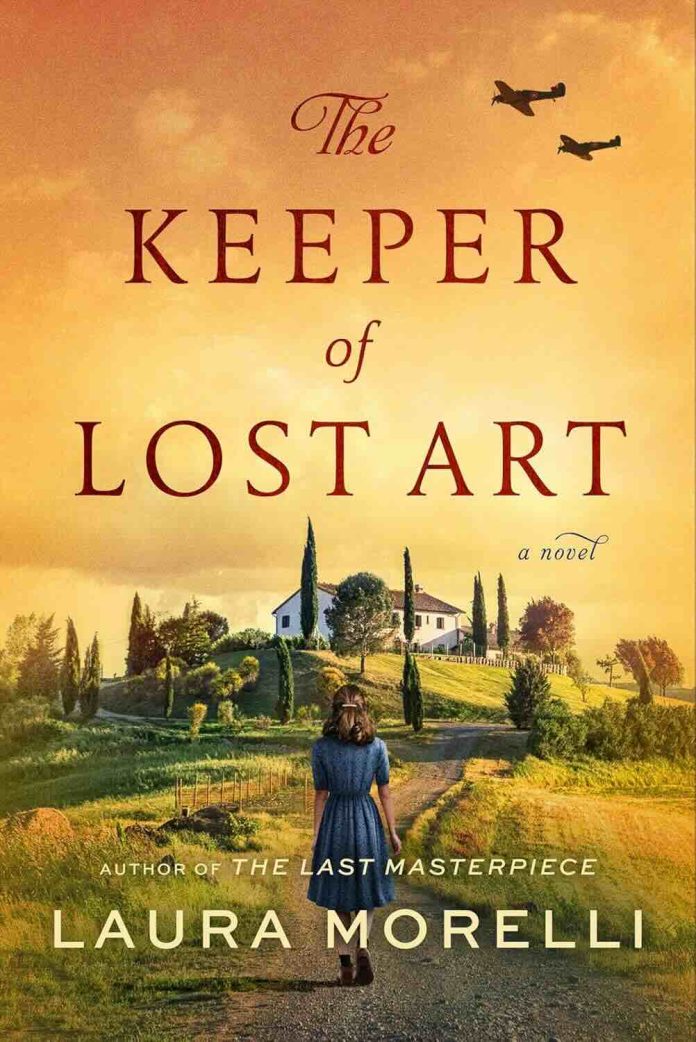
Laura Morelli’s “The Keeper of Lost Art” takes readers on an evocative journey to 1940s Tuscany, where priceless Renaissance masterpieces and displaced refugees find sanctuary in a single villa. Drawing on the true story of art preservation during World War II, Morelli crafts a coming-of-age tale that elegantly balances the grand sweep of history with intimate human connections.
As someone who has studied both World War II history and Italian Renaissance art, I found myself completely transported to the hillsides of Tuscany, where Stella Costa, our young protagonist, discovers the transformative power of art amidst the chaos of war. Morelli’s meticulous research and lyrical prose create a vivid tapestry that feels both authentic and deeply moving.
The Heart of the Story: Art as Salvation
At the center of this narrative stands Stella Costa, a 12-year-old girl sent from bomb-ravaged Torino to live with her aunt and uncle at Villa Santa Lucia. Initially an unwelcome guest in her own family’s home, Stella’s life changes when she discovers that her uncle has been entrusted with hiding nearly 300 masterpieces from Florence’s museums—including Botticelli’s magnificent “Primavera.”
The novel’s true brilliance emerges in Stella’s friendship with Sandro, an orphaned refugee boy with extraordinary artistic talent. Their shared discovery of the hidden paintings creates a sanctuary from the horrors unfolding around them. Through their eyes, we experience:
- The raw wonder of encountering masterpieces like the “Primavera” in the intimate setting of a villa storeroom
- The gradual unfolding of artistic knowledge and appreciation as they learn the stories behind each painting
- The parallel between Sandro’s developing artistic vision and his deteriorating eyesight
- The way art serves as both escape and anchor during the most trying circumstances
Morelli writes with particular sensitivity about these moments of discovery. When Stella observes the paintings with Sandro, she describes them as “a kaleidoscope of frozen stories,” a phrase that perfectly captures the novel’s thematic heart.
Characters Who Breathe History to Life
The strength of historical fiction often lies in how convincingly it populates real historical circumstances with characters who feel vibrantly alive. Morelli excels here with a cast that includes:
- Stella: Torn between longing for absent parents and forging her own path, her growth from reluctant schoolgirl to aspiring art conservator forms the novel’s emotional backbone
- Sandro: The talented boy artist whose gradual loss of vision parallels the darkening world around them
- Zio Tino: Stella’s uncle, a humble driver elevated to guardian of Western civilization’s treasures, displaying quiet dignity and resolve
- Zia Angela: Stella’s prickly aunt, whose complex past with Stella’s father adds layers to their difficult relationship
- Historical figures: Giovanni Poggi, Cesare Fasola, and the fictionalized “Captain Foster” (based on the real Monuments Men) who bring authenticity to the narrative
The dynamics between these characters evolve beautifully throughout the novel. The relationship between Stella and her aunt is particularly well-rendered, moving from mutual suspicion to grudging respect, and finally to genuine affection.
War and Art: The Historical Backdrop
Morelli demonstrates remarkable skill in weaving historical detail into her narrative without resorting to information dumps. The progression of the war unfolds organically through:
- Radio broadcasts that bring increasingly dire news
- The arrival of refugees with stories from villages destroyed by German reprisals
- The parade of different military occupiers—from German paratroopers to New Zealand and Indian troops
- The looting of other art repositories similar to Villa Santa Lucia
What makes this historical novel stand apart is Morelli’s focus on the mundane realities of wartime life. We experience the perpetual hunger, the constant fear, the tedium punctuated by moments of terror, and the ways people maintained their humanity through small acts of resistance and creation.
Artistic Education Through Storytelling
For readers with limited knowledge of Renaissance art, Morelli provides an accessible education without ever feeling didactic. Through Stella’s encounters with art experts, we learn about:
- The symbolism and mythology behind Botticelli’s “Primavera”
- The technical challenges of preserving centuries-old tempera paintings
- The network of dedicated professionals who risked their lives to protect cultural heritage
- The various roles in art preservation, from curators to conservators
These lessons never feel forced. Instead, they emerge naturally from the story, mirroring Stella’s own growing appreciation and understanding of the art that surrounds her.
A Critical Assessment: Strengths and Limitations
Morelli’s novel shines brightest in its sensory immersion. The Tuscan landscape comes alive through descriptions of ripening grapes, the smell of olive trees, the taste of freshly made pasta, and the play of light on ancient stone walls. Her background as an art historian enriches the narrative without overwhelming it.
The novel’s pacing is expertly handled, balancing quieter moments of discovery with the escalating dangers of war. Particularly effective is the way German occupation progresses from tense coexistence to forced labor and eventual violence.
If the novel has a weakness, it lies in some secondary storylines that don’t receive full development. For instance:
- The subplot involving Livia’s relationship with Captain Bauer feels somewhat abbreviated
- Stella’s father’s brief appearance and subsequent disappearance, while thematically consistent, leaves some emotional threads unresolved
- Some of the refugee characters emerge as distinct individuals only to fade into the background
These are minor quibbles in an otherwise richly developed narrative. The central relationships—between Stella and Sandro, and between humans and art—receive the sustained attention they deserve.
In Context: Morelli’s Body of Work
For readers familiar with Morelli’s previous novels, including “The Last Masterpiece,” “The Stolen Lady,” and “The Night Portrait,” this book continues her exploration of art history through fiction with similar themes of cultural preservation during wartime. However, “The Keeper of Lost Art” stands apart through its child protagonist’s perspective, offering a fresh innocence and emotional vulnerability to the narrative.
Fans of novels like Anthony Doerr’s “All the Light We Cannot See,” Kristin Hannah’s “The Nightingale,” or Julie Orringer’s “The Flight Portfolio” will find similar themes of resilience and humanity during wartime, though Morelli’s focus on art preservation offers a unique angle.
Final Reflections: Art That Endures
The emotional weight of “The Keeper of Lost Art” accumulates gradually, building to a moving conclusion that emphasizes both personal and cultural renewal. The novel’s title takes on multiple meanings as we realize the “lost art” refers not only to the displaced paintings but also to Sandro’s fading vision, the disrupted traditions of peacetime life, and the challenge of maintaining hope during war.
Morelli leaves us with the profound idea that art matters most not as physical objects but as vessels of human stories and connections. When Stella reflects that “art can give you hope in a time of despair,” we understand this not as abstract sentiment but as lived experience.
Verdict: A Masterpiece of Historical Fiction
“The Keeper of Lost Art” is a good read its accomplished storytelling, historical authenticity, and emotional resonance. Laura Morelli has created a novel that educates, entertains, and moves in equal measure.
The novel reminds us that even in our darkest hours, beauty persists—in paintings hidden away from bombs, in children drawing on scraps of paper, in pasta prepared from dwindling supplies, and in human connections forged under impossible circumstances. Like Botticelli’s “Primavera,” which survived centuries of upheaval to reach us today, it’s a testament to what endures when so much else is lost.
For readers seeking historical fiction that combines intellectual engagement with emotional depth, “The Keeper of Lost Art” is a must-read that will linger in the mind long after the final page.







