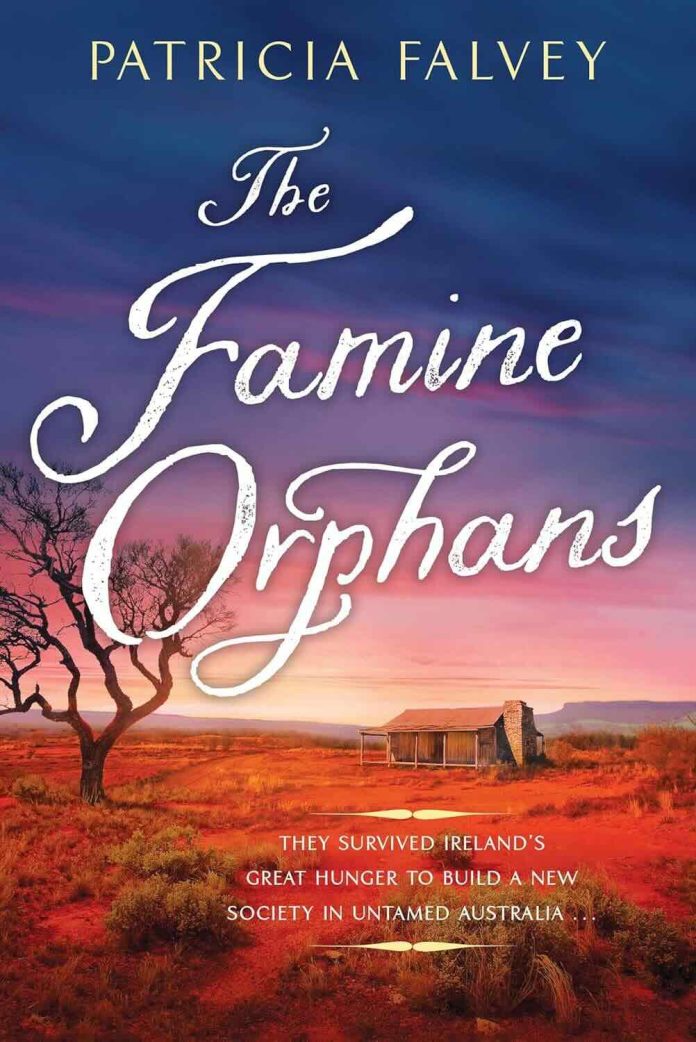
Patricia Falvey’s The Famine Orphans is more than just a poignant novel of historical fiction—it is a lyrical and gut-wrenching ode to forgotten girls, displaced dreams, and the resilient spirit of womanhood forged in fire. Inspired by the real-life Earl Grey scheme, under which 4,100 Irish orphan girls were sent from workhouses to Australia in the mid-19th century, Falvey has created a sweeping narrative rooted in fact and steeped in emotional authenticity.
Set against the backdrop of the Irish Famine and British colonial expansion, this story follows young Kate Gilvarry, a Newry orphan whose life spirals from familial warmth into famine, destitution, and eventually forced emigration. Through her eyes, readers are immersed in a world of hunger, hope, and hard-won survival in the harsh frontier of colonial Australia.
The Story in Layers: Structure and Progression
Falvey breaks the novel into six clear arcs:
- Famine – The slow devastation of Kate’s family in rural Ireland.
- Workhouse – The dehumanizing yet defining period at Newry Workhouse.
- Voyage – The perilous sea journey aboard the Sabine.
- Sydney – The disillusionment and discrimination in colonial society.
- The Outback – Harsh domestic servitude and loneliness on Australian farms.
- Freedom – The final reckoning with selfhood, love, and purpose.
This multi-part narrative lends the book a robust chronological backbone while deepening the emotional stakes. Readers travel through grief, terror, and resilience, much like Kate herself does.
An Unflinching Portrayal of History
Patricia Falvey’s historical grounding is impeccable. Unlike some historical novels that skim surface details for aesthetic, Falvey mines rich archival records—from the Hyde Park Barracks in Sydney to shipping logs and Australian legislative dispatches. The result is a narrative that pulses with the urgency and oppression of its time. Her portrayal of the Earl Grey scheme is particularly powerful, revealing how the scheme masked its colonial ambitions behind humanitarian rhetoric.
The girls were not just sent as domestic laborers; they were expected to “civilize” the overwhelmingly male, ex-convict population. This implied cultural and reproductive labor makes The Famine Orphans a deeply feminist reckoning with colonial history.
Character-Driven Storytelling
At the core of the book is Kate Gilvarry—a narrator who matures across countries, continents, and inner battles. Kate’s voice is intimate and unpretentious, often filled with raw emotion and quiet strength. She is not painted as flawless or grandiose. Her choices, including marriage to the emotionally distant Luke and her longing for lost family, are shaped by fear, love, and the aching desire for security. Her complex inner life elevates the novel beyond a simplistic survival tale.
Other memorable characters include:
- Patsy Toner – A troublemaker with a defiant heart and sharp humor who brings unexpected depth as the story progresses.
- Bridie – Loyal and grounded, Bridie’s journey from workhouse girl to confident woman is one of the novel’s most satisfying arcs.
- Nathaniel Harte – The ship’s doctor and Kate’s love interest, who is both a lifeline and a symbol of unattainable solace.
- Mary Timmins – A young, traumatized girl whose presence brings out Kate’s protective instincts and catalyzes her transformation.
Through these characters, Falvey builds a chorus of female voices, each with their own scars and aspirations.
Themes that Resonate
1. Displacement and Belonging
Whether in the famine-stricken fields of Ireland or the unforgiving Outback, Falvey explores what it means to belong—or not. The orphans are constantly “othered” by both the Irish systems that expelled them and the Australian colonists who view them with suspicion and derision. Anti-Irish, anti-Catholic sentiment, fueled by media outrage, makes the idea of a new beginning feel like another prison.
2. Womanhood and Survival
Falvey bravely addresses issues like menstruation, abortion, sexual exploitation, and childbirth—often omitted in male-centric historical fiction. These are not side notes but core to the narrative, showing the embodied challenges of young women hurled into adulthood amid trauma.
3. Love as a Double-Edged Sword
Romance in The Famine Orphans is neither idealized nor a central goal. Kate’s complicated relationship with Luke—a man she marries out of necessity—and her deeper, quieter bond with Nathaniel, underscore love’s role as both a balm and a burden.
4. Resilience and Identity
The most persistent theme is the fierce, often quiet resilience of the girls. From communal singing to acts of mutual care during sickness and despair, they forge a collective identity that resists victimhood. The novel culminates in a moment of realization: they are no longer simply Irish or orphans—they are the “Mothers of Australia”.
Strengths of the Novel
- Emotional Realism: The narrative voice never slips into melodrama, even during the most harrowing scenes.
- Historical Depth: Backed by meticulous research and enriched by local Newry lore, Falvey gives weight to every setting—from ship decks to workhouse dorms.
- Cultural Authenticity: Irish idioms, songs, and spiritual beliefs are woven seamlessly, creating texture and rhythm throughout the prose.
- Multi-layered Secondary Characters: No woman in this story is merely a prop. Even minor characters like Matron O’Hare and Lizzie McShane are shaded with complexity.
Points of Critique
While The Famine Orphans succeeds in many areas, there are a few notable weaknesses:
- Predictability in Plot Progression: After Kate arrives in the Outback, the narrative follows a relatively expected trajectory—loneliness, hardship, resolve. It could have benefited from more narrative surprises or structural subversion.
- Limited Male Character Development: Characters like Luke and Nathaniel, while important, feel thinly sketched at times compared to the richly drawn female cast.
- Some Emotional Beats Feel Repetitive: Kate’s cycles of despair and renewal, while emotionally true, sometimes verge on redundant. The novel might have benefited from tighter pacing in these sections.
Patricia Falvey’s Signature Style
Falvey’s voice—clear, emotionally intuitive, and richly historical—has been a hallmark since her debut The Yellow House. Her other works, such as The Linen Queen, The Girls of Ennismore, and The Titanic Sisters, also explore Irish womanhood through personal upheaval and national trauma. But The Famine Orphans stands apart as her most historically grounded and emotionally mature work to date.
If you appreciated Before We Were Strangers by Renée Carlino or The Exiles by Christina Baker Kline, you will find similar historical depth and emotional resonance in The Famine Orphans.
Final Verdict: A Worthy Addition to the Historical Fiction Canon
Patricia Falvey’s The Famine Orphans is a deeply felt, impeccably researched, and emotionally layered novel that brings to light the unheard voices of a lost generation of girls. With its rich tapestry of themes, memorable characters, and fearless honesty, it is both a gripping story and a necessary historical reckoning.
For readers seeking historical fiction that doesn’t romanticize trauma but honors survival, The Famine Orphans is a must-read. It offers no easy resolutions, but instead a quietly powerful testimony to the courage it takes to carve identity and purpose from the wreckage of history.
Recommended For:
- Fans of Christina Baker Kline, Lisa Wingate, or Kristin Hannah.
- Readers interested in Irish history, women’s migration narratives, and post-colonial literature.
- Book clubs looking for emotionally resonant and discussion-rich material.







