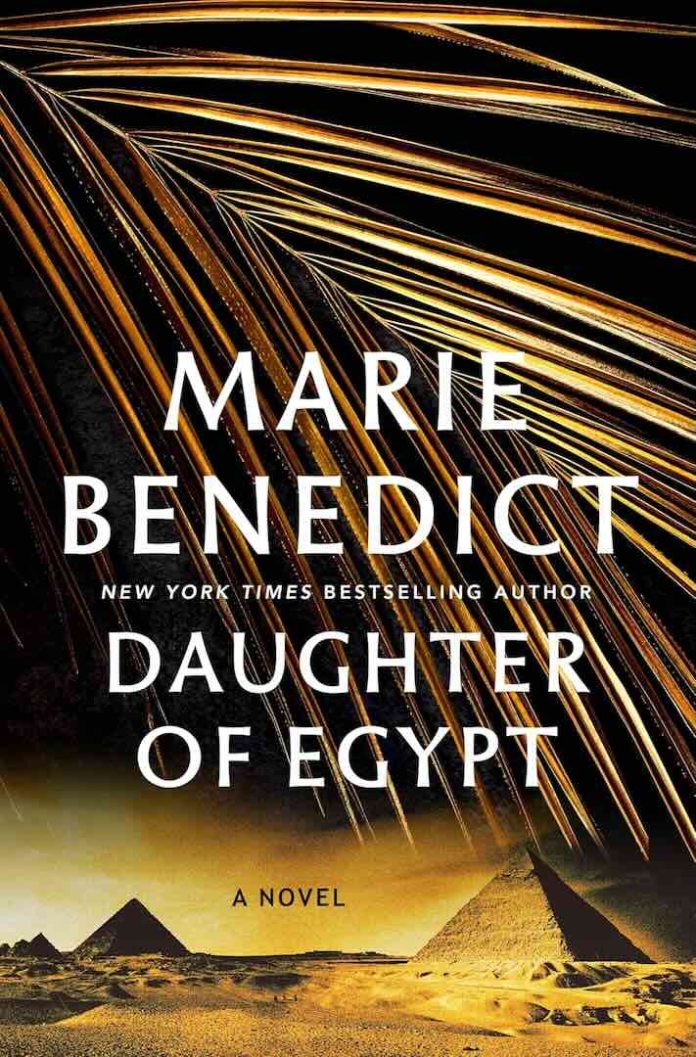
Some historical novels feel like postcards from the past — pretty, well-composed, and immediately forgettable. Daughter of Egypt by Marie Benedict is not that kind of book. It is the kind that lingers like sand between the pages, the kind that makes you want to pull up a map of the Valley of the Kings or lose an afternoon to the mysteries of ancient Egypt. New York Times bestselling author Marie Benedict once again proves she is one of the genre’s most essential voices — a writer who doesn’t simply dramatize history but argues passionately for the women history chose to forget.
Two Timelines, One Unforgettable Obsession
The novel operates on two parallel planes of time that are in constant, quiet conversation. The first follows Lady Evelyn Herbert — daughter of Lord Carnarvon of Highclere Castle — in 1920s England and Egypt. Evelyn is not the kind of aristocratic young woman society expects her to be. Tutored informally by the famed archaeologist Howard Carter, she possesses a scholarly command of ancient dynasties, hieroglyphics, and artifact identification that puts many of the credentialed men around her to shame. Her obsession is singular: the Pharaoh Hatshepsut — ancient Egypt’s first female ruler, who was systematically erased from history following her death.
The second timeline plunges the reader into the New Kingdom of ancient Egypt, circa 1473 BC, where we follow Hatshepsut herself. Her chapters — titled by the stages of her life (The Princess, The Queen, The Regent, The Pharaoh) — are written with mythic grandeur, tracking her transformation from a girl performing dawn rituals as God’s Wife of Amun to the most powerful person in the known world.
Benedict’s central structural achievement is that these two women don’t merely parallel each other — they echo. Every obstacle Evelyn navigates in the 1920s — the dismissal of her expertise by academic men, the pull between personal ambition and social expectation, the question of what a woman is permitted to desire — finds its ancient counterpart in Hatshepsut’s story. The architecture of the novel is its most elegantly argued point: nothing has changed as much as we like to believe.
The Voice of Lady Evelyn Herbert
Evelyn is one of Benedict’s finest protagonists. Written in close first person, her voice carries both the precision of a trained mind and the frustration of a woman perpetually underestimated. When she identifies a fragment of Hatshepsut’s statue from the swell of a breast visible beneath the royal nemes headdress — a detail the male archaeologists had overlooked — the scene crystallizes everything the novel is about: the cost of having knowledge in a world that refuses to credit you for it.
What makes Evelyn particularly compelling is her moral complexity. She loves her father, Lord Carnarvon. She admires Howard Carter. And yet both men make choices — about the artifacts, about the excavation, about what England is owed by Egypt — that force Evelyn toward an agonizing reckoning with loyalty itself. Benedict gives her heroine no easy exits from this dilemma, and the result is genuinely moving.
The book is also strikingly attentive to its colonial context. The Egyptian nationalist movement, embodied in the unforgettable scene featuring Madame Zaghloul, is woven into the narrative with evident care. Evelyn’s discomfort with her own position as an English woman in occupied Egypt — benefiting from the very colonial system she privately questions — adds moral weight that elevates Daughter of Egypt by Marie Benedict well beyond standard historical escapism.
Where the Excavation Hits Bedrock
The Ancient Egypt Sections
For all its considerable strengths, Daughter of Egypt by Marie Benedict is not without fault lines. The Hatshepsut chapters, while atmospherically rich, occasionally prioritize historical delivery over emotional immersion. Benedict is fastidious in her research — the novel’s account of Hatshepsut’s journey from princess to pharaoh is thorough and historically grounded — but at times these sections read like beautifully written historical biography rather than fully inhabited interiority. Evelyn feels like someone we are with; Hatshepsut, at intervals, feels like someone we are carefully observing from across the courtyard.
The Romance and the Pacing
The courtship between Evelyn and Brograve is similarly underdeveloped relative to the archaeological obsession driving everything else. For a novel so interested in the choices women make between love and ambition, this thread deserved deeper excavation.
There is also a pacing imbalance in the final third, where events carrying enormous emotional weight — the discovery of Tutankhamun’s tomb, Evelyn’s moral crisis around the artifacts, Lord Carnarvon’s devastating illness — are compressed into rapid succession. Benedict has clearly lived with this story for years, but the ending arrives slightly hurried against the leisurely richness of what came before.
Why the Book Still Shines
These are the kinds of complaints you make about a book you care about — and readers who love Daughter of Egypt by Marie Benedict will care deeply. The prose is unhurried and sensory. You can smell the dust of the Valley of the Kings, feel the heat of the Egyptian desert, hear the orchestra swelling in Highclere Castle’s candlelit saloon. Benedict’s long-standing mission to restore forgotten women to the center of their own stories has rarely felt more urgent, or more personal, as confirmed by her candid afterword.
The novel also benefits from a richly layered supporting cast. Mrs. Grace Thompson Seton — the spirited American writer Evelyn befriends in Cairo — provides both warmth and a crucial outside perspective on the absurdity of the world Evelyn inhabits. Howard Carter is rendered with rare complexity: brilliant, obsessive, ethically compromised, and deeply human all at once.
Similar Books Worth Reading
If Daughter of Egypt by Marie Benedict has left you eager to dig further, these titles belong on your shelf:
- Nefertiti by Michelle Moran — An intimate first-person portrait of another Egyptian queen navigating power and survival in the royal court
- The Memoirs of Cleopatra by Margaret George — Monumental in scope, deeply researched, and told in the voice of Egypt’s most famous female ruler
- The Woman Who Would Be King by Kara Cooney — Essential Hatshepsut scholarship that reads with the urgency of a novel
- Circe by Madeline Miller — Shares Benedict’s central preoccupation with reclaiming a woman history rendered marginal
- The Egyptologist by Arthur Phillips — A darker, more satirical take on the 1920s Western obsession with Egyptian archaeology
- The Only Woman in the Room by Marie Benedict — Benedict’s own novel about Hedy Lamarr, another woman of formidable intellect obscured by the men around her
Marie Benedict’s Body of Work
Readers who arrive at Daughter of Egypt by Marie Benedict as their first encounter with this author will find it characteristic of her at her most ambitious. Her backlist includes The Queens of Crime, The Mystery of Mrs. Christie, Her Hidden Genius (about Rosalind Franklin), Carnegie’s Maid, and The Other Einstein, each following a woman of singular intelligence navigating a world not built to receive her. The First Ladies, co-written with Victoria Christopher Murray, extends this project into American political history.
Benedict is, in the best sense, a writer with a mission. And this novel is the fullest, most personal expression of it yet — a story about the price women have always paid for ambition, and the extraordinary ones who paid it anyway.







