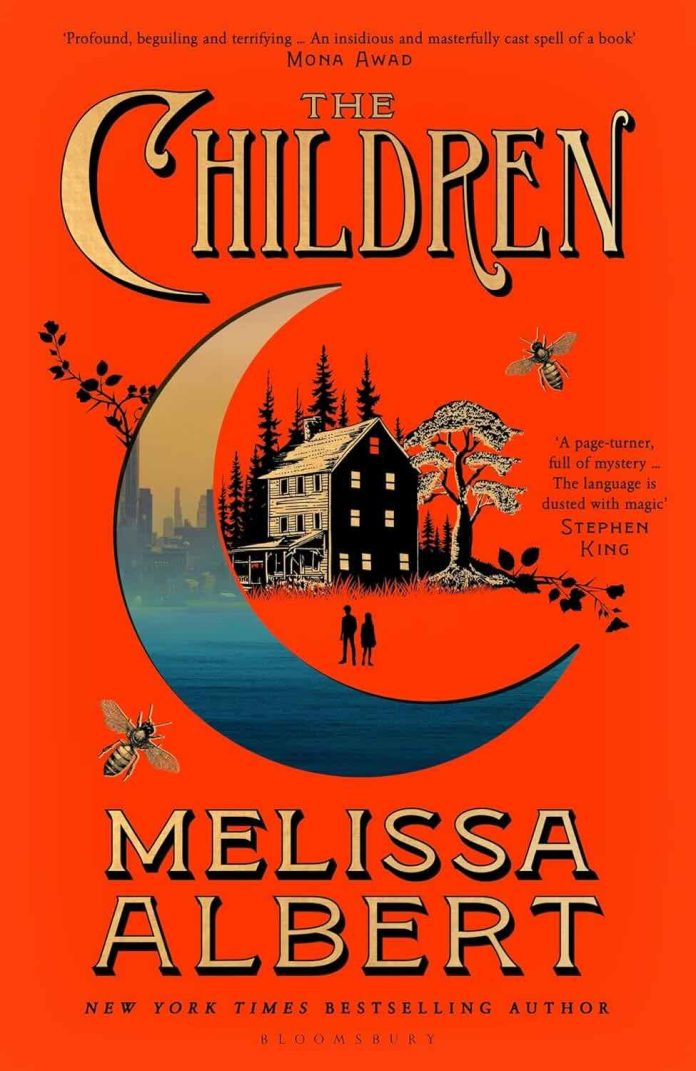
There is a particular spell certain children’s books cast on a reader. You return to them as an adult and the spine cracks like a coffin lid; what felt like wonder at eight rereads at thirty as something colder. Melissa Albert understands this magic, and the rot at its edges, better than almost any writer working today. The Children by Melissa Albert, her first novel for adults, takes that quiet creeping recognition and builds an entire house around it.
A literary, slow-burning hybrid of family mystery and modern gothic, this novel asks what happens when the children who lived inside a beloved fantasy series grow up to be the only ones who remember what really happened. The setup, briefly: Guinevere and Ennis Sharpe were written, lightly fictionalized, into their mother Edith’s wildly popular Ninth City series before her early death in a fire. Two decades later, Guin is mid-promotion for a ghostwritten memoir, and Ennis, an installation artist she has not seen since they were children, announces a new show titled simply Mother.
The Story Across Two Childhoods
Albert braids two timelines with almost metronomic precision. One is the past tense of the Farmhouse, the isolated Vermont property where Edith wrote her books while her two children grew up underfed, unwashed, and largely unsupervised. The other is the present, the week leading up to Ennis’s exhibit, told with a countdown that hums under the prose like a held breath.
What makes the structure work is that Albert is not interested in mystery as machinery. The question of what really happened is genuine, and a real engine of the book, but it is not the only thing pulling you forward. The other pull is the recovery of texture: peach trees and turgid espresso, a wooden hand found in the upholstery of a couch, a caretaker with a red dog he refuses to name. You read partly to know, and partly to be back in the woods.
Where the Prose Lives
This is the kind of book whose sentences ask to be reread. Albert writes with a sensory greed that is rare in literary thrillers. A makeup artist’s mouth is “the brown of a bad apple.” A morning-show host is “a haunted animatronic.” The Vermont woods are a “slow and shaggy beast, lichen clotting its fur.”
A short tour of what the prose pulls off:
- Bodily metaphors that startle awake. Limbs become tools, fear becomes weather, grief becomes furniture. The book never reaches for inherited language to describe feeling.
- A child narrator who is never reduced to cute. Little Guinevere watches the adults around her with a feral intelligence the present-day Guin has spent twenty years burying.
- Allusions worn lightly. Nabokov, Aiken, Milne, Barrie, L’Engle, and Carroll move in and out of the text without ever flexing for the reader.
- Dialogue with teeth. An opening encounter between Guin and a smug male novelist ends in mutual claws and one of the better one-liners I’ve read this year.
Readers of Albert’s young-adult work will recognize the voice, but The Children by Melissa Albert turns up the gothic dial and lets her sentences run longer, weirder, and crueler than her earlier books permitted.
The Architecture of the Plot
Several structural pieces give the novel its shape:
- Interstitials from the Ninth City series itself. Pages from Edith’s books appear between chapters, written with enough conviction that you almost forget they belong to a dead fictional author.
- Backward-counting time stamps. Inserts like “Three Months Ago” and “Nine Months Ago” interrupt the forward march, deepening the pre-history of Ennis’s exhibit.
- A childhood timeline that closes the gap on the fire. Each visit to the past edges closer to the night that ended everything, and Albert’s restraint here is one of the book’s quiet pleasures.
- A modern-day cast with sharp edges. Guin’s quietly furious lover Hank, her formatting-eccentric publicist Regina, her hotel-bound mother figure Bitsy, and Ennis’s caustic ex Arlene each refuse the role the genre would assign them.
Where the Spell Slips
A four-star average is both generous and accurate, because there are real things to set against the praise.
- The middle drags in places. The countdown structure that sharpens the back half can feel becalmed across the long Farmhouse stretches, especially when one visitor’s arc echoes another’s.
- The unreliable-memory device gets crowded. Albert leans on glitches, missing time, and small domestic misplacements so often that the technique loses some of its shiver by the later chapters.
- The fantasy register resists landing. Readers expecting full passage into the Ninth City as a literal place will be either delighted or frustrated by how the book handles its supernatural questions. The novel keeps one foot firmly on the psychological side, and the other foot’s commitment is left, perhaps deliberately, unsettled.
- Some emotional payoffs arrive late. The adult sibling relationship carries enormous weight, and the page count given to it is leaner than the buildup might have you expect.
Even these are the critiques a reader makes about a book they wanted to be perfect. Few novels invite this level of close reading without rewarding it.
What the Book Is Really About
Underneath the gothic surface, Albert is writing about the cost of being someone else’s source material. Guin has spent her adult life as a living souvenir for her mother’s readers, and her grief and her brand have grown into the same plant. The book treats the loving fan, the entitled fan, and the predatory fan with equal moral seriousness, which is something not many novels about fame and art bother to attempt.
It is also, quietly, a book about mothers as artists, and the way ambition can run alongside love without fully cohabiting with it. Edith Sharpe is one of the most discomfiting maternal figures in recent fiction. You mourn her and you understand why her son refused to speak her name for twenty years.
Who This One Is For
The Children by Melissa Albert is for the reader who returned to a childhood favorite and found it strange. For the reader who suspects that Narnia, Neverland, and Wonderland are not entirely safe places. For the reader who likes Donna Tartt’s atmospherics, Catriona Ward’s structural mischief, and Shirley Jackson’s slow domestic dread.
If You Loved This, Read Next
- Mister Magic by Kiersten White, for adult survivors of a vanished children’s property recovering buried memory.
- Looking Glass Sound by Catriona Ward, for fictional doubles, unreliable memoirs, and recursive grief.
- We Have Always Lived in the Castle by Shirley Jackson, for the original feral siblings in a haunted house.
- The Secret History by Donna Tartt, for literary atmosphere and a slow-bleeding past.
- Piranesi by Susanna Clarke, for a beautiful fictional world that turns out to be a prison.
- Mexican Gothic by Silvia Moreno-Garcia, for a heroine entering a house that is far worse than its photographs.
Also by Melissa Albert
Readers new to her work might start with The Hazel Wood, her bestselling debut about a girl whose grandmother wrote a cult fairy-tale collection. Our Crooked Hearts and The Bad Ones are her closer cousins to this novel in tone. The Night Country continues the Hazel Wood story, and Tales from the Hinterland collects the in-world fairy tales from that series and is worth the side trip.
Final Word
The Children by Melissa Albert is a long novel that earns most of its length without quite filling every inch of it. The sentences are the reason to stay. The mystery is the reason to keep turning pages. And the children at its center, both the real ones and the ones their mother turned into characters, are why the book lingers long after the final chapter. Worth your shelf space. Worth the reread that, in this case, will not feel any safer the second time around.







