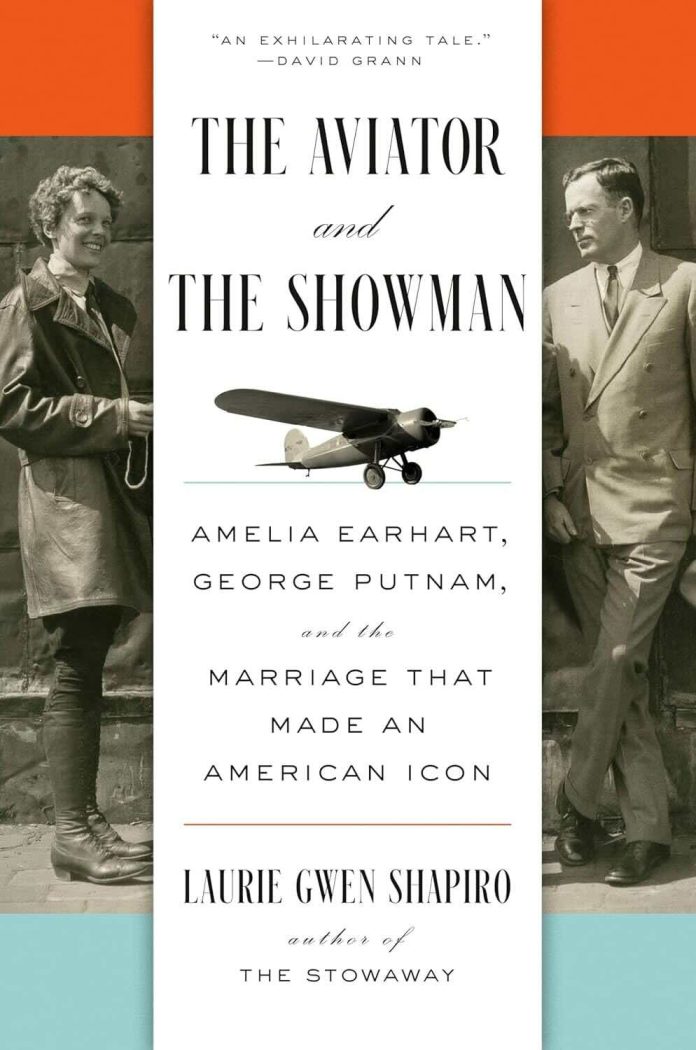
In an era saturated with Amelia Earhart mythology, Laurie Gwen Shapiro’s The Aviator and the Showman: Amelia Earhart, George Putnam, and the Marriage That Made an American Icon emerges as a refreshingly honest biographical examination that strips away decades of romantic legend to reveal a far more complex and fascinating truth. This meticulously researched dual biography illuminates not just the famous aviator, but the equally ambitious man who shaped her public persona—and perhaps sealed her fate.
Unmasking the Mythmaker
Shapiro, an award-winning journalist and author of the acclaimed The Stowaway, brings her investigative instincts to bear on one of America’s most enduring mysteries. Rather than rehashing familiar territory about Earhart’s disappearance, she focuses her lens on the decade-long marriage that transformed a social worker with flying aspirations into an international icon. The result is a narrative that feels both intimate and expansive, revealing how two driven individuals created something larger than themselves—at considerable personal cost.
The book’s central thesis challenges the sanitized version of Earhart’s story that has dominated popular culture for decades. Shapiro presents Amelia not as the wholesome role model of children’s biographies, but as a complex woman who was “ambitious, courageous, intelligent, curious, sexual, overconfident, lazy, kindhearted, shrewd, and flawed.” This multifaceted portrait extends equally to George Palmer Putnam, the “PT Barnum of publishing” whose volatile temperament and relentless promotion both elevated and endangered his wife.
A Partnership Born of Ambition
The narrative begins with their first meeting in 1928, when Putnam was seeking “the right sort of girl” for a secret transatlantic flying mission. Shapiro expertly reconstructs this pivotal encounter, showing how Earhart—despite her modest background as a Boston social worker—possessed the patrician bearing and photogenic qualities that Putnam recognized as marketable. What emerges is not a simple love story, but a calculated partnership between two individuals who understood the power of celebrity in the Jazz Age.
Shapiro’s portrayal of their courtship and marriage reveals the tensions inherent in their relationship from the beginning. Putnam’s first wife, Dorothy, serves as more than a peripheral figure; her perspective provides crucial insight into George’s character and the strain that his obsession with Amelia placed on everyone around him. The author handles these domestic complexities with nuance, showing how personal desires and professional ambitions became inextricably intertwined.
The Machinery of Fame
Perhaps the book’s greatest strength lies in its detailed examination of how celebrity was manufactured in the pre-television era. Shapiro demonstrates how Putnam orchestrated every aspect of Earhart’s public image, from her carefully staged photographs to her ghostwritten books. The revelation that Putnam edited and manipulated even Amelia’s prenuptial agreement for his posthumous memoir speaks to his compulsive need to control the narrative.
The author’s journalistic background serves her well in tracking down previously unknown sources, including undiscovered audio interviews and family documents. These materials allow her to challenge long-held assumptions about the Earhart-Putnam relationship. The book reveals instances where George’s promotional zeal crossed ethical lines, including staged publicity stunts and manipulated media coverage that would seem outrageous by today’s standards.
The Price of Ambition
Shapiro doesn’t shy away from the darker implications of the Putnam publicity machine. She argues convincingly that George’s relentless push for increasingly spectacular stunts contributed to a “certain recklessness” that ultimately influenced Earhart’s final, fatal flight. The 1937 around-the-world attempt emerges not as a noble quest for aviation glory, but as a financially motivated venture designed to generate book sales and lecture fees during the Great Depression.
The author’s treatment of Earhart’s relationships—both with Putnam and with other men in her life—is particularly nuanced. Rather than engaging in salacious speculation, Shapiro presents evidence that suggests Amelia maintained an understanding with George about the nature of their marriage, even as both pursued other romantic interests. This mature handling of complex adult relationships elevates the book above mere gossip.
Narrative Craftsmanship
Shapiro’s prose style captures something of the era’s energy while remaining accessible to contemporary readers. Her background in documentary filmmaking is evident in her ability to structure complex material chronologically while maintaining narrative tension. The book reads like a well-paced novel despite its scholarly foundation, with chapter titles that cleverly reference both aviation terminology and period cultural touchstones.
The author’s decision to eschew the common “AE” and “GP” abbreviations in favor of full names reflects a deeper commitment to humanizing her subjects. This choice, explained in a thoughtful note on name usage, signals Shapiro’s intention to move beyond the simplified iconography that has surrounded both figures.
Critical Perspectives
While The Aviator and the Showman succeeds admirably in its primary goals, certain aspects merit critical examination. The book’s focus on the Putnam marriage occasionally overshadows other significant relationships in Earhart’s life, particularly her connections with fellow female aviators. Additionally, while Shapiro effectively debunks various conspiracy theories about Earhart’s disappearance, readers seeking detailed technical analysis of the final flight may find themselves wanting more.
The author’s evident sympathy for Dorothy Putnam, George’s first wife, sometimes threatens to tip the narrative balance. While Dorothy’s perspective provides valuable insight, the repeated emphasis on her suffering occasionally feels heavy-handed. Similarly, the portrayal of George as almost pathologically manipulative, while well-documented, risks reducing him to a one-dimensional villain.
Historical Context and Significance
Shapiro excels at placing the Earhart-Putnam partnership within its broader historical context. The book effectively shows how their relationship both exploited and challenged gender norms of the 1920s and 1930s. Earhart emerges as a complicated feminist figure—one who advanced women’s opportunities in aviation while conforming to certain expectations about marriage and femininity for publicity purposes.
The author’s exploration of the publishing industry during this period provides fascinating insight into how adventure narratives were packaged and sold to the American public. Putnam’s innovations in celebrity promotion presaged modern entertainment marketing in ways that feel remarkably contemporary.
Literary Merit and Accessibility
The book succeeds in bridging the gap between scholarly biography and popular narrative. Shapiro’s extensive research—including interviews with descendants and previously untapped archival sources—provides authoritative grounding without overwhelming general readers. The inclusion of period photographs and documents enhances the reading experience while supporting the text’s arguments.
The author’s handling of dialogue and scene reconstruction demonstrates careful attention to historical accuracy while maintaining narrative flow. When she speculates about private conversations or internal thoughts, she clearly signals these interpolations, maintaining reader trust while bringing historical figures to life.
Comparative Analysis
The Aviator and the Showman stands apart from previous Earhart biographies through its dual focus and unflinching examination of the publicity apparatus that created the Earhart legend. Unlike heroic treatments that emphasize Amelia’s pioneering spirit or conspiracy theories that focus on her disappearance, Shapiro’s book offers a more grounded examination of how fame operates and what it costs.
The book shares thematic similarities with recent biographical works that examine the intersection of celebrity, gender, and ambition in early 20th-century America. Readers who appreciated The Aviators by Winston Groom or Charles Lindbergh by Scott Berg will find familiar territory here, though Shapiro’s focus on the marriage relationship provides a more intimate lens than these broader aviation histories.
Enduring Relevance
Beyond its historical value, The Aviator and the Showman offers insights that resonate with contemporary discussions about celebrity culture, gender equality, and the costs of fame. The book’s examination of how public personas are constructed and maintained feels particularly relevant in our current media landscape, where the line between authentic self-expression and calculated image management remains blurred.
Shapiro’s portrayal of Earhart as a woman who navigated competing demands for independence and conformity speaks to ongoing tensions that many women continue to face. The book suggests that even revolutionary figures like Earhart operated within systems that constrained their choices, a perspective that adds depth to discussions about historical progress and continuing challenges.
Similar Reading Recommendations
Readers who appreciate Shapiro’s approach to biographical narrative might consider:
- West with the Night by Beryl Markham – A memoir by another pioneering female aviator of the same era
- The Lindbergh Baby Kidnapping by Jim Fisher – Another examination of celebrity culture in 1930s America
- Amelia Earhart: The Thrill of It by Susan Wels – A more traditional biographical approach for comparison
- Charles Lindbergh by Scott Berg – For broader context on aviation heroes of the period
- The Stowaway by Laurie Gwen Shapiro – The author’s previous work on Antarctic exploration
Final Assessment
The Aviator and the Showman represents biographical writing at its finest—thoroughly researched, thoughtfully constructed, and fearlessly honest. Shapiro has crafted a book that simultaneously demythologizes and humanizes its subjects, revealing how two ambitious individuals created an American icon through their complex partnership. While the book occasionally suffers from an overabundance of detail and some narrative imbalance, these are minor flaws in an otherwise exceptional work.
The book’s greatest achievement lies in its restoration of agency to both Earhart and Putnam. Rather than depicting Amelia as either a helpless victim or a flawless hero, Shapiro shows her as a woman who made calculated choices about her career and public image, accepting both the benefits and costs of fame. Similarly, Putnam emerges not as a mere exploiter but as a complex figure whose genuine admiration for his wife coexisted with his manipulative promotional instincts.
For readers seeking to understand how legends are made and maintained, The Aviator and the Showman provides an invaluable case study. It reminds us that the most enduring stories often arise from the intersection of personal ambition and historical moment, shaped by individuals who understand the power of narrative to transform not just careers, but entire legacies. In revealing the machinery behind the Earhart myth, Shapiro has paradoxically made both Amelia and George more fascinating than their carefully constructed public personas ever suggested.