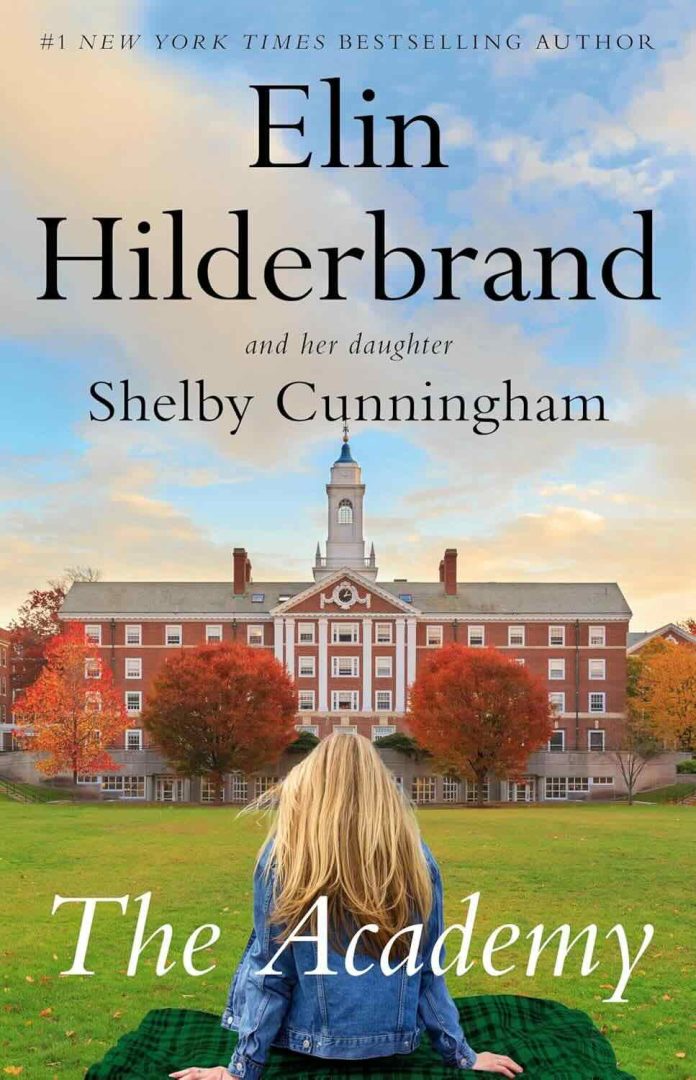
The collaboration between bestselling author Elin Hilderbrand and her daughter Shelby Cunningham results in something genuinely magical—a boarding school novel, The Academy, that feels both authentically teenage and literarily sophisticated. This mother-daughter writing partnership brings together Hilderbrand’s seasoned storytelling prowess with Cunningham’s insider knowledge of contemporary boarding school life, creating a narrative that pulses with genuine authenticity.
Unlike many adult authors who attempt to capture teenage voices through rose-colored nostalgia, The Academy benefits from Cunningham’s recent graduation from St. George’s School. Her lived experience permeates every page, from the casual cruelty of social media dynamics to the suffocating pressure of college admissions. The result is a novel that avoids the patronizing tone often found in adult-written young adult fiction, instead offering characters who speak and think like actual teenagers.
Inside the Gilded Cage of Tiffin Academy
Set against the backdrop of Tiffin Academy—a fictional New England boarding school that suddenly leaps from obscurity to the #2 national ranking—the novel immediately establishes tension between public perception and private reality. The authors masterfully use this ranking anomaly as both plot catalyst and metaphor for the disconnect between institutional image and student experience.
The campus becomes almost a character itself, with its manicured grounds hiding a labyrinth of secrets. From “God’s Basement” (where students conduct illicit liaisons) to the mysterious underground speakeasy called “Priorities,” the physical spaces mirror the layers of privilege and hidden transgression that define boarding school culture. Hilderbrand and Cunningham excel at creating this sense of place—readers can practically smell the old money and fresh scandal in the autumn air.
Character Portraits That Cut Deep
The ensemble cast represents some of the most nuanced teenage characterizations in recent boarding school fiction. Charley Hicks, the scholarship student navigating social landmines while processing grief, serves as our primary emotional anchor. Her characterization avoids both the “noble poor” stereotype and the “fish out of water” cliché, instead presenting a complex young woman whose intelligence and integrity make her both admirable and occasionally frustrating.
Davi Banerjee, the Instagram-famous queen bee, could have been a one-dimensional mean girl, but the authors reveal layers of vulnerability beneath her polished exterior. Her struggle with an eating disorder is handled with remarkable sensitivity, showing how perfectionist culture intersects with social media pressure in genuinely devastating ways.
The adult characters prove equally compelling. Audre Robinson, the school’s first Black female head, wrestles with institutional change while managing personal integrity. Her characterization explores the complex burden of being a “first” in any environment—the pressure to be simultaneously revolutionary and respectably safe. Cordelia Spooner, the admissions director harboring a secret relationship with college counselor Honey Vandermeid, represents the complicated emotional lives of faculty who dedicate themselves to institutions that may not fully accept their authentic selves.
The Digital Age Meets Ancient Hierarchies
Perhaps the novel’s greatest achievement is its integration of contemporary technology with timeless boarding school dynamics. The mysterious ZipZap app—which releases anonymous scandalous revelations about students and faculty—functions as both a modern update of traditional gossip networks and a chilling examination of digital-age character assassination.
The app serves multiple narrative functions: advancing plot, revealing character, and providing social commentary on how technology amplifies both connection and cruelty among teenagers. Rather than feeling gimmicky, ZipZap emerges as an organic extension of boarding school culture, where secrets have always been currency and reputation everything.
The authors demonstrate remarkable restraint in their handling of social media’s role in teenage life. Rather than either demonizing or romanticizing digital communication, they present it as simply another tool that can be wielded for both connection and destruction—much like any other aspect of teenage social dynamics.
Narrative Structure That Mirrors Teenage Experience
The novel’s structure, organized around the academic calendar from September through graduation, creates a natural rhythm that mirrors the boarding school experience. Each chapter focuses on different characters, creating a kaleidoscopic view of the community that feels both intimate and comprehensive.
This multi-perspective approach allows the authors to explore how the same events ripple differently through various social strata. A single party might represent liberation for one character, humiliation for another, and professional crisis for faculty members. This technique particularly shines during major set pieces like Family Weekend and the various school dances, where the authors demonstrate how privilege, anxiety, and adolescent desire intersect in complex ways.
Themes That Resonate Beyond Campus
While firmly rooted in the specific world of elite boarding schools, The Academy by Elin Hilderbrand and Shelby Cunningham explores themes with universal resonance. The pressure to perform perfection, the cost of maintaining facades, the complexity of female friendship, and the challenge of authentic self-expression within rigid institutional structures speak to experiences far beyond New England preparatory schools.
The novel’s examination of economic inequality proves particularly nuanced. Rather than simply contrasting rich students with scholarship recipients, the authors explore the various gradations of privilege and how financial security (or insecurity) shapes everything from academic pressure to social relationships. Charley’s perspective as a scholarship student provides crucial insight into how class differences play out in subtle, daily interactions.
Literary Craftsmanship and Contemporary Voice
Hilderbrand’s experienced hand shows in the novel’s assured pacing and sophisticated character development, while Cunningham’s contribution ensures the dialogue and cultural references feel absolutely authentic. The writing strikes an impressive balance between accessibility and literary sophistication—never talking down to readers while maintaining the engaging pace readers expect from Hilderbrand’s work.
The authors excel at capturing the specific language patterns of different characters without resorting to caricature. Adults sound like adults, but not like adults trying to sound teenagery, while the student voices feel genuinely contemporary without being overwhelmed by trendy slang that would quickly date the novel.
Areas for Growth
While largely successful, The Academy by Elin Hilderbrand and Shelby Cunningham occasionally struggles with its large cast, sometimes leaving certain characters underdeveloped in favor of advancing multiple plotlines. Some of the faculty romantic subplots, while individually interesting, sometimes feel disconnected from the main narrative thrust.
The novel’s resolution, while emotionally satisfying, feels somewhat rushed given the careful build-up of tensions throughout the academic year. Certain character arcs, particularly those involving the mysterious ZipZap perpetrator, could have benefited from more development in the final act.
Additionally, while the authors handle issues of diversity and inclusion thoughtfully, some readers might wish for deeper exploration of how race and class intersect within elite educational institutions. The novel touches on these themes but sometimes prioritizes romantic and social drama over more substantive social commentary.
A Genre Elevated
The Academy by Elin Hilderbrand and Shelby Cunningham distinguishes itself in the crowded field of boarding school fiction by bringing together authentic teenage perspective with sophisticated literary craftsmanship. Unlike novels that either romanticize or demonize elite educational institutions, this collaboration presents boarding school life with all its contradictions intact—simultaneously privileged and pressured, sophisticated and adolescent, protective and destructive.
The mother-daughter writing partnership proves inspired, combining generational perspectives in ways that enrich rather than confuse the narrative voice. Readers get both the insider authenticity of recent experience and the narrative wisdom that comes with time and reflection.
Perfect For Readers Who Appreciate
- Contemporary boarding school settings with authentic detail
- Multi-perspective narratives that explore community dynamics
- Complex female characters navigating friendship and rivalry
- Social media integration that feels organic rather than forced
- Coming-of-age stories with genuine emotional depth
- Institutional settings that shape character development
Similar Reads to Explore
For readers captivated by The Academy by Elin Hilderbrand and Shelby Cunningham, consider these comparable titles:
- “Prep” by Curtis Sittenfeld – The gold standard of boarding school fiction, exploring class and belonging with devastating precision
- “The Secret History” by Donna Tartt – Though college-set, captures similar themes of privilege, secrets, and moral complexity
- “My Education” by Susan Choi – Explores academic settings and sexual awakening with literary sophistication
- “The Admissions” by Meg Mitchell Moore – Examines the pressure-cooker world of elite college preparation
- “I Have Some Questions for You” by Rebecca Makkai – A boarding school mystery that interrogates memory and truth
Final Verdict
The Academy by Elin Hilderbrand and Shelby Cunningham represents a significant achievement in contemporary young adult fiction, offering both entertainment and insight in equal measure. While it may not revolutionize the boarding school genre, it certainly elevates it, providing readers with characters worth caring about and conflicts that resonate beyond their privileged setting.
The collaboration between Hilderbrand and Cunningham feels like the beginning of something special—a writing partnership that could produce many more nuanced explorations of contemporary teenage life. For readers seeking intelligent entertainment that doesn’t sacrifice emotional authenticity for literary pretension, The Academy delivers exactly what its reputation promises.
This is boarding school fiction for the digital age, written by authors who understand that privilege and pain often share the same address, and that growing up has never been simple—regardless of the thread count of your sheets or the prestige of your postal code.







