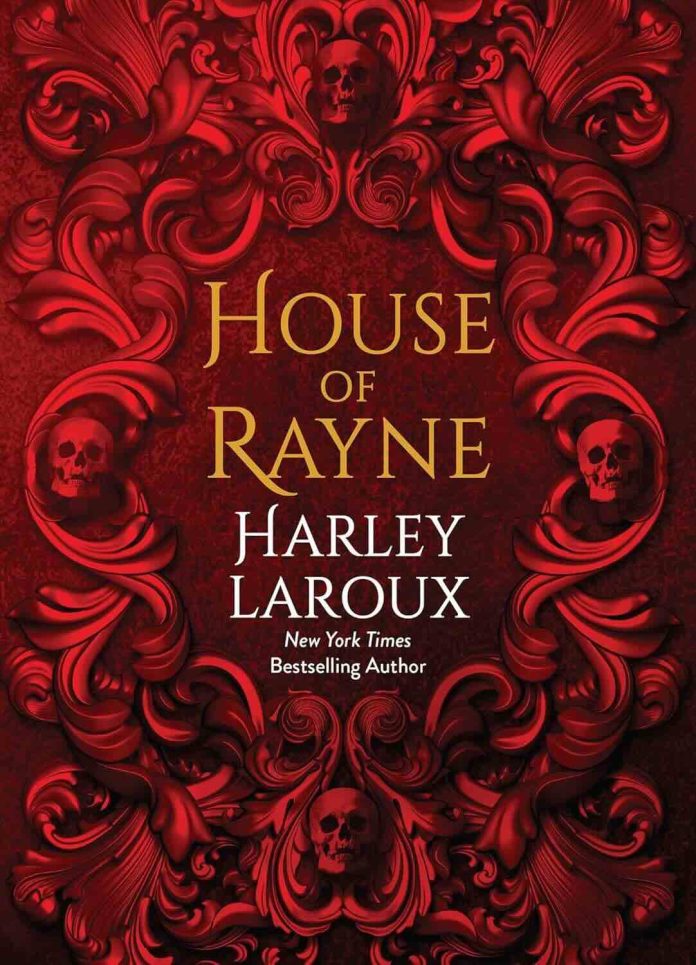
There exists a peculiar magic in books that understand how to balance visceral terror with tender romance, and Harley Laroux’s House of Rayne achieves this alchemy with masterful precision. This standalone gothic romance doesn’t simply tell a love story against a supernatural backdrop—it weaves the horror and the heart together so seamlessly that one cannot exist without the other, creating an experience that lingers long after the final page.
Set on the remote Blackridge Island in the Pacific Northwest, the novel introduces us to Salem Lockard, whose life has been upended by a canceled wedding and an engagement ring that no longer adorns her finger. Seeking escape and healing, she arrives at the historic Balfour Manor, a bed-and-breakfast that promises refuge but delivers something far more complicated. Enter Rayne Balfour, the manor’s enigmatic owner—tall, scarred, and carrying the weight of family secrets that could crush a lesser soul. What begins as an unexpected attraction quickly spirals into something far deeper and more dangerous when the island’s true nature reveals itself through gruesome murders and supernatural horrors.
Atmosphere That Breathes
Laroux demonstrates an exceptional understanding of gothic atmosphere throughout this novel. Balfour Manor isn’t merely a setting; it becomes a character unto itself, with its ivy-draped stone facade, creaking floorboards, and windows that watch like eyes. The author crafts an environment where every shadow holds potential menace, where the distinction between the living and the dead grows increasingly tenuous. The Pacific Northwest setting enhances this eerie beauty, with fog-shrouded forests, crashing waves against rocky cliffs, and an abandoned lighthouse that pulses with sinister significance.
The island of Blackridge operates under its own cursed logic, isolated not just geographically but spiritually from the mainland. Laroux excels at creating a sense of claustrophobia despite the wilderness setting—there’s nowhere to run when the ferry doesn’t return, when cell towers fail, when winter storms trap everyone on an island with a hunting angel. The seasonal shift from summer’s deceptive normalcy to winter’s brutal honesty mirrors Rayne’s own duality, and the author uses weather, landscape, and architecture to externalize her characters’ internal struggles.
Characters Who Defy Expectations
Salem emerges as a refreshingly complex protagonist who refuses to be diminished by her circumstances. Rather than the typical damsel in distress, she’s a mountain biker with grit, resourcefulness, and the courage to stay when every rational instinct screams to flee. Her journey from heartbroken escape artist to determined survivor showcases genuine character growth. Salem doesn’t overcome her fears by becoming fearless; instead, she learns to act despite terror, to trust her instincts, and to recognize that vulnerability can coexist with strength. Her panic attacks and trauma responses feel authentic rather than performative, grounding the supernatural elements in psychological realism.
Rayne Balfour stands as one of the more compelling gothic heroines in recent romance. Laroux resists the temptation to make her merely brooding or mysterious—instead, Rayne carries genuine trauma, responsibility, and a protective instinct that borders on self-sacrificial. She’s scarred both literally and figuratively, managing a crumbling manor while hunting a supernatural entity that’s terrorized her island for decades. The author allows Rayne to be simultaneously vulnerable and powerful, damaged yet capable of profound love. Her relationship with her service dog Loki, her complicated family history, and her role as reluctant guardian of Blackridge all add layers to her character.
The supporting cast enriches the narrative without overwhelming it. Andy and his daughters Rachel and Rebecca provide moments of warmth and normalcy that make the horror more visceral by contrast. The island’s insular community, with its religious fanaticism and willingness to sacrifice innocents in the name of divine judgment, creates an additional layer of threat beyond the supernatural.
Romance That Burns Despite the Cold
The romantic development between Salem and Rayne forms the novel’s beating heart, and Laroux handles their connection with both sensuality and emotional depth. Their attraction sparks immediately but develops thoughtfully, building through shared vulnerability and mutual recognition. Both women carry wounds—Salem from her broken engagement, Rayne from her traumatic past—and their healing occurs through connection rather than in isolation.
The explicit content deserves mention, as Laroux writes BDSM dynamics with both heat and thoughtfulness. The power exchange between Salem and Rayne reflects their emotional dynamics, with clear communication, enthusiastic consent, and mutual care. These scenes advance both plot and character development rather than existing merely for titillation. The greenhouse encounter, the scenes of tender aftercare, and the progression from physical attraction to profound emotional intimacy all demonstrate the author’s skill at integrating explicit content into the larger narrative.
What makes their romance particularly effective is how it exists in conversation with the horror elements. Love becomes an act of defiance against death, intimacy a rebellion against isolation, and commitment a form of survival. The contrast between their passionate moments and the lurking terror creates a tension that keeps pages turning.
Horror That Respects Its Roots
The supernatural elements draw from gothic tradition while maintaining originality. The “angel” that haunts Blackridge subverts expectations—this is no benevolent guardian but a corrupted entity born from grief, religious fanaticism, and dark magic. Laroux creates genuinely unsettling moments without relying on cheap jump scares. The whispers in the walls, the crimson-clad specter, the bodies hanging in trees like grotesque decorations—these images burrow under the skin.
The mystery surrounding Rayne’s mother’s murder and the origins of the creature provides narrative momentum beyond the romance. Laroux doles out revelations carefully, allowing readers to piece together the truth alongside the characters. The connection between Picard Balfour’s obsessive grief, his mysterious book of dark magic, and the entity now terrorizing the island creates a tragic through-line that elevates the horror beyond simple monster-hunting.
The body horror and violence never feel gratuitous; instead, they serve the story’s themes about the corruption of faith, the dangers of obsession, and the ways trauma can literally become monstrous. The scenes in the lighthouse—the angel’s nest built from compressed remains of victims—are particularly effective in their visceral horror.
Writing That Serves the Story
Laroux’s prose style suits the material perfectly, alternating between lush description and sharp, propulsive action. The dual POV structure allows readers intimate access to both Salem and Rayne’s perspectives, creating dramatic irony and emotional resonance. The author demonstrates particular skill in writing distinct voices for each character—Salem’s observations carry a warmth and wonder even amid horror, while Rayne’s sections pulse with barely contained intensity and self-recrimination.
The pacing maintains momentum despite the novel’s length. Quieter character moments provide necessary breathing room between intense horror sequences. The structure follows the seasonal progression from autumn to deep winter, with the environment growing increasingly hostile as the supernatural threat escalates. This mirrors the romantic progression—as Salem and Rayne grow closer emotionally, their external circumstances grow more dire.
Critiques Worth Noting
While House of Rayne excels in many areas, it’s not without flaws. Some readers may find the religious fanaticism portrayed through characters like Ruth feels somewhat one-dimensional, though this arguably serves the gothic tradition of corrupt institutional power. The island’s willingness to accept ongoing deaths as “God’s judgment” occasionally strains credulibility, even accounting for isolation and indoctrination.
The resolution, while satisfying emotionally, arrives through methods that may feel somewhat convenient to readers seeking more intricate plotting. The final confrontation relies heavily on character determination and love conquering all—a thematically appropriate choice that nonetheless may leave some wanting more strategic complexity.
Additionally, certain secondary characters could benefit from deeper development. Gerard Balfour and other townspeople serve their narrative functions but occasionally feel more like plot devices than fully realized individuals.
Themes That Resonate
Beneath the romance and horror, House of Rayne explores meaningful themes about inherited trauma, the corruption of faith, and choosing love despite impossible odds. The novel examines how toxic belief systems perpetuate suffering, how secrets fester into monstrosities, and how genuine connection can provide strength without erasing individuality.
House of Rayne also thoughtfully addresses queer identity in hostile environments. Both Salem and Rayne navigate a community where their relationship exists as an act of defiance against rigid religious doctrine. Laroux handles this aspect with care, never reducing her characters’ queerness to their struggle against bigotry while acknowledging the reality of that struggle.
The theme of chosen family versus blood family resonates throughout, particularly in Rayne’s relationship with Andy’s daughters and Salem’s integration into this makeshift family unit. Love—romantic, platonic, and familial—becomes the antidote to inherited curses and cyclical violence.
For Readers Who Enjoy
Fans of Harley Laroux’s previous works, including Her Soul to Take, Her Soul for Revenge, and the Losers duet, will find familiar territory in House of Rayne while appreciating the distinct sapphic focus. The novel will also appeal to readers who enjoyed:
- The Invisible Life of Addie LaRue by V.E. Schwab for gothic atmosphere and doomed romance
- The Death of Jane Lawrence by Caitlin Starling for gothic horror and sapphic undertones
- Mexican Gothic by Silvia Moreno-Garcia for atmospheric horror and strong female protagonists
- The Seven Husbands of Evelyn Hugo by Taylor Jenkins Reid for sapphic romance with emotional depth
- Sarah Waters’ gothic novels for period atmosphere and queer representation
- Alexis Henderson’s work for dark fantasy with romance elements
Final Verdict
House of Rayne succeeds as both gothic horror and sapphic romance, never sacrificing one genre for the other. Harley Laroux has crafted a novel that understands how fear and desire intertwine, how love can flourish in darkness, and how the scariest monsters often wear familiar faces. The book delivers satisfying scares, genuine emotional resonance, and explicit content that serves character development.
This is a story about two broken women who find wholeness not through fixing each other but through standing together against impossible odds. It’s about choosing to fight for tomorrow even when darkness seems inevitable, about finding light in another person without expecting them to erase your shadows. The novel earns its happy ending through struggle, sacrifice, and the persistent belief that love—imperfect, messy, and fierce—can survive even the coldest winter.
For readers seeking a romance that doesn’t flinch from horror or horror that doesn’t shy away from heart, House of Rayne offers both in equal, satisfying measure. Just be prepared for sleepless nights—both from the scares and from the inability to stop turning pages.