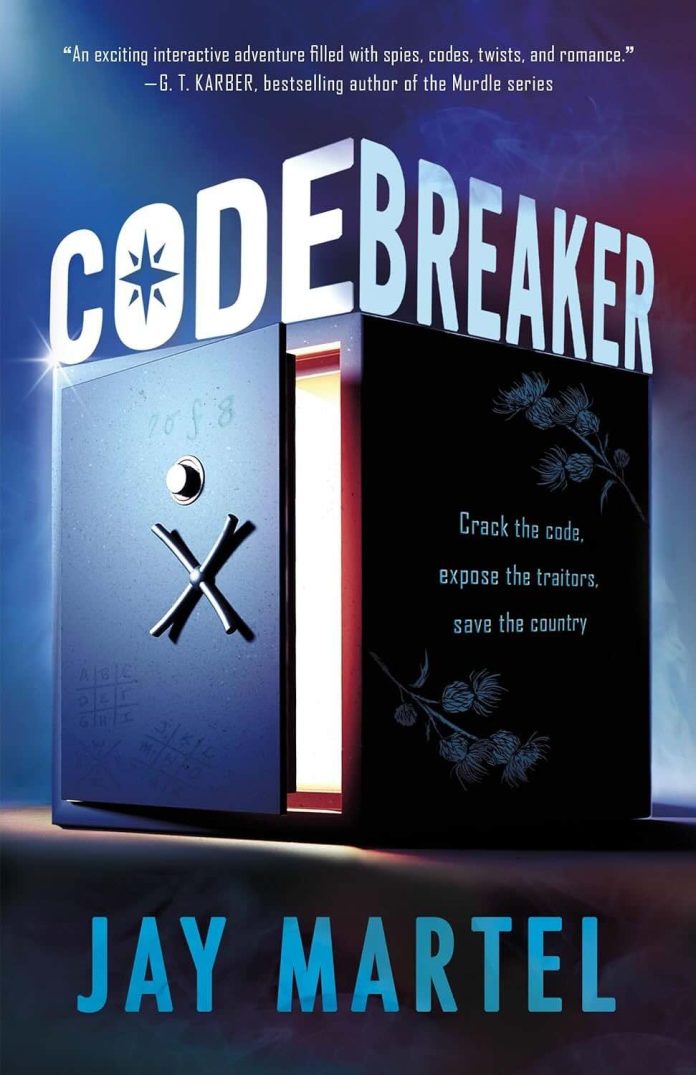
Jay Martel—the collaborative pen name of husband-and-wife writing team Andy Bennett and Katy Helbacka—delivers a stunning debut with Codebreaker, a novel that successfully bridges the gap between intellectual puzzles and heart-pounding action. This interactive thriller transforms what could have been a simple YA adventure into a sophisticated exploration of trust, family secrets, and the dangerous intersection of technology and terrorism.
The Foundation: A Life Built on Lies
The story centers on seventeen-year-old Mia Hayes, whose carefully planned summer—complete with college prep and a coffee shop job—shatters when government agents storm her home one fateful night. The aftermath leaves her mother dead, her father a fugitive, and Mia grappling with the devastating realization that her entire life has been built on lies. Her father, whom she believed to be a university professor, was actually a CIA cryptanalyst specializing in encrypted communications.
Martel excels at capturing the psychological whiplash of Mia’s discovery. The authors understand that the most devastating betrayals aren’t just about what happened, but about questioning everything you thought you knew. Mia’s internal struggle—torn between anger at her father’s deception and the desperate need to understand why her family was destroyed—drives the emotional core of the narrative with remarkable authenticity.
The Hunt: Codes, Conspiracies, and Character Development
When Mia receives a cryptic voicemail from her father three weeks after his disappearance, she’s thrust into an elaborate scavenger hunt that takes her across Washington D.C.’s most iconic landmarks. Joined by Logan, a charismatic hacker she meets at a protest, Mia must decode a series of increasingly complex ciphers while being pursued by the same agents who destroyed her family.
The interactive element—where readers can attempt to solve the codes alongside Mia—is implemented with remarkable skill. Rather than feeling gimmicky, these puzzles become integral to understanding both the plot and Mia’s character. Her facility with cryptography isn’t just a convenient plot device; it’s a window into her analytical mind and her deep connection to her father’s work.
Strengths in Character Chemistry
The relationship between Mia and Logan provides the story’s romantic subplot without overwhelming the central mystery. Logan’s character—equal parts charming troublemaker and genuine ally—offers the perfect balance of support and challenge for Mia’s journey. Their partnership feels organic, built on mutual respect for each other’s skills rather than forced romantic tension.
The Conspiracy Unveiled: The Iron Hand
The novel’s central antagonist emerges as “The Iron Hand,” a domestic terrorist organization operating within the CIA itself. Named after Herman Melville’s poem about Lincoln’s assassination, this group represents a chilling evolution of conspiracy theories into actual conspiracy. Martel demonstrates impressive research skills in weaving historical elements—from the Knights Templar to Lincoln assassination theories—into a contemporary threat.
The authors’ background shines through here: Andy Bennett’s cybersecurity expertise and Katy Helbacka’s theatrical sensibilities combine to create a conspiracy that feels both technologically plausible and dramatically compelling. The group’s use of encrypted classified ads to coordinate attacks showcases a sophisticated understanding of how modern terrorism might evolve.
Technical Mastery: Where Cryptography Meets Storytelling
One of the novel’s greatest achievements is making complex cryptographic concepts accessible without dumbing them down. From the Ave Maria cipher to pigpen encryption, each code serves multiple narrative functions: advancing the plot, revealing character history, and providing genuine intellectual challenges for engaged readers.
The Washington D.C. setting becomes almost a character itself, with each landmark—the Cryptologic Museum, Ford’s Theatre, the Lincoln Memorial—serving as both a puzzle piece and a thematic element. The authors’ research into these locations is meticulous, transforming tourist destinations into stages for high-stakes revelations.
Areas for Improvement: Pacing and Emotional Depth
While Codebreaker by Jay Martel succeeds on multiple levels, it occasionally struggles with pacing issues in its middle act. Some of the cipher-solving sequences, while intellectually engaging, can slow the narrative momentum when tension should be building toward the climax. The balance between puzzle-solving and action sometimes tips too heavily toward the former.
Additionally, while Mia’s grief over her mother’s death is well-handled, some emotional beats feel rushed. The devastating revelation about her mother’s true role in the conspiracy could have benefited from more psychological exploration, particularly given its impact on Mia’s entire worldview.
The Climax: High Stakes at the Washington Monument
The novel’s crescendo—a potential assassination attempt during a presidential candidate’s rally—brings together all the story’s threads with impressive precision. The shift from intellectual puzzle-solving to physical danger creates genuine tension, though the resolution feels somewhat hurried. Logan’s infiltration of the Washington Monument provides thrilling action sequences, but the final confrontation with The Iron Hand could have been more emotionally satisfying.
The twist regarding Mia’s mother serves as both the story’s emotional climax and its most problematic element. While the revelation recontextualizes everything readers thought they knew, it risks undermining the very foundation of sympathy the authors built for Mia’s situation.
Writing Style: Accessibility Meets Sophistication
Martel’s prose strikes an effective balance between young adult accessibility and adult sophistication. The authors avoid talking down to their readers while maintaining clarity in complex technical explanations. Dialogue feels natural and age-appropriate, with each character maintaining a distinct voice throughout the narrative.
The interactive elements are seamlessly integrated, never feeling like arbitrary additions to the story. When readers are invited to solve codes alongside Mia, it enhances rather than interrupts the reading experience.
Comparisons and Context
Codebreaker by Jay Martel joins the ranks of intelligent YA thrillers that respect their readers’ intelligence. It shares DNA with works like The Westing Game in its puzzle-focused narrative and The Bourne Identity in its themes of hidden identities and government conspiracy. However, Martel carves out unique territory by focusing on cryptography as both plot device and character development tool.
The novel’s handling of contemporary fears—domestic terrorism, government overreach, the erosion of truth in the digital age—feels timely without being preachy. The authors understand that the best thrillers reflect real anxieties while providing the satisfaction of resolution.
Interactive Innovation: A New Model for Engagement
The book’s interactive elements represent a genuine innovation in thriller publishing. Rather than simple puzzles thrown in for novelty, each code serves the story’s emotional and plot needs. Readers who engage with the cryptographic challenges will find themselves more invested in Mia’s journey, while those who prefer to read straight through won’t feel excluded.
This approach could influence how future thrillers incorporate reader participation, suggesting new possibilities for interactive storytelling that go beyond simple gimmicks.
Final Verdict: A Promising Start with Room for Growth
Codebreaker by Jay Martel succeeds as both an engaging thriller and a showcase for its authors’ unique collaborative strengths. While it occasionally falters in pacing and emotional depth, the novel’s innovative approach to interactive storytelling and sophisticated understanding of cryptography mark it as a noteworthy debut.
The book will particularly appeal to readers who enjoy intellectual challenges alongside their action sequences, and those who appreciate thrillers that take their historical research seriously. Young adult readers looking for stories that don’t insult their intelligence will find much to appreciate, while adult thriller fans will enjoy the sophisticated plotting and contemporary relevance.
For a debut novel, Codebreaker by Jay Martel demonstrates impressive ambition and largely succeeds in achieving its goals. Martel has created a strong foundation for future works, and readers will likely anticipate what this talented writing team produces next.
Similar Reading Recommendations
For readers who enjoyed Codebreaker by Jay Martel, consider these titles:
- The Da Vinci Code by Dan Brown – Master class in combining historical puzzles with modern conspiracy
- Ready Player One by Ernest Cline – Interactive elements and puzzle-solving in a high-stakes narrative
- The Maze Runner by James Dashner – YA thriller with government conspiracy elements
- National Treasure (film novelization) – Historical mysteries in American landmarks
- Cryptonomicon by Neal Stephenson – Deep dive into cryptography and its historical implications
- The Blackthorn Key by Kevin Sands – Historical mystery with codes and secret societies
- Invisible by Christina Diaz Gonzalez – Contemporary YA thriller with international intrigue







