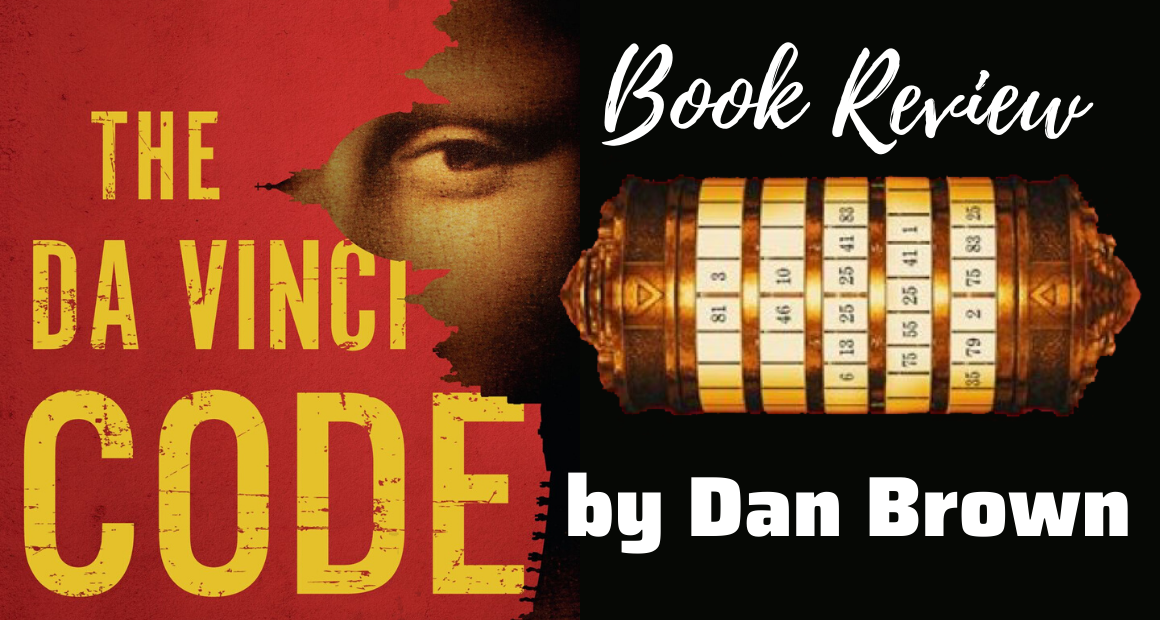
Title: The Da Vinci Code
Author: Dan Brown
Series: Robert Langdon: Book 2
Publisher: Doubleday
Genre: Mystery, Thriller, Historical Fiction
First Publication: 2003
Language: English
Major Characters: Robert Langdon, Sophie Neveu, Jacques Saunière, Silas, Leigh Teabing
Setting Places: Paris, Versailles, London, Scotland.
Theme: The False Conflict between Faith and Knowledge, The Subjectivity of History and The Intelligence of Women.
Narration: Third person, anonymous, omniscient narrator
Preceded by: Angels and Demons
Followed by: The Lost Symbol
Book Summary: The Da Vinci Code by Dan Brown
While in Paris, Harvard symbologist Robert Langdon is awakened by a phone call in the dead of the night. The elderly curator of the Louvre has been murdered inside the museum, his body covered in baffling symbols.
As Langdon and gifted French cryptologist Sophie Neveu sort through the bizarre riddles, they are stunned to discover a trail of clues hidden in the works of Leonardo da Vinci—clues visible for all to see and yet ingeniously disguised by the painter.
Even more startling, the late curator was involved in the Priory of Sion—a secret society whose members included Sir Isaac Newton, Victor Hugo, and Da Vinci—and he guarded a breathtaking historical secret. Unless Langdon and Neveu can decipher the labyrinthine puzzle—while avoiding the faceless adversary who shadows their every move—the explosive, ancient truth will be lost forever.
Book Review: The Da Vinci Code by Dan Brown
Counted as one of the most controversial books of all times for the ideas it purports, The Da Vinci Code by Dan Brown directly challenges the authority of the Vatican, garbing real facts in clever fiction and telling a narrative that’s interesting, full of intrigue and thought provoking, not to mention an unforgettable cast of characters and events.
Even a decade after causing all its controversy, The Da Vinci Code by Dan Brown still captivates readers with its detailed plot full of wonderful intricacies and highly entertaining suppositions thorough research on such topics as the Templars, Leonardo Da Vinci, codes and ciphers, as well as the history of the Church bring the narrative to life; and fill the plot with so many twists that the reader must hold on to better understand what is going on.
“Men go to far greater lengths to avoid what they fear than to obtain what they desire.”
On a trip to Paris, Robert Langdon is called to the Louvres, where its curator has been murdered. A cryptic code left in his own blood leads French authorities to presume that Langdon is actually the killer. Paired with a cryptographer whose interest in the case is more than superficial, Langdon begins to decipher the code left in the blood, only to be chased down by the authorities as the prime suspect in the murder.
Clues point to more complex codes and ciphers, as well as a deeply contentious revelation the Vatican wishes left unearthed. Langdon is not the only one trying to get to the bottom of this mystery, the Holy Grail itself, as an ultra-conservative Catholic sect, Opus Dei, sends one of its own to hunt the secrets down and destroy Langdon in the process.
“History is always written by the winners. When two cultures clash, the loser is obliterated, and the winner writes the history books-books which glorify their own cause and disparage the conquered foe. As Napoleon once said, ‘What is history, but a fable agreed upon?”
As the story moves along, the reader cannot help but learn all about the secret society in which Da Vinci was a member and how he used his art to communicate key points of Christianity the early Church tried to bury. While the search is sure to be mind-altering, Langdon must survive long enough to feel the euphoria.
Dan Brown uses an easy narrative to push the story forward and, as in the first book of the series Angels and Demons, he chooses to focus his attack/critique on the Greater Church, this time for burying the truth of Jesus’ personal side and his fallible nature.
“Life is filled with secrets. You can’t learn them all at once.”
I am utterly stupefied by this masterpiece and Dan Brown’s ability to blur the lines between the real and the fictional, as he did in the first book in the Robert Langdon series. No reader who takes the time to read and attempt to understand Brown’s story and the nuances of that which is factual (as well as the fiction) will leave the experience with nothing gained. That said, an open mind can lead down many pathways and leave the reader to wonder how they did not piece it all together before. A must-read for those who like their fiction served piping hot with just enough critique of the sacred to have the Vatican debunking it for fear the real truth will soon be unveiled.