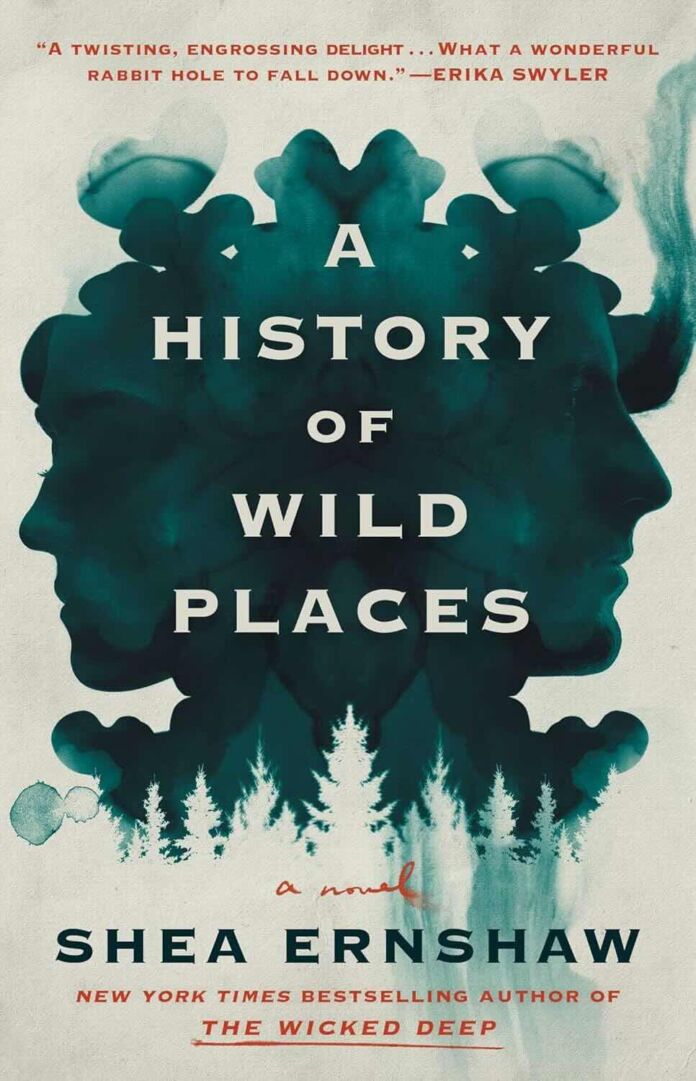
There’s something inherently captivating about the idea of disappearing into the wilderness, leaving behind the chaos of modern life for a simpler existence. But what happens when that idyllic escape becomes a prison? Shea Ernshaw’s “A History of Wild Places” delves into this tantalizing premise, weaving a spellbinding tale that blurs the lines between reality and fantasy, truth and deception.
A Haunting Premise
Ernshaw, known for her previous young adult novels “The Wicked Deep” and “Winterwood,” makes a stunning foray into adult fiction with this atmospheric thriller. The story revolves around Travis Wren, a man with an uncanny ability to locate missing persons, who vanishes while searching for Maggie St. James, an author of macabre children’s books. His disappearance leads us to Pastoral, a secluded community hidden deep in the forest, where the lines between salvation and imprisonment become increasingly blurred.
Characters Lost in the Woods of Their Minds
The narrative unfolds through multiple perspectives, each character as complex and mysterious as the forest that surrounds them:
- Travis Wren: The seeker who becomes the sought, his gift both a blessing and a curse.
- Theo: A lifelong resident of Pastoral, grappling with doubts and desires.
- Calla: Theo’s wife, whose roots in Pastoral run deeper than she realizes.
- Bee: Calla’s sister, blind but perhaps seeing more clearly than anyone else.
Ernshaw’s character development is nothing short of masterful. Each voice is distinct, their inner turmoil palpable. As readers, we’re drawn into their world, feeling the weight of their secrets and the suffocating fear of the unknown that permeates their existence.
A Setting That Comes Alive
Pastoral itself emerges as a character in its own right. Ernshaw’s prose paints a vivid picture of this isolated community:
“The trees wove themselves into her heart, and soon she became just as hard and rough as bark.”
The author’s descriptive prowess shines as she brings to life the dappled sunlight filtering through leaves, the earthy scent of the forest floor, and the eerie silence that blankets the community. It’s a place that feels both alluring and menacing—a paradise with a rotten core.
Themes That Resonate
The Power of Stories
At its heart, “A History of Wild Places” is about the stories we tell ourselves and others. Maggie St. James’s dark fairy tales serve as a haunting backdrop, their influence seeping into the very fabric of Pastoral. Ernshaw explores how narratives can shape reality, for better or worse:
- The comforting lies we tell to protect ourselves
- The destructive myths that can control an entire community
- The healing power of confronting the truth
Fear and Control
The novel delves deep into the human psyche, examining how fear can be weaponized to maintain control. The residents of Pastoral live in constant dread of the “rot” that supposedly lurks beyond their borders. This fear keeps them isolated, dependent, and compliant. It’s a chilling reflection of how easily manipulation can masquerade as protection.
Identity and Belonging
As the characters unravel the mysteries surrounding them, they’re forced to confront fundamental questions about who they are and where they belong. The struggle between the desire for safety and the yearning for freedom is palpable, resonating with anyone who’s ever felt torn between two worlds.
A Masterclass in Atmosphere
Ernshaw’s greatest strength lies in her ability to create an immersive atmosphere. The novel drips with tension, each page suffused with a sense of creeping dread. The author employs all the senses to draw readers in:
- The whisper of wind through leaves
- The taste of wild berries on the tongue
- The play of shadows in the forest
This sensory richness makes the reading experience visceral, almost hallucinatory at times. It’s as if we, too, are lost in the wild places of our minds.
Pacing and Plot: A Slow Burn That Ignites
Those expecting a fast-paced thriller might find the novel’s pacing challenging at first. Ernshaw takes her time, allowing the mystery to unfold gradually. But this deliberate approach pays off, building to a crescendo that’s both shocking and deeply satisfying.
The plot is intricate, with multiple threads weaving together in unexpected ways. Just when you think you’ve figured it out, Ernshaw throws in another twist that leaves you reeling. It’s a testament to her skill that these revelations never feel forced or contrived, but rather like inevitable truths finally coming to light.
A Critique of Utopian Dreams
While “A History of Wild Places” works beautifully as a psychological thriller, it also serves as a pointed critique of utopian ideals. Pastoral, founded as a haven from the outside world’s ills, becomes a cautionary tale about the dangers of isolation and blind obedience. Ernshaw deftly explores:
- The corruption of power, even in seemingly idyllic settings
- The fine line between protection and control
- The human cost of maintaining a “perfect” society
Comparisons and Influences
Ernshaw’s work invites comparisons to other masters of atmospheric suspense:
- The psychological complexity of Shirley Jackson
- The haunting rural settings of Andrew Michael Hurley
- The blending of reality and fantasy reminiscent of Neil Gaiman
Yet “A History of Wild Places” stands firmly on its own, a unique blend of genres that defies easy categorization.
A Few Quibbles
While the novel is undeniably gripping, there are a few minor issues that might give some readers pause:
- The pacing in the middle section can feel slightly sluggish
- Some plot points require a significant suspension of disbelief
- A few secondary characters could have been more fully developed
However, these small complaints do little to detract from the overall power of the story.
The Verdict: A Mesmerizing Journey Into the Dark
“A History of Wild Places” is a triumph of mood and atmosphere, a novel that lingers in the mind long after the final page is turned. Ernshaw has crafted a story that is at once a gripping mystery, a dark fairy tale, and a profound meditation on the human psyche.
Who Should Read This Book?
- Fans of psychological thrillers with a touch of the supernatural
- Readers who appreciate lush, descriptive prose
- Anyone fascinated by the idea of isolated communities and their dynamics
- Those who enjoy stories that blur the lines between reality and fantasy
Final Thoughts
Shea Ernshaw has delivered a novel that is both deeply unsettling and utterly captivating. “A History of Wild Places” is a book to be savored, its layers of meaning unfolding with each read. It’s a story that will have you questioning the nature of reality, the power of belief, and the wild places that exist within us all.
In a world where we’re constantly connected, Ernshaw reminds us of the allure—and the danger—of disappearing into the wilderness. This is a book that will haunt you, in the best possible way.







