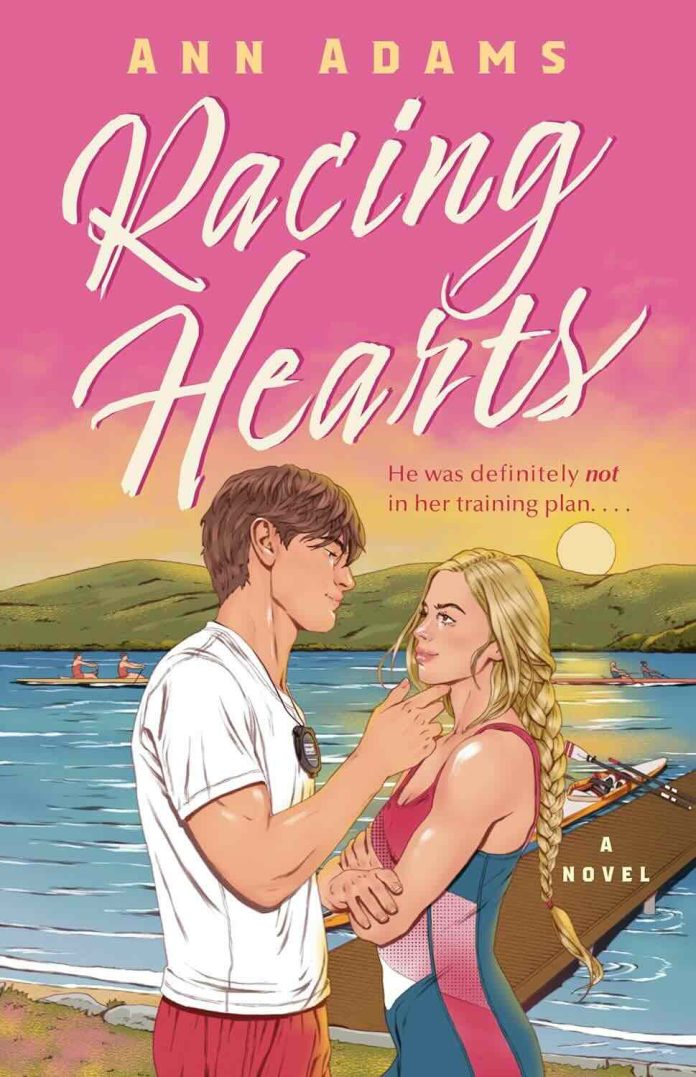
The rhythm of oars slicing water— Control battles with wild heart— Love finds its own pace
In a genre saturated with formulaic sports romances, Racing Hearts by Ann Adams emerges as a refreshingly nuanced exploration of what it means to truly compete—not just against opponents, but against one’s own rigid expectations. Adams, herself a former junior national champion and Olympic Training Center resident, brings an authenticity to this story that transforms it from mere escapist fiction into a compelling character study wrapped in the breathless intensity of elite athletics.
The Anatomy of Ambition
Katherine Parker isn’t your typical romance heroine stumbling into self-discovery. She’s a woman who has built her entire identity on lists, metrics, and an almost obsessive devotion to routine. When we meet her at rock bottom—freshly dumped at a race’s starting line, promptly bombing her performance, and getting kicked out of the only place she’s ever called home—Adams doesn’t soften the blow. The opening chapters of Racing Hearts by Ann Adams pulse with genuine desperation, the kind that comes from watching years of meticulous planning crumble in real time.
What makes Katherine fascinating is her complete awareness of her own rigidity paired with her utter inability to release it. She tracks her hydration down to the ounce, weighs her meals with scientific precision, and approaches relationships with the same checklist mentality she applies to training programs. Her ex-boyfriend Maxwell wasn’t chosen for passion but for compatibility on paper—another rower who understood the lifestyle, who never questioned her dietary restrictions at restaurants, who shared her singular focus on Olympic glory.
Adams doesn’t judge this approach, which is one of the novel’s quiet strengths. Instead, she presents Katherine’s control mechanisms as both shield and prison, born from a childhood spent steadying her emotionally volatile mother through a parade of failed relationships. The novel asks: What happens when the very traits that make you excellent at something also prevent you from experiencing joy in it?
The Coach Who Wouldn’t Play by the Rules
Enter Adrian Crawford, and here’s where Adams subverts expectations. Rather than the typical alpha-male coach wielding authority through intimidation, Adrian is secure enough in his expertise to adapt his methods to each athlete’s needs. He’s confident without arrogance, knowledgeable without being pedantic, and—most frustratingly for Katherine—utterly unimpressed by her credentials.
Their initial clashes crackle with tension that’s as much intellectual as romantic. When Adrian confiscates Katherine’s beloved StrokeCoach device and wristwatch, forcing her to row without constant metric feedback, it’s not mere power play. It’s philosophy made manifest. He champions spontaneity where she worships planning, advocates for presence where she defaults to analysis. Their arguments about training methodology become proxy battles for fundamentally different worldviews.
Adams excels at showing rather than telling Adrian’s coaching brilliance. Watch him navigate Rohan’s announcement that he’s quitting the team—not with platitudes or pressure, but with quiet space for the teenager to articulate what he actually wants versus what his parents expect. Observe how he modulates his approach with each athlete, pushing some while offering others encouragement. The man who quit rowing in high school carries deep wounds about that choice, convinced it forever defines him as inadequate for higher levels of coaching. This vulnerability makes him three-dimensional in ways many romance heroes never achieve.
Technical Mastery Meets Emotional Resonance
Few authors could make extended passages about erg tests and interval training genuinely compelling to non-rowers, but Adams manages exactly that. The technical details never feel like showing off or padding; instead, they’re woven into the emotional fabric of the story. When Katherine finally learns to “get out of her head and into her body” during a crucial practice session—feeling the wind, hearing the seagulls, sensing the rhythm of her oars rather than obsessing over split times—it’s both a rowing breakthrough and a metaphor for her entire journey toward vulnerability.
The race sequences deserve particular praise for their visceral intensity. Adams captures the specific agony of competitive rowing: the lactic acid building in screaming muscles, the mental negotiation between quitting and pushing harder, the way extreme pain can create an almost transcendent disconnect from the body. Her Pan American Games final reads like poetry written in suffering, each stroke a choice to continue despite every cell begging for surrender.
Where Control Meets Its Limits
Racing Hearts by Ann Adams navigates some genuinely complex emotional territory. Katherine’s relationship with her mother—a free-spirited woman who cycles through men with alarming regularity—provides crucial context for why Katherine has constructed such rigid boundaries around her own heart. She witnessed firsthand how emotional vulnerability led to her mother’s repeated devastation, how love made her mother lose herself. Better to choose a partner based on practical compatibility than risk that kind of destruction.
The novel’s treatment of Katherine’s ex-boyfriend Maxwell could have veered into cartoon villainy, but Adams resists that temptation. Maxwell is controlling and ultimately cruel, yes, but he’s also a product of the same hyper-competitive rowing culture that shaped Katherine. His breakup timing was unconscionable, his later attempt at reconciliation tone-deaf, but he genuinely believed his criticisms of Katherine’s performance were objective observations rather than emotional sabotage. This nuance makes Katherine’s journey toward healthier relationship patterns feel earned rather than simplistic.
The Delicate Balance of Dual Timelines
If the novel stumbles anywhere, it’s in its pacing during the middle sections. Adams structures the story with countdown headers—”61 Days Until Pan Ams,” “47 Days Until Pan Ams”—which creates urgency but occasionally works against the gradual unfolding of Katherine and Adrian’s relationship. Some readers may find Katherine’s resistance to acknowledging her feelings repetitive, though it’s psychologically accurate for someone with her particular damage around vulnerability.
The subplot involving Adrian’s evaluation for a junior national team coaching position provides narrative tension but requires considerable suspension of disbelief. Would Katherine truly be expected to evaluate her coach while simultaneously developing romantic feelings for him? The ethics here feel murky, even if Adams eventually addresses the conflict directly. Similarly, some of the obstacles keeping Katherine and Adrian apart in the final act feel manufactured when clearer communication could resolve them faster.
The supporting cast occasionally gets short shrift in service of the central romance. Best friend Sofi deserves more page time for someone carrying an Olympic bronze medal and serving as Katherine’s primary emotional support system. The high school rowing team members blur together with the exception of Rohan, whose TikTok presence provides some social media-era texture but never quite evolves into a fully realized character arc.
The Triumph of Transformation
Where Racing Hearts by Ann Adams truly excels is in refusing easy answers. Katherine doesn’t magically abandon all her routines and schedules to become spontaneous and carefree. Adrian doesn’t simply validate her need for control without challenging its limits. Instead, they find something more difficult and realistic: integration. Katherine learns that her passion for rowing can coexist with her need for structure, that love doesn’t require losing herself if she chooses a partner who sees and values her completely.
The novel’s climax delivers genuine suspense despite the genre’s requirements for a happy ending. Katherine’s final race is a masterclass in sensory writing—every stroke meticulously rendered, every strategic choice explained, every moment of pain and triumph earned through the preceding pages of character development. When she crosses that finish line in second place rather than first, it feels more triumphant than many fictional victories because we understand the internal obstacles she overcame to get there.
For Readers Who Crave Substance
Adams’ background as a competitive rower shows in every page. The rowing details never feel researched; they feel lived. The emotional landscape of elite athletics—the isolation, the single-minded focus, the complicated relationship with one’s own body as both instrument and burden—rings absolutely true. Readers who’ve pursued anything at the highest levels will recognize Katherine’s particular brand of excellence-driven anxiety.
The romance itself builds with patience rare in contemporary fiction. Katherine and Adrian’s first kiss arrives well past the midpoint, and their physical relationship develops in tandem with their emotional intimacy rather than racing ahead of it. The sexual tension simmers through charged glances during training sessions, through lingering touches while adjusting form, through the intimacy of vulnerability that comes from pushing bodies to their limits together.
Racing Hearts by Ann Adams joins a small but growing category of sports romances that take both the sport and the romance seriously. It’s a worthy successor to works like The Deal by Elle Kennedy or Kulti by Mariana Zapata—novels that understand athletic excellence requires sacrifices but shouldn’t require sacrificing everything that makes life worth living outside competition.
Similar Reads for Racing Hearts Enthusiasts
Readers who connected with Katherine’s journey might appreciate The Spanish Love Deception by Elena Arenas for another tightly-wound protagonist learning to release control, or The Hating Game by Sally Thorne for similarly electric professional chemistry. For those drawn to the athletic elements, The Long Game by Rachel Reid offers hockey romance with comparable attention to sport-specific detail, while It Happened One Summer by Tessa Bailey provides fish-out-of-water coaching dynamics with emotional depth. Fans of Ann Adams may also enjoy exploring her backlist, though this marks her debut in the sports romance arena.
The novel ultimately argues that passion and discipline aren’t opposing forces but complementary ones—that the lists and metrics Katherine loves can coexist with the flow states Adrian champions. It’s a message delivered through the specific vessel of elite rowing but applicable to anyone who’s ever tried to control their way to happiness only to discover that joy requires a different kind of courage entirely.
Racing Hearts by Ann Adams doesn’t revolutionize the sports romance genre, but it elevates it through specificity, authenticity, and a willingness to sit with uncomfortable truths about what excellence costs and whether those costs are always necessary. For readers seeking romance with substance, characters who feel like real people rather than archetypes, and a sports backdrop rendered with genuine expertise, this debut delivers on every count.