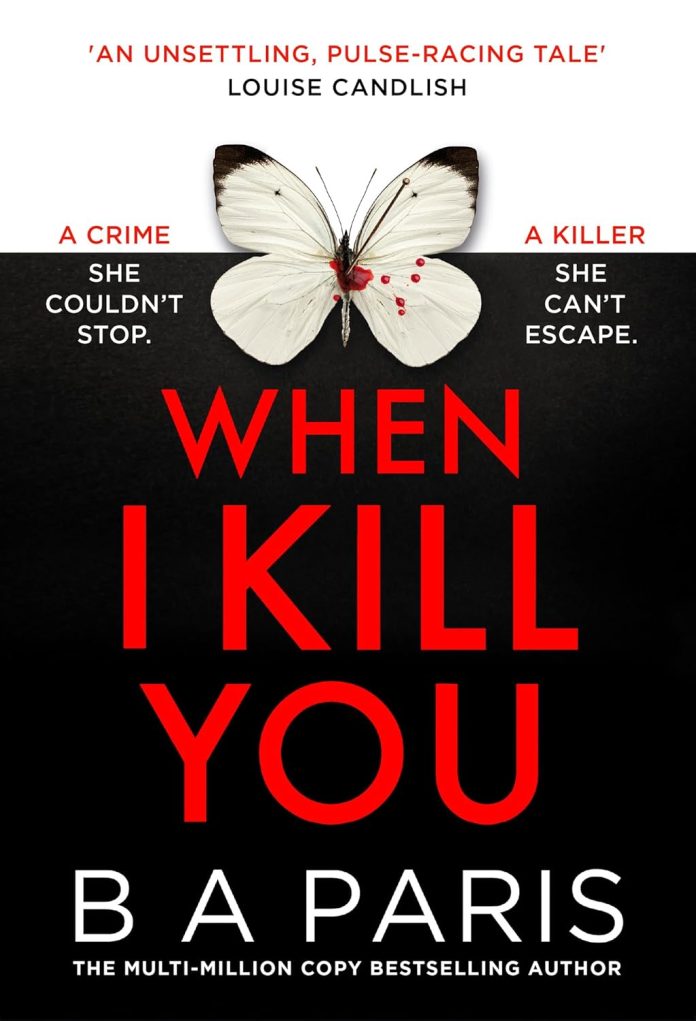
B.A. Paris returns with a masterfully constructed psychological thriller that explores how one catastrophic error in judgment can ripple through an entire lifetime. When I Kill You by B.A. Paris presents readers with Nell Masters, a woman desperately trying to outrun a shadowy past that refuses to stay buried. What begins as a paranoid sense of being watched escalates into a full-blown nightmare where every shadow could conceal the person who wants her dead.
Paris, the New York Times bestselling author of Behind Closed Doors, The Guest, The Breakdown, and The Therapist, has built her reputation on crafting domestic thrillers that expose the fragility of seemingly normal lives. This latest offering maintains her signature style while pushing into darker, more complex psychological territory. The novel’s strength lies not merely in its suspenseful plot mechanics but in its unflinching examination of obsession, guilt, and the devastating consequences of refusing to accept uncomfortable truths.
A Narrative Structure That Mirrors Fractured Memory
When I Kill You by B.A. Paris employs a dual timeline structure that alternates between Nell’s present-day terror and Elle’s past mistakes—a technique that Paris wields with considerable skill. The “Elle” chapters gradually unveil the tragic circumstances that forced our protagonist to change her identity, while the “Nell” sections chronicle her current descent into paranoia. This structure serves a purpose beyond mere suspense; it mirrors the way trauma fragments memory and identity, creating a protagonist who quite literally became two different people to survive her past.
Paris punctuates these timelines with excerpts from mysterious notebooks that add an unsettling layer to the narrative. These interpolated sections, written from the stalker’s perspective, provide chilling glimpses into an obsessive mind. The effect is genuinely unnerving, offering readers privileged access to the killer’s thoughts while maintaining narrative tension about their identity.
Characters Drowning in Moral Ambiguity
The Complexity of an Imperfect Protagonist
Nell/Elle stands out as one of Paris’s most nuanced creations—a protagonist who inspires both sympathy and frustration. Her past actions, driven by a genuine desire for justice, nonetheless destroyed innocent lives. Paris refuses to let readers comfortably side with her heroine without acknowledging the damage wrought by her obsessive pursuit of what she believed was truth. This moral complexity elevates When I Kill You by B.A. Paris beyond standard thriller fare, forcing readers to grapple with uncomfortable questions about the nature of guilt and redemption.
Supporting Cast: Suspects and Confidants
The supporting characters serve dual purposes, functioning both as potential suspects and emotional anchors for Nell’s increasingly isolated existence:
- Alex – Nell’s romantic interest, whose tragic romantic history raises red flags
- Sadie – The loyal best friend whose presence provides moments of normalcy
- Béatrice, Victor, and Inès – Alex’s French connections who may harbor their own secrets
- Marcus – A mysterious neighbor whose proximity feels too convenient
Paris skillfully develops these characters beyond their potential as red herrings, giving each authentic motivations and believable relationships with Nell. The slow revelation of their backstories maintains suspense while grounding the thriller elements in genuine human connection.
Craft and Construction: Where Paris Excels
Atmospheric Tension Building
In When I Kill You by B.A. Paris, Paris demonstrates a sophisticated understanding of how to maintain dread throughout a lengthy narrative. Rather than relying on constant action, she builds tension through accumulating details—the sensation of being watched, flowers delivered without cards, silent phone calls. These seemingly minor incidents compound into genuine terror, mirroring how paranoia actually functions in the human psyche. The author’s restraint in these early sections pays dividends when the violence finally erupts.
The London setting, particularly Nell’s inherited mews house, becomes almost a character itself. Paris captures the city’s dual nature—both comforting in its mundane routines and threatening in its anonymity. The contrast between Nell’s safe domestic space and the menacing public sphere effectively dramatizes her psychological state.
Pacing: A Double-Edged Sword
The novel’s pacing represents both its greatest strength and occasional weakness. Paris takes her time establishing Nell’s psychological landscape, which deepens our investment in her survival. However, the middle section occasionally stalls as the narrative circles familiar ground—Nell sensing danger, investigating, finding nothing, repeat. While this mirrors the exhausting cycle of anxiety, it can test reader patience.
The final third of When I Kill You by B.A. Paris accelerates dramatically, perhaps too dramatically. The revelation of the stalker’s identity and the climactic confrontation feel somewhat rushed compared to the measured buildup. Paris earned this explosive payoff through careful groundwork, but the resolution arrives with such velocity that certain emotional beats don’t fully register before the story hurtles forward.
Critical Examination: Strengths and Shortcomings
What Works Brilliantly
- Psychological Depth: Paris excels at depicting trauma’s long-term effects on personality and decision-making. Nell’s inability to trust others, her constant vigilance, her self-isolation—these feel earned rather than imposed by plot necessity.
- Thematic Resonance: The novel’s exploration of how certainty can blind us to truth carries particular weight in our current cultural moment. Nell’s tragic flaw isn’t malice but an unwillingness to consider she might be wrong—a relatable failing with catastrophic consequences.
- Authentic Female Friendship: The relationship between Nell and Sadie provides genuine warmth and humor, offering respite from the thriller mechanics without feeling like authorial manipulation.
Areas for Improvement
- Predictability: Experienced thriller readers may identify the culprit before the revelation, as Paris leaves certain clues perhaps too visible. While this doesn’t entirely diminish the suspense—we still worry about how events will unfold—it reduces the shock value of the ultimate disclosure.
- Secondary Plot Threads: Alex’s backstory involving two deceased ex-girlfriends deserves more thorough exploration. While this contributes to reader suspicion, it feels somewhat underutilized in the final analysis. The resolution of this thread arrives quickly, leaving questions lingering that more patient development could have addressed.
- Occasional Repetition: Certain beats recur with sufficient frequency that attentive readers may wish for more variation in how Paris conveys Nell’s fear and hypervigilance.
The Paris Signature: Comparing to Previous Works
Readers familiar with Paris’s oeuvre will recognize her trademark elements: the isolated protagonist, the claustrophobic domestic setting, the slow-burn revelation of secrets. When I Kill You by B.A. Paris shares DNA with The Breakdown, particularly in its depiction of a woman questioning her own perceptions. However, this novel ventures into darker territory regarding moral culpability. Unlike Grace in Behind Closed Doors or Alicia in The Therapist, Nell carries genuine guilt for real harm she’s caused, complicating our emotional alignment with her.
This represents growth in Paris’s approach to psychological thrillers. She’s moved beyond simple victim narratives to explore the gray spaces where victims and perpetrators overlap—a more mature and ambitious undertaking than her earlier work, even if the execution doesn’t always match the ambition.
Final Verdict: A Compelling if Imperfect Thriller
When I Kill You by B.A. Paris succeeds as both an edge-of-your-seat thriller and a meditation on obsession’s destructive power. While certain structural choices and pacing issues prevent it from achieving masterpiece status, Paris demonstrates continued evolution as a thriller writer. The novel rewards patient readers willing to sit with Nell’s discomfort and uncertainty, building to a violent crescendo that, despite some predictability, delivers emotional impact.
For Paris devotees, this represents a worthy addition to her bibliography. For newcomers, it serves as a solid introduction to her style, though Behind Closed Doors or The Therapist might offer more immediately gripping entry points.
If You Enjoyed This, Try These Similar Psychological Thrillers
- The Silent Patient by Alex Michaelides – Another exploration of obsession and identity with a shocking twist
- The Woman in the Window by A.J. Finn – Features an unreliable narrator questioning her own perceptions
- The Guest List by Lucy Foley – Multiple suspects and dark secrets revealed through shifting perspectives
- Local Woman Missing by Mary Kubica – Dual timelines exposing community secrets and hidden identities
- The Housemaid by Freida McFadden – Domestic thriller with layered revelations about protagonist’s past
- The Last Mrs. Parrish by Liv Constantine – Character-driven suspense about obsession and deception
- An Anonymous Girl by Greer Hendricks and Sarah Pekkanen – Psychological thriller exploring manipulation and moral boundaries







