 1
1 2
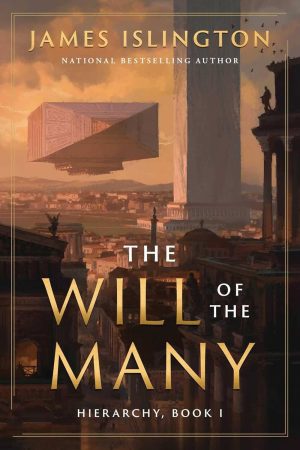
2James Islington, the internationally bestselling author behind The Licanius Trilogy (The Shadow of What Was Lost, An Echo of Things to Come, and The Light of All That Falls), returns with something entirely unexpected. The Will of the Many, the first installment in the Hierarchy series, signals a bold departure from his previous work while retaining the intricate plotting and philosophical depth that defined his earlier success. Where Licanius dealt with time loops and apocalyptic stakes, this new series grounds itself in something far more insidious: a society built on the systematic exploitation of human will itself.
The Hierarchy series currently consists of two books: The Will of the Many (Book 1) and the forthcoming The Strength of the Few (Book 2), promising readers an extended exploration of this meticulously constructed world.
The Weight of Hidden Identities
At its core, The Will of the Many follows Vis Telimus—or rather, the young man now calling himself Vis. Three years ago, he was Diago, prince of Suus, before the Catenan Republic executed his entire family and conquered his island homeland. Now, he’s a carefully constructed lie: an orphan boy plucked from obscurity by Senator Ulciscor Telimus and offered admission to the Catenan Academy, the Republic’s most prestigious institution where the children of power are groomed for leadership.
The premise crackles with tension from the opening pages. Vis must infiltrate the Academy, maintain his false identity among the children of those who destroyed his family, and somehow survive in a system designed to crush individualism. His mission: solve a murder, locate an ancient weapon, and uncover secrets that could topple the Republic. All while never, ever ceding his Will to the empire that took everything from him.
Islington’s prose carries a weight appropriate to Vis’s predicament. The narrative voice mirrors the protagonist’s careful control—measured, observant, always calculating. When Vis describes his first view of the Academy or navigates the treacherous social hierarchies within it, readers feel his constant vigilance. Every conversation becomes a chess match; every friendship a potential betrayal.
The Brilliance of the Pyramid System
The true genius of The Will of the Many lies in its magic system, though calling it merely “magic” undersells its sophistication. The Hierarchy operates on a principle both elegant and horrifying: citizens cede half their Will—their strength, focus, and life force—to those ranked above them in a vast pyramid structure. An Octavus (the lowest rank) gives to a Septimus, who gives to a Sextus, and so on, concentrating power exponentially as it rises through the eight ranks.
This creates a society where approximately twenty-one million people labor as Octavii, their vitality systematically drained to empower the few thousand at the pyramid’s apex. Islington doesn’t shy from exploring the mathematical and moral implications. Through conversations with Callidus, a brilliant student who shares forbidden census data, Vis learns the ugly truth: the system isn’t a meritocracy. Birth determines destiny, and the Academy exists not to find the best leaders but to maintain the illusion that anyone could rise through hard work alone.
The Aurora Columnae—pre-Cataclysm devices that enable this transfer of Will—stand as both technological marvels and instruments of oppression. They’re relics from a civilization that destroyed itself three hundred years ago, now repurposed to build an empire on systematic exploitation. The parallel to our own use of technologies whose long-term consequences remain unknown adds unsettling resonance.
Dark Academia Meets Espionage Thriller
The Academy itself becomes a character—a beautiful prison on the island of Solivagus where students compete in a rigid class structure (Seven through Three) for rankings that will determine their future positions of power. Islington excels at depicting the claustrophobic atmosphere of constant competition. Vis must excel academically while training physically, all while maintaining the pretense of being a grateful orphan rather than a spy with multiple masters.
The school’s challenges range from intellectual debates and Foundation (a strategic board game reminiscent of Go) to physical trials like the Labyrinth—a deadly Will-powered maze hidden beneath ancient ruins. When Vis discovers that solving the murder of Ulciscor’s brother Caeror requires running this maze, the stakes become visceral. Islington’s action sequences, particularly within the Labyrinth, demonstrate his growth as a writer. The tension is sustained not through constant combat but through problem-solving under life-threatening pressure.
The relationships Vis forms—particularly with Emissa Corenius, the sharp-witted student from Class Three, and Callidus Ericius, whose cynical brilliance masks deep moral conviction—add emotional texture without softening the narrative’s edges. These friendships matter precisely because they’re built on lies. Vis genuinely cares for people who would see him executed if they knew his true identity. This creates a constant undercurrent of dread that Islington exploits masterfully.
Critiques Within the Construction
However, The Will of the Many isn’t without its flaws. The pacing occasionally suffers from Islington’s thoroughness. The first act, while necessary for establishing Vis’s backstory and the world’s mechanics, moves slowly. Readers familiar with YA academy fantasies might find some early beats predictable—the outsider protagonist, the competitive rankings, the mysterious murder from years past.
More significantly, the book juggles multiple plot threads that don’t always feel equally developed. Vis serves at least three masters: Ulciscor (who wants the truth about his brother’s death), Relucia (Ulciscor’s wife, secretly part of the rebel Anguis), and his own quest for survival. While this creates appropriate complexity, certain revelations feel withheld for sequel purposes rather than organic pacing. The ancient weapon Vis supposedly seeks remains frustratingly vague, and the connection between the Academy’s secrets and the larger political machinations sometimes feels tenuous.
The book’s length also works against it at times. At over 600 pages, some sequences—particularly the extended training montages and Academy classroom scenes—could have been trimmed without sacrificing characterization or world-building. Islington’s attention to detail enriches the world but occasionally stalls momentum.
A System Built on Greed
What elevates The Will of the Many above typical academy fantasy is its willingness to interrogate its own premise. Through Vis’s father’s words, remembered in flashback, Islington articulates the Hierarchy’s fundamental flaw: “Greed is by definition the moral ruler of the Hierarchy, Diago. All decisions are based upon it. It is not the strong who benefit in their system, no matter what they say—it is the weak. It is the ones willing to do anything, sacrifice anything, to rise.”
The book forces uncomfortable questions about complicity and responsibility. Are the Octavii who cede their Will victims or accomplices? When Vis stops an Anguis attack that kills thousands during the naumachia (a gladiatorial battle on artificial lakes), is he betraying his people or protecting innocents? Islington refuses easy answers. Even the Anguis, ostensibly freedom fighters against tyranny, employ terrorist tactics that kill indiscriminately.
These moral ambiguities never feel like both-sidesism or false equivalency. Rather, they reflect Islington’s understanding that systems of oppression complicate individual agency. Vis himself embodies this tension—he despises the Hierarchy yet benefits from infiltrating its elite institutions, forms genuine connections with the children of his enemies, and must repeatedly choose between personal survival and abstract justice.
The Craft of Patient Revelation
Islington’s experience with The Licanius Trilogy shows in his plotting. Information is carefully metered, with seemingly minor details from early chapters gaining significance hundreds of pages later. The mystery of Caeror’s death intertwines with larger questions about the Academy’s true purpose, the nature of the ruins beneath it, and the existence of forbidden knowledge from before the Cataclysm.
The book’s ending satisfies while promising much more to come. Without spoiling specifics, Vis’s position becomes simultaneously more secure and more precarious. He’s achieved certain goals while being drawn deeper into conspiracies he doesn’t fully understand. The final pages set up The Strength of the Few with genuine anticipation rather than cheap cliffhangers.
For Readers Who Appreciate…
The Will of the Many will particularly resonate with readers who enjoyed:
- Pierce Brown’s Red Rising series for its exploration of hierarchical societies and protagonist infiltrating the ruling class
- R.F. Kuang’s The Poppy War for its blend of academy setting with dark political themes and moral complexity
- Mark Lawrence’s Book of the Ancestor trilogy for its combination of school competition with larger political intrigue
- Brandon Sanderson’s Mistborn series for its systematic magic built on resource exploitation
- Patrick Rothfuss’s The Name of the Wind for its measured pacing and protagonist with a hidden past
Additionally, fans of Islington’s Licanius Trilogy will find familiar strengths: intricate world-building, philosophical underpinnings, and plot architecture that rewards careful reading. However, this is a more character-focused work with tighter scope, at least initially.
The Verdict: A Strong Foundation
The Will of the Many succeeds as both a reimagining of the academy fantasy and a meditation on power, complicity, and the systems that perpetuate injustice. Islington has crafted a world that feels lived-in and logical, where magic serves as metaphor without sacrificing narrative excitement. Vis emerges as a compelling protagonist—clever without being insufferable, morally engaged without being preachy, and vulnerable despite his considerable skills.
The book’s flaws—occasional pacing issues, an abundance of setup, and some predictable academy tropes—never undermine its considerable strengths. This is thoughtful fantasy that trusts readers to engage with complex ideas while delivering genuine suspense and emotional stakes. As an opening to the Hierarchy series, it establishes a foundation that promises rich development in The Strength of the Few and beyond.
For readers seeking fantasy that challenges as it entertains, that questions power structures while crafting an engrossing story, The Will of the Many delivers. It’s not flawless, but its ambitions and execution mark it as one of the more interesting fantasy debuts of recent years. James Islington has proven that his success with The Licanius Trilogy wasn’t a fluke—he’s a writer with the patience, skill, and vision to build worlds worth inhabiting, even when those worlds force us to confront uncomfortable truths about hierarchy, complicity, and the will it takes to resist.
You might also like: Islington broke off from the Hierarchy sequence to write a standalone: Scion trades Roman-inflected imperial fantasy for a cyberpunk dystopia, and keeps the same preoccupation with what obedience costs the person paying it.
You might also like: For another magical college where power is borrowed from other people, The Divines by Rachel Greenlaw closes the Killmarth Trials duology.