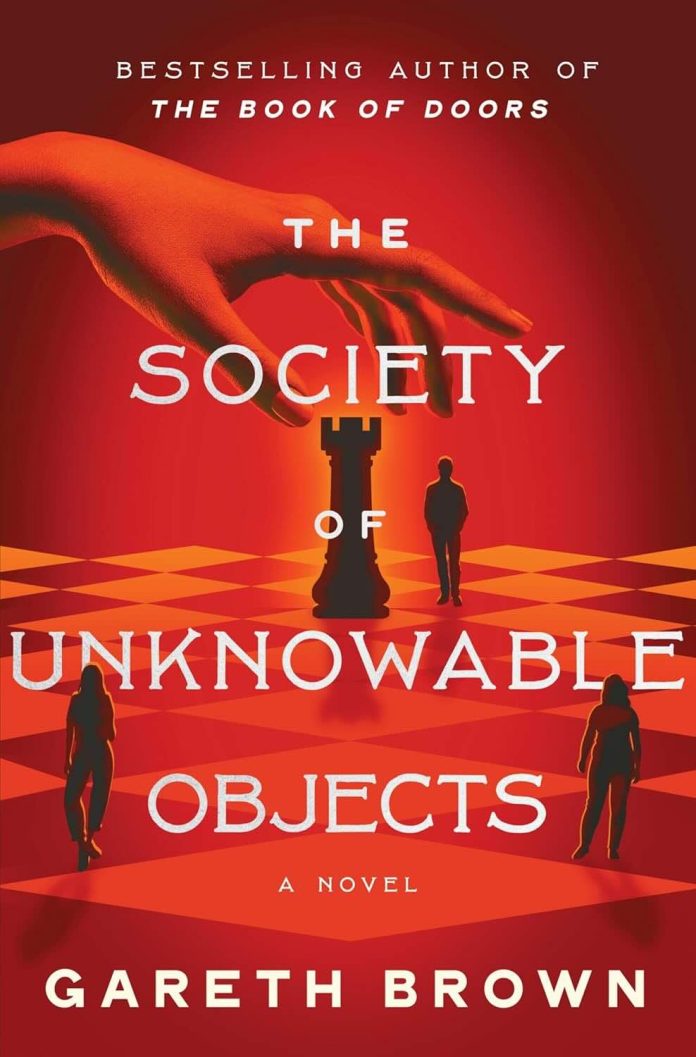
Gareth Brown’s sophomore effort, The Society of Unknowable Objects, arrives with the weight of expectation following his Sunday Times bestselling debut, The Book of Doors. This latest offering plunges readers into a world where magic masquerades as mundane, where a chess piece can freeze time and reality bends at the whim of ordinary-looking objects that possess extraordinary powers.
Set against the atmospheric backdrop of London’s Bell Street Books, Brown crafts a tale that feels both intimately personal and grandly adventurous. The story follows Magda Sparks, a successful novelist whose comfortable life is upended when she’s thrust into the dangerous world of magical artifacts and the secret society sworn to protect them.
A Tale of Family, Secrets, and Dangerous Magic
The Heart of the Story
The narrative opens with what appears to be a routine mission for the Society of Unknowable Objects—Magda’s assignment to investigate a new artifact in Hong Kong. What begins as a straightforward retrieval quickly spirals into a deadly game of cat and mouse when she encounters Owen Maddox, a professional killer with his own connection to the magical underworld.
Brown masterfully weaves together multiple timelines and perspectives, revealing the true nature of the Society through carefully orchestrated flashbacks and revelations. The core mystery—the truth about Magda’s mother Imelda’s death and the Society’s real purpose—drives the narrative forward with relentless momentum. Rather than simply collecting magical items for safekeeping, we discover that the Society’s founders were the very people they now claim to protect the world from.
Character Development and Relationships
Magda Sparks emerges as a compelling protagonist, balancing vulnerability with determination. Her relationship with Frank Simpson, the father figure who has kept devastating secrets, forms the emotional backbone of the story. Brown excels at depicting the complex dynamics between characters who genuinely care for each other but find themselves on opposite sides of moral divides.
The supporting cast—particularly Henrietta, the reformed burglar with her own magical abilities, and James, the Hong Kong companion with supernatural resilience—adds depth and humor to what could otherwise be a purely dark tale. Their interactions feel authentic, grounded in shared danger and growing trust.
Literary Craftsmanship and World-Building
Brown’s Evolving Style
Having read Brown’s debut, The Book of Doors, it’s evident that his writing has matured significantly. Where his first novel occasionally felt rushed in its pacing, The Society of Unknowable Objects demonstrates a more confident narrative voice. Brown takes time to develop atmosphere, particularly in his descriptions of Bell Street Books and the basement meeting room that serves as the Society’s sanctuary.
The author’s background in the UK Civil Service shows in his attention to procedural details and institutional dynamics. The Society feels like a real organization with genuine history, complete with bureaucratic tensions and generational conflicts. Brown’s prose maintains an accessible, conversational tone that keeps complex magical concepts grounded and understandable.
Magic System and World Logic
Brown’s approach to magic is refreshingly restrained. Rather than overwhelming readers with elaborate magical systems, he focuses on specific, tangible objects with clearly defined powers. A chess piece that can manipulate time, a pendant that grants flight, a book that can create any magical item—each artifact feels purposeful rather than arbitrary.
The concept of “unknowable objects” cleverly subverts fantasy tropes. These aren’t ancient relics or obviously mystical talismans, but everyday items hiding extraordinary secrets. This approach allows Brown to explore themes about hidden power and the responsibility that comes with secret knowledge.
Strengths and Notable Elements
Atmospheric Setting and Pacing
The London setting, particularly the bookshop at Bell Street, becomes almost a character in its own right. Brown’s descriptions of the cramped, book-filled spaces and the hidden basement meeting room create a tangible sense of place. The contrast between the cozy bookshop above and the dangerous secrets below mirrors the book’s central theme about hidden truths.
The pacing demonstrates significant improvement from Brown’s first novel. Action sequences, particularly the Hong Kong chase and the climactic confrontations, feel urgent without becoming chaotic. The author knows when to slow down for character development and when to accelerate for maximum tension.
Moral Complexity
Perhaps the strongest aspect of the novel is its moral ambiguity. The Society, initially presented as protectors, reveals itself to have been founded by the very sort of people it now opposes. Frank’s deception of Magda, while painful, stems from genuine care and a desire to protect her from dangerous truths. This complexity elevates the story beyond simple good-versus-evil narratives.
Areas for Critical Consideration
Predictable Plot Elements
While the book succeeds in many areas, certain plot developments feel telegraphed. The revelation about the Society’s true origins, while well-executed, follows a fairly predictable pattern. Readers familiar with fantasy literature may anticipate several key twists before they’re revealed.
The character of Owen Maddox, while menacing, occasionally borders on generic. His motivations, rooted in addiction to magical sensation, feel somewhat shallow compared to the deeper character work Brown achieves with his protagonists.
Uneven Secondary Characters
Some supporting characters, particularly Will Pinn, feel underdeveloped. While his family connection to the Society provides necessary plot advancement, his character lacks the depth that Brown achieves with Magda, Frank, and even Henrietta. This creates an unbalanced ensemble that weakens some of the story’s emotional impact.
Thematic Depth and Relevance
Power, Responsibility, and Truth
Brown explores weighty themes about the corrupting nature of power and the burden of secret knowledge. The Society’s struggle with whether to reveal magic to the world resonates with contemporary discussions about transparency and institutional accountability. The question of whether some truths are too dangerous to share feels particularly relevant in our current information age.
The family dynamics between Magda and Frank examine how love can coexist with deception, and whether protecting someone from painful truths is ultimately an act of kindness or cruelty. These themes give the fantastical elements genuine emotional weight.
Heritage and Legacy
The multi-generational scope of the story allows Brown to examine how the sins of previous generations affect their descendants. Magda’s discovery of her mother’s true fate and Frank’s family history creates a meditation on inherited responsibility and the courage required to break destructive cycles.
Comparison to Contemporary Fantasy
The Society of Unknowable Objects occupies an interesting space in contemporary fantasy literature. It shares DNA with urban fantasy classics like Charles de Lint’s work, where magic exists alongside mundane reality, but Brown’s approach feels more grounded and less whimsical than many modern examples.
The secret society angle recalls both The Magicians by Lev Grossman and The Invisible Life of Addie LaRue by V.E. Schwabe, though Brown’s approach is more mystery-focused than either. The book’s emphasis on ordinary objects with extraordinary powers also echoes the work of authors like Erin Morgenstern, though with a more thriller-like pace.
Brown’s Literary Evolution
Comparing this work to The Book of Doors, Brown demonstrates clear growth as a storyteller. Where his debut sometimes felt episodic, The Society of Unknowable Objects maintains narrative focus throughout. The character development is more nuanced, and the world-building feels more lived-in and authentic.
However, Brown hasn’t completely escaped the pacing issues that occasionally plagued his first novel. Some exposition feels forced, and certain plot revelations are delivered through dialogue rather than shown through action. Despite these minor flaws, the overall trajectory suggests an author gaining confidence in his voice and technique.
Final Verdict
The Society of Unknowable Objects succeeds as both an entertaining fantasy adventure and a thoughtful examination of truth, power, and family loyalty. While it doesn’t completely transcend genre conventions, Brown’s improved storytelling and genuine emotional investment in his characters create a satisfying reading experience.
The book works particularly well for readers who enjoy urban fantasy with mystery elements, though it may feel familiar to those well-versed in secret society narratives. Brown’s restraint in his magical world-building and focus on character relationships over flashy supernatural elements will appeal to readers seeking substance alongside spectacle.
This novel confirms Brown’s place as a writer worth watching in the contemporary fantasy landscape. While not groundbreaking, The Society of Unknowable Objects demonstrates solid craftsmanship and genuine heart, suggesting even stronger work to come.
Similar Reads You Might Enjoy
If you found yourself drawn into Brown’s world of hidden magic and secret societies, consider these complementary reads:
- The Ten Thousand Doors of January by Alix E. Harrow – Features magical books and portal fantasy with similar themes of hidden worlds
- The Starless Sea by Erin Morgenstern – Combines mysterious books, secret societies, and atmospheric world-building
- The Invisible Life of Addie LaRue by V.E. Schwabe – Explores themes of memory, magic, and the price of power
- The City & The City by China Miéville – Offers a different take on hidden realities existing alongside our own
- The Magicians series by Lev Grossman – Examines the darker side of magical education and responsibility
- Rivers of London series by Ben Aaronovitch – Urban fantasy set in London with a procedural approach to magic
- The Book of M by Peng Shepherd – Explores how ordinary objects can become extraordinary and dangerous







