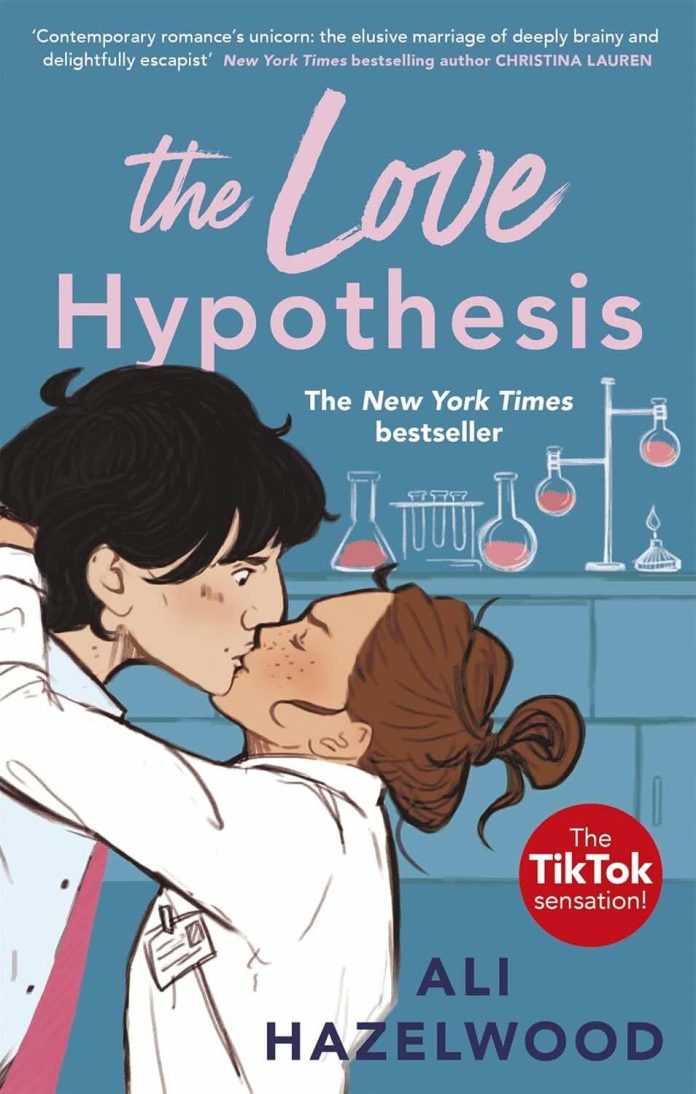
Ali Hazelwood’s debut novel “The Love Hypothesis” presents a compelling case study in contemporary romance, blending the high-stakes world of academic research with the timeless appeal of enemies-to-lovers romance. Set against the backdrop of Stanford University’s competitive PhD program, this novel attempts to prove that love, much like scientific theory, requires both hypothesis and experimentation to reach meaningful conclusions.
The story follows Olive Smith, a third-year biology PhD candidate who finds herself entangled in a web of deception when she impulsively kisses Adam Carlsen, Stanford’s notoriously difficult young professor, to convince her best friend Anh that she’s successfully navigating the dating world. What begins as a moment of panic transforms into an elaborate fake relationship that challenges both characters’ preconceived notions about love, trust, and vulnerability.
Character Development: A Mixed Experimental Result
Olive Smith: The Relatable Protagonist with Room for Growth
Olive emerges as a refreshingly authentic protagonist whose academic struggles and personal insecurities resonate with readers familiar with the pressure-cooker environment of graduate school. Hazelwood skillfully portrays Olive’s imposter syndrome and her tendency to overthink every situation, making her feel genuinely human rather than idealized. Her background as a foster child who learned early to be self-reliant adds depth to her character arc, explaining her reluctance to depend on others.
However, Olive’s character development occasionally feels inconsistent. While her scientific mind is supposedly analytical and logical, she often makes decisions based on assumptions rather than gathering evidence—a contradiction that undermines her credibility as a researcher. Her tendency to jump to conclusions about Adam’s motivations, particularly regarding her former advisor Tom, sometimes feels more like plot convenience than authentic character behavior.
Adam Carlsen: The Misunderstood Academic Hero
Adam represents a fascinating study in character complexity. Initially presented as the stereotypical grumpy professor, Hazelwood gradually reveals the layers beneath his intimidating exterior. His reputation as a “lab tyrant” masks a deeply caring individual who protects those he loves through fierce loyalty and unwavering support. The revelation of his past relationship with Tom and his subsequent efforts to shield Olive from a similar fate demonstrates his growth from reactive to proactive protection.
Yet Adam’s character suffers from the common romance novel affliction of being almost too perfect once his true nature is revealed. His willingness to sacrifice his own reputation for Olive’s career advancement, while romantic, occasionally strains credibility. The balance between his professional competence and personal vulnerability could have been more nuanced.
Plot Structure: A Well-Designed Experiment with Predictable Results
The fake relationship trope, while familiar, receives fresh treatment through Hazelwood’s academic setting. The Stanford conference subplot provides an excellent pressure cooker environment that forces both characters to confront their feelings while dealing with professional stakes. The integration of Olive’s research struggles with her personal growth creates a cohesive narrative where both internal and external conflicts drive the plot forward.
The pacing generally maintains reader engagement, with the initial setup moving quickly into the development of the fake relationship. However, the third act resolution feels somewhat rushed, particularly the confrontation with Tom and the subsequent fallout. The climax, while emotionally satisfying, relies heavily on dramatic revelations rather than the gradual character development that strengthens the best romance novels.
Writing Style and Voice: Academic Precision Meets Romantic Warmth
Hazelwood’s background in neuroscience brings authenticity to the academic setting that elevates the novel above typical contemporary romance. Her descriptions of laboratory life, research pressures, and the politics of academia feel lived-in rather than researched. The scientific metaphors woven throughout the narrative—from hypothesis testing to chemical reactions—create thematic coherence without feeling forced.
The dialogue sparkles with wit and chemistry, particularly in the banter between Olive and Adam. Hazelwood demonstrates a talent for crafting conversations that reveal character while advancing the plot. The supporting cast, including Olive’s lab mates and friends, feels distinct and contributes meaningfully to the story rather than serving merely as plot devices.
However, the internal monologue occasionally becomes repetitive, particularly Olive’s endless second-guessing of Adam’s motivations. While this reflects realistic anxiety patterns, it sometimes slows the narrative momentum and frustrates readers who can see the obvious solutions to the characters’ problems.
Thematic Depth: Beyond the Surface Romance
“The Love Hypothesis” explores several compelling themes that extend beyond the central romance:
Power Dynamics in Academic Settings
The novel thoughtfully examines the complex power structures within university research environments. Tom’s predatory behavior represents a realistic portrayal of how some individuals exploit their positions of authority. Adam’s contrasting approach—using his power to protect rather than exploit—provides a positive counterexample while avoiding the trap of making all authority figures villainous.
Trust and Vulnerability in Relationships
Both protagonists struggle with trust issues rooted in past experiences. Olive’s foster care background and Adam’s betrayal by Tom create parallel journeys toward emotional vulnerability. Their relationship development mirrors the scientific process: initial hypothesis, testing through controlled conditions, and gradual acceptance of results.
Professional Identity versus Personal Fulfillment
The novel explores the tension between career ambition and personal relationships without suggesting that women must choose between professional success and romantic fulfillment. Olive’s research remains important to her throughout the story, and her relationship with Adam ultimately supports rather than threatens her academic goals.
Critical Analysis: Strengths and Limitations
What Works Exceptionally Well
The academic setting provides a refreshing change from typical romance novel locations, offering opportunities for unique conflicts and character development. Hazelwood’s insider knowledge prevents the common pitfall of inaccurate professional portrayals that can alienate readers with relevant expertise.
The slow-burn romance development feels earned rather than instalove, with both characters needing to overcome significant emotional barriers before committing to their relationship. The physical chemistry between Olive and Adam builds naturally from their intellectual compatibility and mutual respect.
Areas for Improvement
The novel’s treatment of secondary characters sometimes feels underdeveloped. While Anh and Malcolm serve important plot functions, they could benefit from more complex characterization. The resolution of Olive’s conflict with Tom, while satisfying, relies too heavily on external intervention rather than Olive’s own agency.
The book’s approach to diversity deserves recognition—featuring characters from various ethnic backgrounds without tokenism—but could have explored the intersection of identity and academic experience more deeply.
Comparison with Similar Works
“The Love Hypothesis” fits comfortably within the academic romance subgenre alongside works like:
- “The Hating Game” by Sally Thorne – Similar enemies-to-lovers dynamic with workplace tension
- “Beach Read” by Emily Henry – Contemporary romance with writing/academic themes
- “The Unhoneymooners” by Christina Lauren – Fake relationship trope with comedic elements
- “Well Met” by Jen DeLuca – Character-driven romance with strong community elements
Hazelwood’s work distinguishes itself through its authentic academic setting and science-positive approach, avoiding the common romance novel tendency to portray intellectual pursuits as obstacles to romantic fulfillment.
Final Verdict: A Successful Hypothesis Worth Testing
“The Love Hypothesis” succeeds as both an engaging romance and a thoughtful exploration of academic life. While it doesn’t revolutionize the fake relationship trope, Hazelwood’s execution demonstrates sufficient skill and authenticity to satisfy both romance veterans and newcomers to the genre. The novel’s greatest strength lies in its ability to make readers care about both the romantic outcome and the characters’ professional success.
The book’s treatment of serious themes—including workplace harassment and power abuse—adds weight to what could have been a purely lighthearted romance. However, these elements never overwhelm the fundamentally hopeful and entertaining nature of the story.
For readers seeking contemporary romance with intellectual depth and authentic professional settings, “The Love Hypothesis” proves that love and science can coexist beautifully. While not without flaws, it represents a promising debut that suggests great potential for Hazelwood’s future work.
Recommended for Readers Who Enjoy
- Contemporary romance with academic settings
- Enemies-to-lovers character dynamics
- Fake relationship storylines executed with care
- Strong, career-focused heroines
- Science-positive narratives that celebrate intellectual pursuits
- Romance novels that tackle serious themes while maintaining hopeful tone
Note: This is Ali Hazelwood’s debut novel, launching what promises to be an exciting career in contemporary romance. Readers who enjoy “The Love Hypothesis” should anticipate future releases from this talented new voice in romance fiction.







