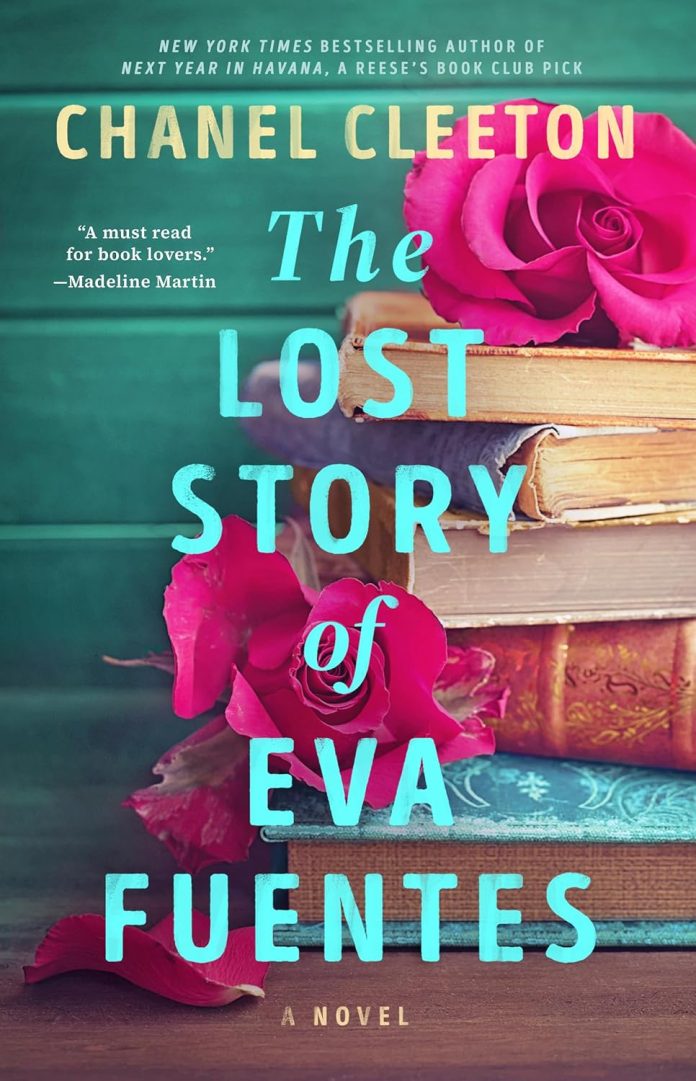
Chanel Cleeton’s The Lost Story of Eva Fuentes arrives not merely as historical fiction but as a meditation on literature’s enduring power to connect souls across chasms of time, geography, and circumstance. Spanning from 1900 to 2024, this multi-timeline narrative weaves together three women whose lives intersect through a single, elusive book—a novel that becomes both treasure and testament to survival.
When a Book Becomes More Than Words on a Page
At the heart of Cleeton’s intricate narrative lies A Time for Forgetting, a fictional novel penned by Cuban teacher Eva Fuentes following her transformative summer at Harvard’s Cuban Summer School in 1900. This book-within-a-book device proves far more substantial than mere plot mechanism; it becomes a character unto itself, carrying the weight of secrets, heartbreak, and the complicated truths we bury in the stories we tell ourselves.
The Lost Story of Eva opens in contemporary London with Margo Reynolds, an antiquities specialist whose carefully ordered professional life shatters when she’s hired to locate a rare book with only one surviving copy. What begins as a straightforward acquisition quickly escalates into something far more dangerous, particularly when the bookseller assisting her investigation turns up murdered. Cleeton demonstrates remarkable skill in transforming what could have been a straightforward treasure hunt into a meditation on provenance—not just of objects, but of lives and legacies. Margo’s journey forces readers to confront uncomfortable questions about who owns history, and whether the past ever truly releases its grip on the present.
The 1966 Havana timeline introduces Pilar Castillo, perhaps the novel’s most emotionally resonant character. A librarian navigating the treacherous landscape of Castro’s Cuba, Pilar embodies quiet resistance in an era demanding absolute conformity. Fresh from the devastating loss of her husband to the regime’s brutal prison system, Pilar discovers A Time for Forgetting through a desperate neighbor. Cleeton’s portrayal of grief rings authentic and raw; Pilar doesn’t simply mourn—she disintegrates and reconstructs herself through the act of reading. The author captures something profound here: how literature can serve as both mirror and lifeline when reality becomes unbearable.
Eva’s 1900 storyline transports readers to a pivotal moment in Cuban-American relations, when sixty Cuban teachers traveled to Harvard for an unprecedented cultural exchange. Here, Cleeton excels in depicting the tension between personal ambition and societal constraints faced by an educated woman at the turn of the century. Eva’s struggle to complete her novel while navigating an unexpected romance provides the foundation for all that follows, though the romantic elements occasionally feel constrained by the weight of foreshadowing.
The Architecture of Secrets
Cleeton constructs her narrative in The Lost Story of Eva like a Russian nesting doll, each layer revealing another, more intimate truth. The central mystery—why this particular book warrants murder, theft, and decades-spanning obsession—propels the plot forward with genuine tension. However, the revelation, when it arrives, may leave some readers feeling the journey exceeded the destination. The explanation for the book’s significance, while emotionally resonant, doesn’t quite justify the level of violence and intrigue surrounding it.
The author’s handling of multiple timelines demonstrates considerable technical prowess. Each era maintains its distinct voice and atmosphere without sacrificing narrative momentum. The 1900 chapters carry a formality befitting their period while remaining accessible to modern readers. The 1966 sections pulse with barely suppressed dread, every interaction shadowed by the surveillance state. The 2024 timeline crackles with contemporary thriller energy, complete with cyber threats and international intrigue.
Yet this structural ambition occasionally works against the novel’s emotional core. Just as readers sink into one timeline, Cleeton pivots to another, sometimes fracturing the intimacy she’s so carefully built. The most powerful moments—Pilar’s devastating grief, Eva’s heartbreak, Margo’s confrontation with her failed marriage—deserve more sustained attention than the format allows.
The Love Stories Within
Romance threads through all three narratives of The Lost Story of Eva, though with varying degrees of success. Margo’s reconnection with her ex-husband Luke provides the novel with its most fully realized relationship. Their history together—the unresolved hurt, the persistent attraction, the fundamental disagreements about life priorities—feels earned and authentic. Cleeton resists the temptation to smooth over their past conflicts with present passion, instead allowing them to grapple honestly with whether love alone suffices when life goals diverge.
Eva’s romance, conversely, suffers from the constraints of historical propriety and narrative necessity. While Cleeton hints at deeper complexities—and delivers a gut-punch revelation about the nature of Eva’s relationship—the actual development feels rushed, dependent more on passionate declarations than demonstrated compatibility. The author tells us about Eva’s transformation through love without always showing the moments that catalyze such change.
Pilar’s love story exists in memory and absence, and paradoxically, this makes it the most achingly beautiful. The novel she’s already lived with Enrique haunts every page of her timeline, rendered in Cleeton’s careful attention to the mundane details of shared life—his book of poetry waiting on the couch, his favorite foods, the rhythm of their evenings together. This portrayal of love’s residue proves more affecting than many conventional romance arcs.
The Weight of History
As a Cuban-American author, Cleeton brings particular authority to her exploration of Cuba’s tumultuous twentieth century. Her depiction of post-revolutionary Havana in 1966 achieves a claustrophobic verisimilitude—the constant surveillance, the casual betrayals born of fear, the way hope itself becomes a dangerous luxury. The library where Pilar works transforms into a battleground where she wages her own small rebellion by safeguarding books meant for confiscation.
Cleeton’s research into the 1900 Cuban Summer School at Harvard clearly runs deep, and she succeeds in capturing this remarkable cultural moment without drowning readers in exposition. However, some historical context arrives through dialogue that occasionally strains credibility, with characters explaining things they would both already know.
The contemporary timeline in The Lost Story of Eva tackles the thorny issue of art and antiquities displaced by political upheaval. Through Margo’s work sourcing items with complicated provenances, Cleeton raises questions without offering easy answers: Who rightfully owns objects seized by authoritarian regimes? What obligations do we have to return cultural artifacts to families in exile? When does acquisition become theft, and when does preservation justify questionable means?
Literary Ambitions and Limitations
Cleeton herself positions The Lost Story of Eva Fuentes as a love letter to literature’s transformative power, and this meta-textual awareness enriches the reading experience. When Pilar describes finding solace in Eva’s words, when Eva struggles to capture truth in fiction, when Margo recognizes the hunger for a book that changes lives, the novel achieves moments of genuine insight into why we read and write.
Yet this same self-awareness occasionally tips into overstatement. Multiple characters deliver speeches about books saving lives, literature as resistance, and the sacred duty of librarians that, while undoubtedly heartfelt, lack subtlety. The novel works best when demonstrating these truths through action rather than declaration.
The pacing suffers from uneven distribution of tension across timelines. The 2024 sections maintain thriller-like momentum, complete with chases, break-ins, and escalating danger. The 1966 chapters simmer with dread that periodically boils over. But Eva’s 1900 storyline meanders, particularly in its middle section, as the author balances her protagonist’s writing struggles with romantic development and historical context.
Cleeton’s prose generally serves the story well—clear, evocative, accessible. She excels at sensory details that ground readers in place and period. However, some scenes lean on familiar phrasing and well-worn metaphors rather than reaching for more distinctive language. Dialogue mostly rings true to character and era, though occasional modernisms slip into the historical sections.
Echoes of Cleeton and Beyond
Readers familiar with Cleeton’s previous works, particularly Next Year in Havana and When We Left Cuba, will recognize her abiding fascination with the Cuban diaspora experience and the ways political upheaval ripples across generations. The Lost Story of Eva Fuentes shares DNA with The Most Beautiful Girl in Cuba in its turn-of-the-century setting and attention to Cuban-American relations, though this latest offering pushes further into meta-fictional territory.
The Lost Story of Eva invites comparison to Kate Morton’s time-slip mysteries, particularly The Forgotten Garden, in its structure of present-day investigators unraveling historical secrets. Like Sarah Blake’s The Guest Book, it examines how families inherit not just wealth but moral complexity. Kristin Hannah’s The Nightingale comes to mind in Cleeton’s treatment of women finding courage under oppressive regimes, though Cleeton’s scope expands across more than a century.
For readers craving more explorations of books within books, try Geraldine Brooks’s People of the Book or Carlos Ruiz Zafón’s The Shadow of the Wind. Those drawn to Cleeton’s multi-timeline structure might appreciate Lisa Wingate’s Before We Were Yours or Beatriz Williams’s A Hundred Summers. And for those captivated by Pilar’s quiet resistance in revolutionary Cuba, Cristina García’s Dreaming in Cuban offers a complementary perspective.
The Verdict
The Lost Story of Eva Fuentes succeeds more in its parts than as a unified whole. Individual chapters achieve genuine emotional power—Pilar learning of her husband’s death, Eva’s devastating confrontation with betrayal, Margo’s reckoning with her failed marriage. The novel offers thoughtful examination of literature’s role as witness, comfort, and resistance. Cleeton’s research enriches rather than overwhelms, and her passion for her subject matter shines through on every page.
Yet the ambitious structure occasionally diffuses rather than concentrates the narrative’s impact. The central mystery, while emotionally satisfying, doesn’t quite justify the elaborate scaffolding surrounding it. Some readers may find the resolution of Eva’s storyline, in particular, both predictable and insufficiently explored given its weight.
This is a novel that respects its readers’ intelligence and emotional capacity. Cleeton refuses easy comfort or pat resolutions. Her characters grapple with genuinely difficult questions about duty, love, survival, and justice. She acknowledges that sometimes the endings we get aren’t the ones we deserve or desire, that history’s weight can crush as easily as inspire.
For readers seeking literary historical fiction that prizes emotion and theme over pure plot, The Lost Story of Eva Fuentes delivers a resonant, if occasionally uneven, reading experience. It will particularly appeal to those who share Pilar’s conviction that somewhere exists the perfect book waiting for each reader—the one that will speak directly to your soul when you need it most. Cleeton’s novel may not be that book for every reader, but it makes a compelling case for why we should never stop searching.
Recommended for readers who loved:
- The Shadow of the Wind by Carlos Ruiz Zafón
- The Forgotten Garden by Kate Morton
- People of the Book by Geraldine Brooks
- The Nightingale by Kristin Hannah
- Next Year in Havana by Chanel Cleeton
- Dreaming in Cuban by Cristina García
- The Guest Book by Sarah Blake
- Under the Stars by Beatriz Williams







