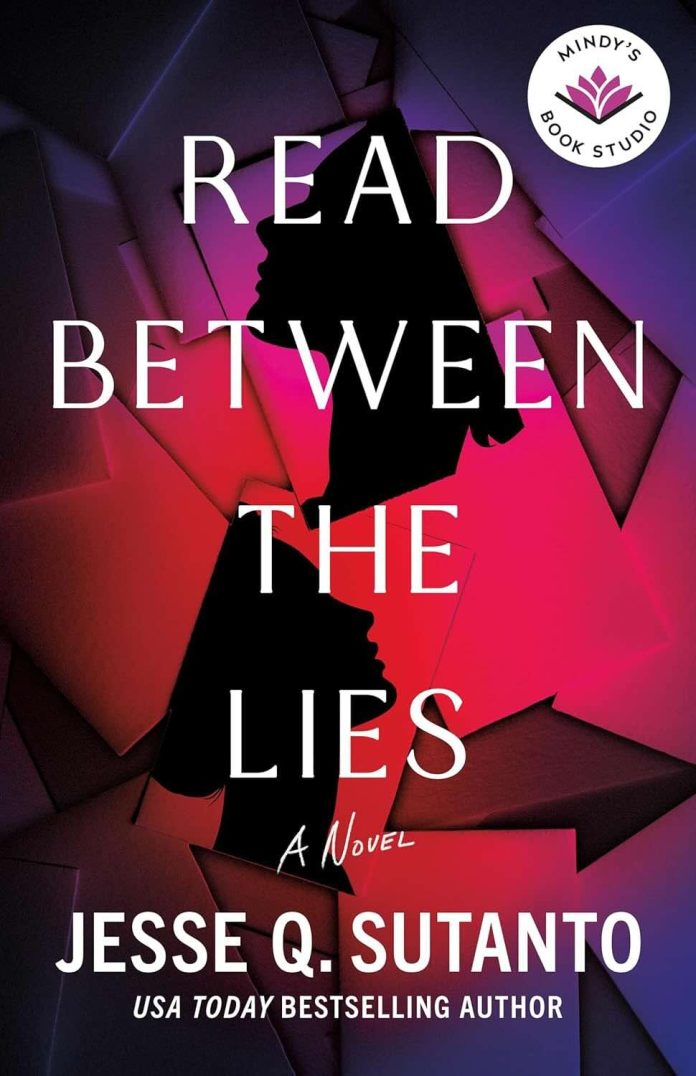
The publishing world’s dark underbelly becomes a psychological battlefield in Jesse Q. Sutanto’s departure from her trademark humor. Read Between the Lies by Jesse Q. Sutanto transforms the seemingly innocuous space of debut author groups into a claustrophobic arena where past trauma and present ambition converge with devastating consequences.
A Narrative That Refuses Simple Answers
Fern Huang’s dream of becoming a published author finally materializes when her debut novel sells. Her relief transforms into dread when she discovers Haven Lee, her high school tormentor, has landed a seven-figure book deal and will debut alongside her in 2020. As the pandemic forces their debut group entirely online, old wounds fester beneath the veneer of supportive tweets and congratulatory Slack messages.
What distinguishes Read Between the Lies by Jesse Q. Sutanto from conventional psychological thrillers is its refusal to offer comfortable certainties. Sutanto constructs a narrative where victim and villain identities shift like quicksand, forcing readers to question their assumptions with each revelation. The story’s true brilliance lies not in its twists, but in how it mirrors the fragmentary, unreliable nature of social media itself—where context collapses and every interaction can be weaponized.
The novel’s structure alternates between present-day chaos and carefully placed flashbacks to Fern and Haven’s school years. These temporal shifts reveal a relationship far more complex than simple bully-victim dynamics. We witness twelve-year-old Fern’s descent from hopeful baker to isolated outsider, and slowly, uncomfortably, we realize both characters have blood on their hands from an incident involving their mutual friend Dani—a death officially ruled suicide but shrouded in lies and coercion.
Character Psychology: The Predator-Prey Paradox
Sutanto’s characterization operates on multiple levels simultaneously. Fern presents herself as prey—someone who dissociates, who bakes compulsively as coping mechanism, who journals and attends therapy to manage her trauma. Her narration drips with self-deprecation and hypervigilance, constantly monitoring how others perceive her. Yet gradually, we discover Fern possesses her own capacity for calculated cruelty, from poisoning Haven’s cookie with laxatives in middle school to sabotaging Haven’s electricity during a pandemic when her father needs refrigerated insulin.
Haven appears as the archetypal queen bee—beautiful, charismatic, effortlessly successful—but Sutanto provides just enough glimpses to suggest Haven’s perfection might be performance rather than essence. When Haven reaches out to Fern with what seems like an olive branch, is it genuine growth or strategic positioning? The novel’s genius lies in keeping this ambiguous, reflecting how we can never truly know another person’s intentions, especially through the distorting lens of digital communication.
The relationship dynamics within their online writing community showcase Sutanto’s keen observation of group psychology. Lisa and Jenna, Fern’s supposed friends, believe they’re being supportive when they encourage Fern to “not let Haven intimidate her.” Yet their inability to see Haven’s subtle undermining—how she frames herself as generous while positioning Fern as paranoid—demonstrates how easily charisma can blind even well-meaning people. The private Slack channels and direct messages become echo chambers where resentment metastasizes.
Thematic Depth: Bullying, Memory, and Moral Ambiguity
Read Between the Lies by Jesse Q. Sutanto interrogates how bullying scars persist long after childhood ends. Fern’s therapy sessions and coping strategies reveal someone genuinely working toward healing, yet her obsessive monitoring of Haven’s social media shows how trauma creates patterns that feel impossible to break. When Haven’s deal announcement appears, Fern literally chokes on a peanut butter sandwich—a visceral manifestation of how deeply Haven’s success threatens her sense of self.
The novel explores how the internet has fundamentally altered bullying dynamics. Haven’s online presence allows her to maintain her perfect image while privately undermining Fern through carefully calibrated messages that appear supportive to outsiders. Conversely, Fern’s eventual op-ed about her experiences—written after losing her first book deal—weaponizes public opinion against Haven with catastrophic results. The mob mentality of Book Twitter becomes another character, capable of destroying careers and lives with alarming speed.
Memory itself becomes unreliable territory. Both Fern and Haven have constructed narratives about what happened to Dani, but neither can be fully trusted. Did Fern kick Dani during the fight, or did Haven push her? The ambiguity reflects how memory warps under pressure, especially when telling the truth would mean accepting unbearable responsibility. The novel suggests that our memories are always somewhat self-serving, edited versions of events designed to let us sleep at night.
The publishing industry backdrop adds another layer of commentary. The debut author experience—characterized by simultaneous vulnerability and competition—creates perfect conditions for old animosities to flourish. When success feels zero-sum, every other author’s triumph can feel like personal failure. Haven’s seven-figure deal and Good Morning America book club selection don’t exist in isolation; they represent everything Fern feels she deserves but will never achieve, fueling a resentment that eventually explodes.
Writing Craft: Voice, Structure, and Pacing
Sutanto’s prose in Read Between the Lies by Jesse Q. Sutanto marks a deliberate shift from her previously comedic work. Fern’s first-person narration alternates between self-aware and unreliable, creating constant tension between what she tells readers and what her actions reveal. Her descriptions of dissociation—escaping into her mind to avoid painful reality—are rendered with uncomfortable authenticity. The writing captures how anxiety spirals work, how one perceived slight from Haven cascades into hours of obsessive analysis.
The novel’s structure deserves attention for how it parcels out information. Early chapters establish Fern as sympathetic—bullied, isolated, working to heal—before gradually revealing her own capacity for harm. This technique forces readers to grapple with their own tendency to categorize people as wholly good or bad, victim or villain. By the time Haven’s death occurs, readers are left morally adrift, unsure whether to grieve or feel vindicated.
Pacing-wise, the book sometimes struggles during its middle section where the online community dynamics can feel repetitive. Multiple scenes of Fern analyzing Haven’s Slack messages follow similar patterns: perceived slight, consultation with friends Lisa and Jenna, spiraling anxiety, brief resolution, repeat. However, this repetitiveness arguably reflects the obsessive nature of Fern’s fixation, so whether it’s weakness or intentional choice remains debatable.
The ending sequence accelerates dramatically as Fern’s viral op-ed leads to Haven’s publisher dropping her and ultimately to Haven’s suicide. The final revelations—Fern’s memoir deal, Haven’s posthumous success, and Fern’s decision to finally confess about Dani to the police—arrive in quick succession. Some readers may find the resolution too neat given the messy ambiguity preceding it, though others will appreciate how Fern’s confession represents genuine, if belated, moral awakening.
Critical Considerations
While Read Between the Lies by Jesse Q. Sutanto succeeds as psychological exploration, it occasionally sacrifices momentum for thematic depth. The extensive passages detailing publishing industry mechanics—edit letters, agent communications, debut group protocols—may alienate readers unfamiliar with or uninterested in these specifics. The novel assumes reader investment in the stakes of publishing success that may not translate universally.
Additionally, the social media sequences, while realistic, can feel claustrophobic to the point of discomfort. Long stretches occur entirely within Slack channels and private messages, creating a hermetically sealed world that reflects Fern’s isolation but may test reader patience. Those expecting Sutanto’s signature humor from works like Dial A for Aunties will need to recalibrate expectations significantly—this is a much darker, more introspective work.
The book’s treatment of suicide as plot device rather than fully explored subject warrants discussion. Haven’s death occurs off-page, and we receive limited insight into her actual mental state beyond Fern’s perception and social media posts. While this reflects Fern’s self-centered perspective, it arguably reduces Haven to a narrative function rather than a fully realized person. Readers seeking sensitive, nuanced exploration of mental health may find this aspect underdeveloped.
Final Verdict
Read Between the Lies by Jesse Q. Sutanto operates as both gripping psychological suspense and incisive social commentary. It refuses to offer the satisfying vindication of typical underdog stories or the clear-cut morality of traditional thrillers. Instead, Sutanto presents a world where everyone is simultaneously victim and perpetrator, where social media amplifies our worst impulses, and where the past never truly releases its grip on the present.
The novel succeeds most powerfully in its depiction of how trauma shapes behavior in ways victims themselves may not fully understand. Fern’s journey from bullied teenager to obsessive adult to author willing to weaponize her pain for public consumption traces a psychologically authentic arc. Her final decision to confess about Dani suggests growth, yet the fact that she profits massively from her memoir complicates any straightforward redemption narrative.
Readers who appreciate morally complex characters, unreliable narration, and stories that prioritize psychological realism over tidy resolutions will find much to appreciate here. The novel’s examination of how digital spaces transform human interaction—allowing both unprecedented connection and devastating cruelty—feels urgently contemporary. Those seeking traditional thriller satisfaction or clear heroes and villains should look elsewhere.
Comparable Reads
If Read Between the Lies by Jesse Q. Sutanto resonated with you, consider these similarly complex psychological narratives:
- The Other Black Girl by Zakiya Dalila Harris for workplace dynamics and racialized microaggressions
- My Dark Vanessa by Kate Elizabeth Russell for morally complicated narrators examining past trauma
- Such a Fun Age by Kiley Reid for social media’s role in racial and class conflicts
- The Guest List by Lucy Foley for multiple perspectives revealing hidden resentments
- Big Little Lies by Liane Moriarty for seemingly perfect lives concealing darker truths
Sutanto’s previous works like Dial A for Aunties and Vera Wong’s Unsolicited Advice for Murderers showcase her versatility as an author, though they bear little stylistic resemblance to this much darker offering.







