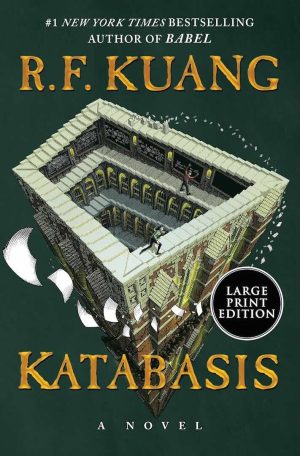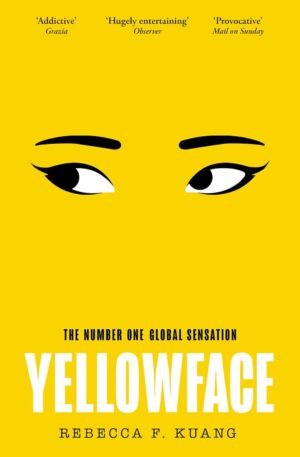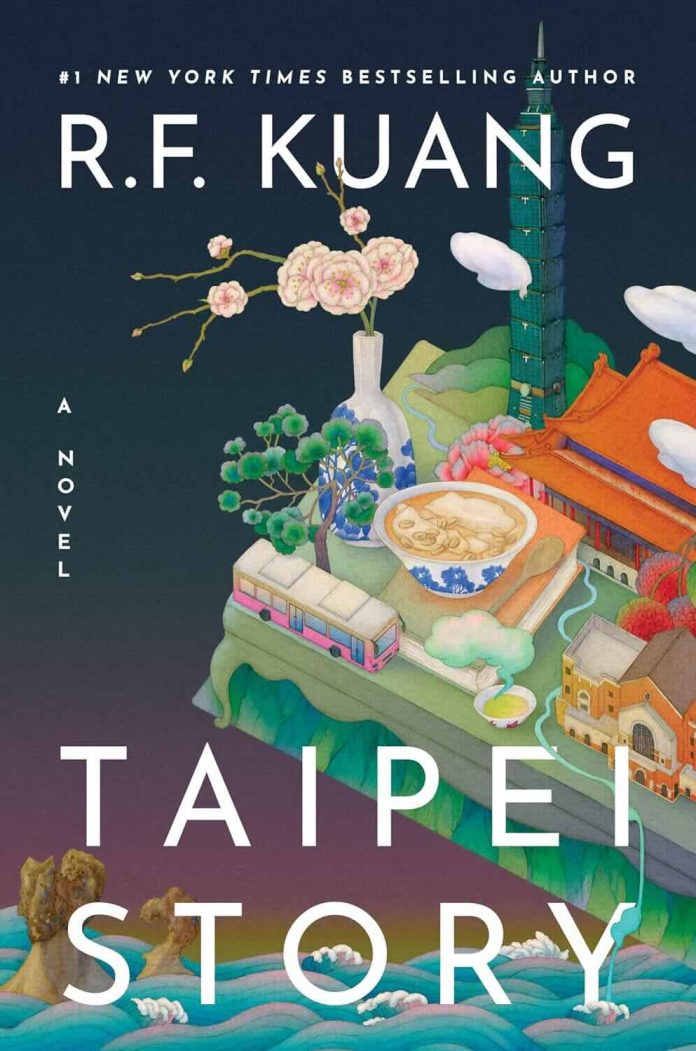
Rebecca Kuang has spent her career setting fire to the page. From the carnage of The Poppy War trilogy to the academic violence of Babel, from the publishing satire of Yellowface to the icy descent of Katabasis, her books tend to arrive loud, polemical, and willing to draw blood. Taipei Story by R F Kuang does something different. It speaks at a lower volume. It is funnier, smaller in scope, and stranger in shape than anything she has published before, and it may also be her most personal novel yet.
This is a literary novel about a college sophomore named Lily Chen who flies to Taipei for ten weeks of intensive Mandarin instruction at a famously punishing summer program at National Taiwan University. She thinks she is going there to fill in a gap. Instead, she discovers the gap is bigger, and lonelier, than she ever knew.
What the Book Is Actually About
Setting the Trap
The opening pages spring the trap with quiet precision. Lily watches a row of Chinese American students at Logan Airport gossip about Din Tai Fung and the same Chinese textbook every heritage student has ever wrestled with, and she despises them, until she realizes she is them. She has read the same travel blogs. She has rehearsed the same fantasy of arriving in Taipei as a kind of rightful return.
The Summer Comes Apart
What follows is a slow, often painful dismantling of that fantasy. Lily’s classes are brutal. Her studio apartment is a scam. Her roommate Anna giggles too much in class and snoops too freely at home. A famous boy from her college takes her on a trip to the hot springs in Beitou, and a single careless evening becomes program-wide gossip in a way anyone who has ever lived in a small academic community will recognize with a wince.
And then, halfway through her summer, her grandfather dies in Guangzhou. He is a man Lily had been planning, in some vague distant way, to finally have real conversations with once her Mandarin caught up. Her Mandarin never caught up in time. The rest of Taipei Story by R F Kuang is about what you do with that.
What Kuang Does Better Than Almost Anyone Right Now
Three things stand out in the writing itself:
- Voice. Lily narrates in a wry, slightly cruel, deeply self-aware first person, the kind of voice that catalogues its own delusions even as it indulges them. She judges other Chinese Americans for behavior she is one paragraph away from committing, and she knows she is doing it.
- Linguistic texture. Mandarin sits inside the book the way it sits inside Lily’s head: half-grasped, glittering, embarrassing, slippery. The teacher who tells her she has always sounded like an idiot, only now she can hear it, is the funniest exchange in the novel and also the most generous.
- Sense of place. Taipei here is not a postcard. It is humid laundry that never quite dries, dragon fruit that stains the toilet bowl, mosquito bites the size of coins, vendors who switch to English the moment they sense weakness. The city feels lived in rather than visited.
The Emotional Center
The most quietly shattering passages are the interstitial chapters, brief sections that step outside Lily’s first person and imagine her grandfather’s life in close third. We glimpse him as a boy sent away by his parents because of a dream of modernity, then a soldier, then a husband, then a father giving up a daughter to America, then an elder watching bilingual grandchildren visit and complain about the food. These chapters do quietly what some other novels try to do across five hundred pages. They give you the entire shape of a life Lily was too late to ask about. They never moralize. And they never reach for the reader’s tear ducts. They simply set the inheritance on the table.
It is in these passages that Taipei Story by R F Kuang announces itself as something more than a smart campus novel. The book is interested in the specific cost of waiting too long to ask.
Where the Book Wobbles
This is not a flawless novel, and the four-star average tracks. Some honest critiques:
- The pace is patient to a fault. Lily spends a lot of the middle section wandering, watching films, scrolling, sulking. Readers who came expecting the propulsive plotting of The Poppy War or the airport-thriller turns of Yellowface will need to recalibrate.
- Lily is, by design, a frustrating narrator. She is passive, sometimes catty, often self-pitying. Kuang clearly knows this, but readers who need a likable protagonist may struggle to settle in.
- The gossip and romance plot gets dropped a little roughly. It serves a thematic purpose, but it feels less examined than the family thread.
- A few middle vignettes circle the same diaspora-anxiety note. A sharper edit could have tightened them without losing the texture.
These are real complaints. They are also the cost of a book that refuses to behave like a tidier coming-of-age. The looseness is the point. Kuang is writing the texture of a summer that does not pay off in the way the protagonist hoped, and the form mirrors that.
Who Should Read This Book
You Will Love It If You Have Ever
- Lied about how well you speak your parents’ language
- Sat through a video call with a grandparent and run out of things to say in three minutes
- Hated other people doing the exact thing you were also doing
- Felt that grief did not arrive on schedule, or in the shape it was supposed to
You Might Bounce Off It
If you want a propulsive plot, a triumphant arc of fluency, or a clean reconciliation between the protagonist and her family. Kuang withholds all three on purpose.
Read-Alikes Worth Picking Up
A short list of titles in conversation with Taipei Story by R F Kuang:
- Crying in H Mart by Michelle Zauner, the closest cousin in spirit, on grief, food, and a missing elder.
- Days of Distraction by Alexandra Chang, a quieter Chinese American novel of relocation and ambiguity.
- The Leavers by Lisa Ko, on family silence and the question of where home actually lives.
- Disorientation by Elaine Hsieh Chou, for a sharper-edged Asian American satire of academic identity.
- Severance by Ling Ma, for the dry, observational, alienated first-person in a Chinese American key.
- Pachinko by Min Jin Lee, for the generational sweep the interstitials gesture toward.
- Interior Chinatown by Charles Yu, for the formal play with diaspora identity.
Our review of Pan by Michael Clune covers another literary fiction in the same vein.
Final Word
Taipei Story by R F Kuang is a slower, quieter, and more honest book than her existing fans may be expecting, and that is its strength. It is about the languages we never quite learn, the elders we never quite reach, and the unflattering version of ourselves we discover the moment we land somewhere that was supposed to feel like home. Kuang is no longer just one of the most exciting genre writers of her generation. With this book, she has staked a real claim on literary fiction, and she has done it without raising her voice.