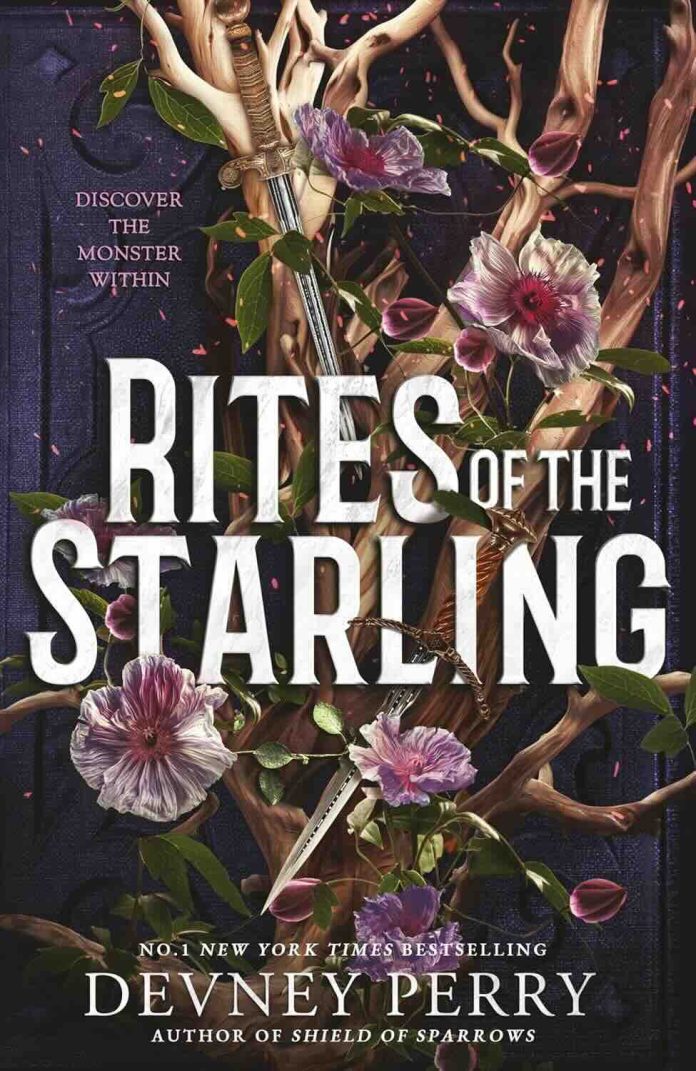
After the ruin that Shield of Sparrows left readers in, there is a particular kind of courage required to open the sequel. Odessa and Ransom, separated by monsters and miles, their treaty-bound marriage still a secret from the world, represent everything romantasy fans want from a second installment: the promise of reunion, deepened lore, and a love tested by forces larger than any single kingdom. Rites of the Starling by Devney Perry delivers all of this. It also delivers something unexpected: a third heartbeat, a new perspective from across an ocean no map in Calandra acknowledges, and the revelation that the monsters haunting five kingdoms have roots older than anyone knew.
This is not a sequel content to stay within the borders its predecessor drew. It reaches, sometimes gloriously, sometimes unevenly.
The Shape of Loss
The story opens in fracture. Odessa and Ransom are apart, and that separation carries real weight because Perry refuses to rush it. The princess is exhausted, hunted, and responsible for a traumatised child named Evie, who witnessed devastation the night Book 1 ended. Odessa’s chapters are some of the finest writing here: raw, physical, grounded in small human details like the smell of smoke still caught in unwashed hair, or the particular cruelty of a child’s nightmare in the dark.
Ransom’s chapters crackle with the tension of a man holding himself together through sheer will. The Lyssa infection spreading through his blood, the political calculations of his father King Ramsey, and his own identity as the Guardian make him feel genuinely imperilled in ways that go beyond the physical. Perry writes him with the same careful restraint she established in Shield of Sparrows, and it pays off in moments of stillness and controlled fury alike.
What drives both storylines is not only the romance but the question of identity: who is Odessa beyond the Sparrow? Who is Ransom beyond the Guardian? Those questions do not resolve neatly here, but they push the characters into choices that matter.
A Third Voice from Across the Sea
The true gamble in Rites of the Starling by Devney Perry is Caspia, a Starling princess from the continent of Nelfinex, introduced as a full point-of-view character in this installment. She is answering her ritus, a blood-calling that draws Starlings across the ocean in search of transformation, and she arrives in Calandra with her cousin Xandra, a warrior’s instinct, visions of a silver-eyed man who murdered her sister, and absolutely no idea what this land does to people like her.
Her storyline is where Perry takes the greatest creative risk. Caspia’s chapters feel, for long stretches, like a different novel. The world she inhabits: the Starling shapeshifting customs, the elfalter metal worn like honour, the swift birds of prey bred for war and loyalty, all of it is vivid and specific. Andreas, the Quentis man who becomes her love interest and travelling companion, is one of the warmest characters in the entire series. Their slow, careful romance has the quality of two people genuinely surprising each other.
But that separation from Odessa and Ransom’s arc creates pacing friction that is hard to ignore. Caspia’s thread is engaging in isolation. It is occasionally frustrating as an interruption when readers are desperate to know what happens to the people they have followed since the first book.
The payoff is significant. The mythology of the crux expands in ways that reframe generations of history, and Caspia is the character who unlocks it. Perry earns this through patience, even if that patience costs some readers momentum in the middle sections.
What This Book Gets Right
Rites of the Starling by Devney Perry does several things exceptionally well.
- Evie’s grief is written with honesty. A four-year-old who witnessed violence and loss is not a plot device here. She eats too little, cries in the saddle, flinches at loud noises. That specificity elevates the emotional stakes of Odessa’s entire arc.
- The Voster mythology finally breathes. The priests who have hovered over the series since Book 1 are given a history with genuine weight. A schism within the brotherhood, the question of who they truly serve, and what their magic costs the people around them pull the larger plot into something far more dangerous than monster attacks.
- The action sequences are kinetic and clear. A chase through waterfall caves, a creature attack at the bottom of a black obsidian ravine, a night ambush in castle gardens: these scenes move without confusion, and the danger feels cold enough to make the hands sweat.
- The separated romance stays present. The longing between Odessa and Ransom is maintained through physical echoes, a shared scar on their palms, the habit of tracing it like a prayer. Perry understands that absence can deepen desire rather than dissolve it.
Where It Stumbles
No sequel to a massively successful debut escapes without growing pains, and Rites of the Starling by Devney Perry has them.
The pacing in Part Two is the most consistent issue. Multiple plotlines advance slowly, and the enigmatic behaviour of the Voster settles into a recognisable pattern across chapters: question asked, meaningful silence, vague instruction, eerie departure. After the fourth or fifth repetition, it becomes something the reader anticipates rather than dreads.
Caspia’s storyline, while thematically essential, could have been woven more tightly into the book’s overall structure. Her chapters work as their own reading experience. They are less effective as interruptions to a storyline readers are already anxious to follow.
The ending will satisfy some and frustrate others. One major emotional arc closes. Several significant threads are left deliberately open, as befits a series building toward a third book. Those who came expecting complete resolution will need to adjust their expectations and their patience.
Who This Book Is For
If you finished Shield of Sparrows already wondering what happens to Odessa and Ransom, Rites of the Starling by Devney Perry is your answer, even if it is not a simple one. Perry takes real creative risks with this book, expanding the world in ways that will clearly pay dividends across future installments. The decision to bring a fully realised outside perspective into a story already dense with mythology is bold, and it mostly works.
Readers new to the series should start with Shield of Sparrows before attempting this. The emotional weight here depends entirely on knowing who these characters were before everything broke.
Devney Perry’s Wider Work
Perry built her substantial readership through contemporary romance: the beloved Edens Series beginning with Indigo Ridge, the gritty Clifton Forge series, and the Calamity Montana books. Bluebird Gold from her Lost Legends series offered an earlier taste of her fantasy instincts. Shield of Sparrows marked her boldest genre shift, and this sequel confirms that the romantasy register suits her talent for tension and emotional precision.
If You Liked This, Try
- Shield of Sparrows by Devney Perry (the essential starting point)
- A Court of Thorns and Roses by Sarah J. Maas
- Fourth Wing by Rebecca Yarros
- From Blood and Ash by Jennifer L. Armentrout
- Gothikana by RuNyx
- The Jasad Heir by Sara Hashem
- Divine Rivals by Rebecca Ross